17 Farmhouse Kitchen Wall Decor Ideas for a Cosy Country Feel
Walk into a farmhouse kitchen and you can feel it before you see it. Warm wood, soft linen, and things that look like they have been there for years.
Nothing here needs to be new or perfect. A chipped jug, a faded towel, and a worn wooden board all earn their place on the wall.
I started with one bare wall and one old crate, and the room slowly found its country feel. These seventeen ideas work the same way, one small change at a time.
Pick the ones that fit your walls and your budget. A farmhouse kitchen grows slowly, and that slow growth is what makes it feel like home.

1. Reclaimed Barn Wood Accent Panel
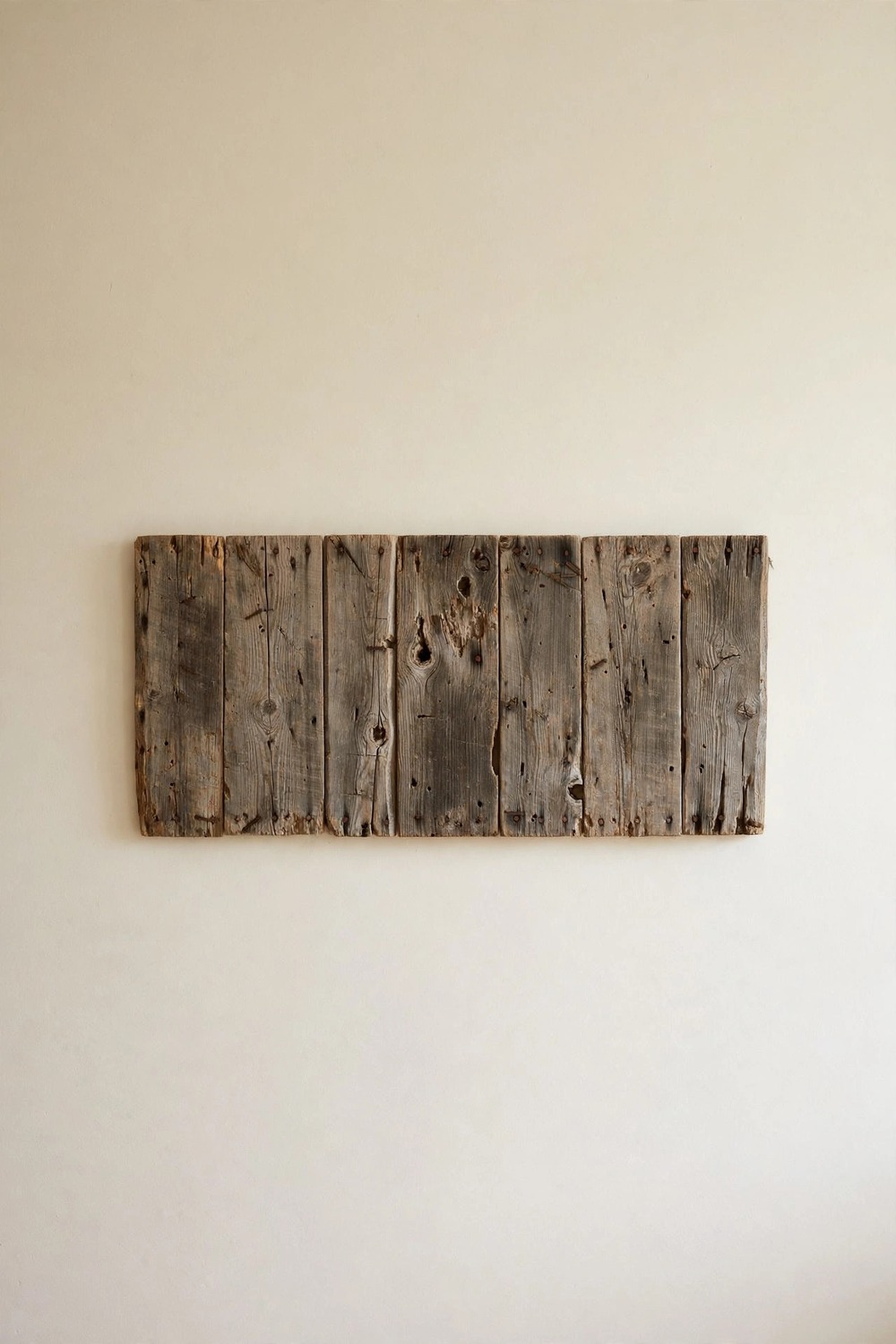
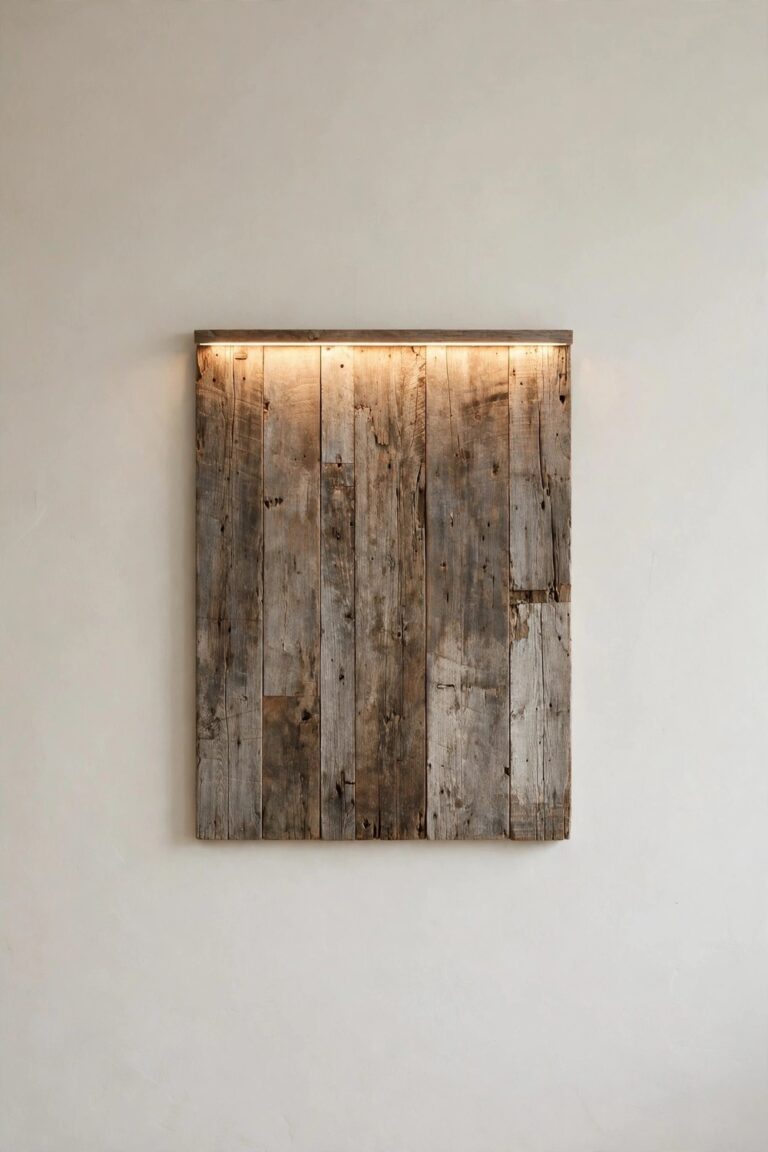
One wide panel of raw, unpainted barn wood can change a whole wall. Fix it behind the stove or the sink, where your eyes land first.
The wood needs no paint and no gloss. Its knots, nail holes, and faded grey brown tones are the decoration.
Ask a salvage yard for boards from one old barn so the colour stays close. Sand off splinters but keep the weathered face.
A light coat of clear wax seals the wood against kitchen steam without hiding the grain or the nail holes.
2. Vintage Wooden Signs in a Row
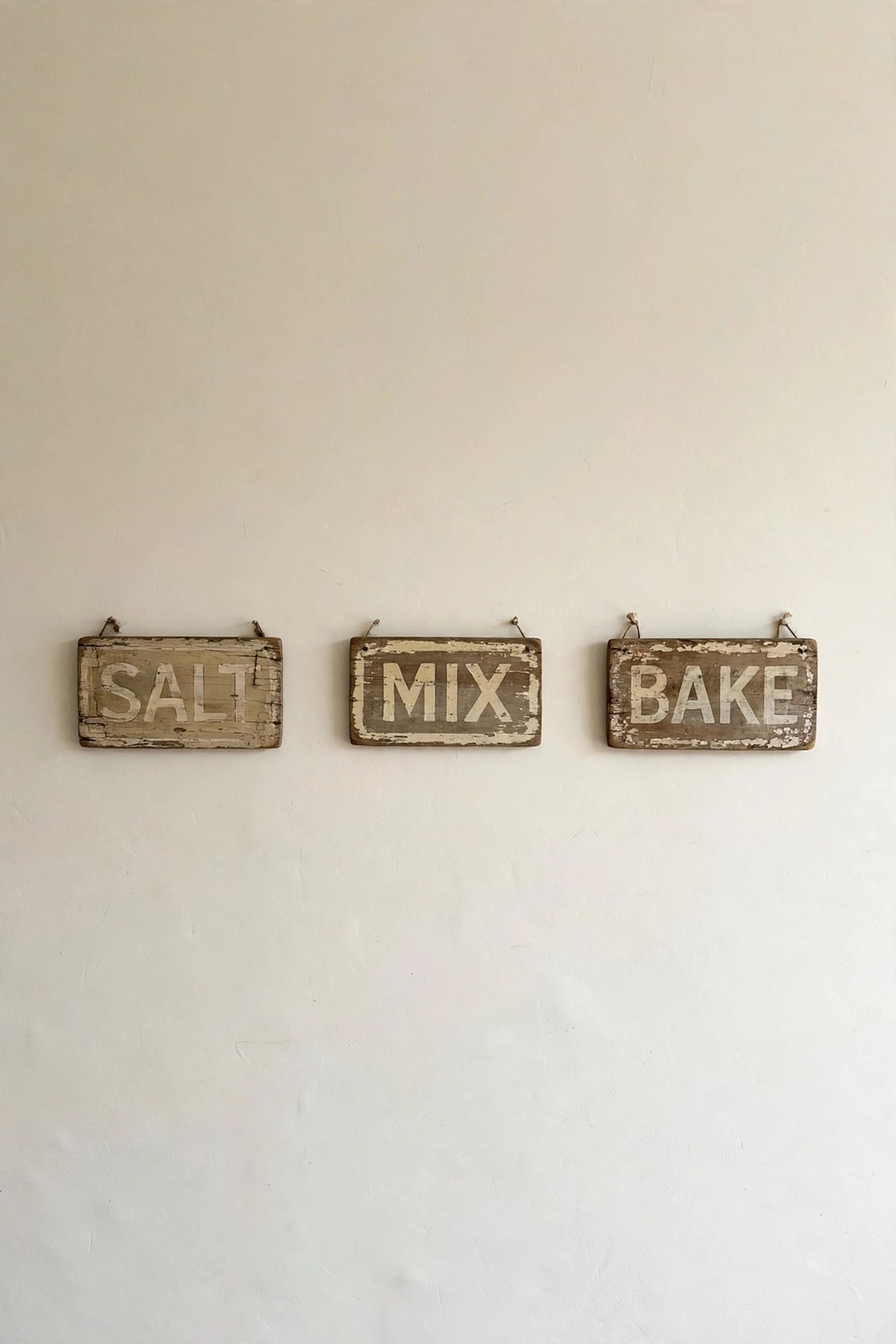
Three small worn wooden signs hung in a row feel collected, not bought as a set. Pick short kitchen words you actually like, and keep each sign about the same size.
Hang them at the same height with even gaps, so the row reads as one piece. Look for signs with faded paint and soft edges at flea markets.
New signs with fake wear look flat next to real ones. If you only find one you love, wait, because the row is worth building slowly.
3. Antique Milk Jug Vases on a Wall Ledge
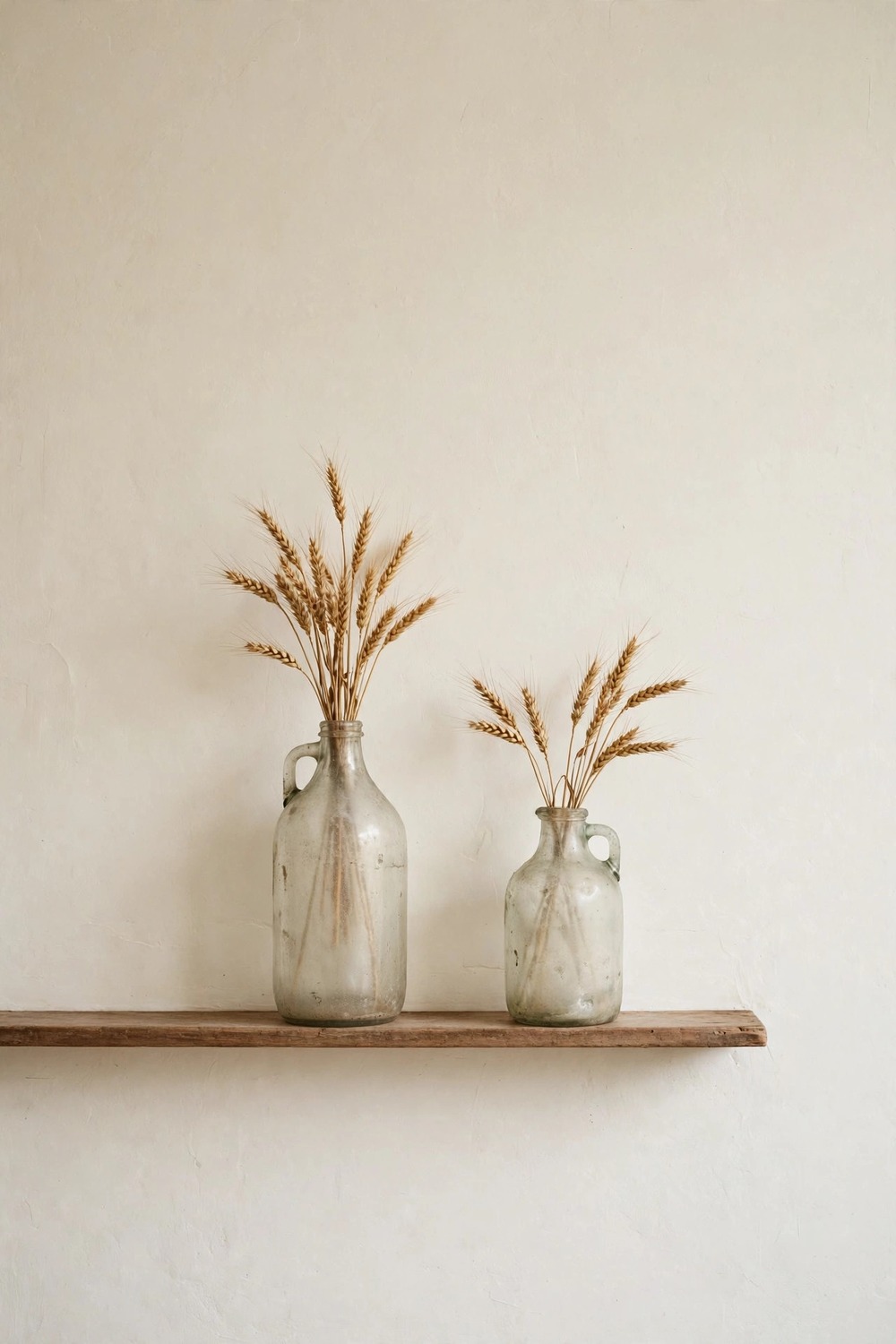
Old milk jugs make the prettiest wall vases. Fix a slim wooden ledge to the wall, then set two jugs on it with a few dried stems in each.
The jugs should look found, not matched. One tall and one short works best.
Choose jugs with a little age on them. A faint stain or a worn rim adds character, so do not scrub them back to new.
Dried wheat or grasses suit them better than fresh flowers. Fresh stems need water, and water near a wall ledge is a chore.
Leave about ten centimetres between the jugs so each one reads on its own, and keep the ledge at eye level.
4. Antique Wooden Butter Moulds Hung in a Row
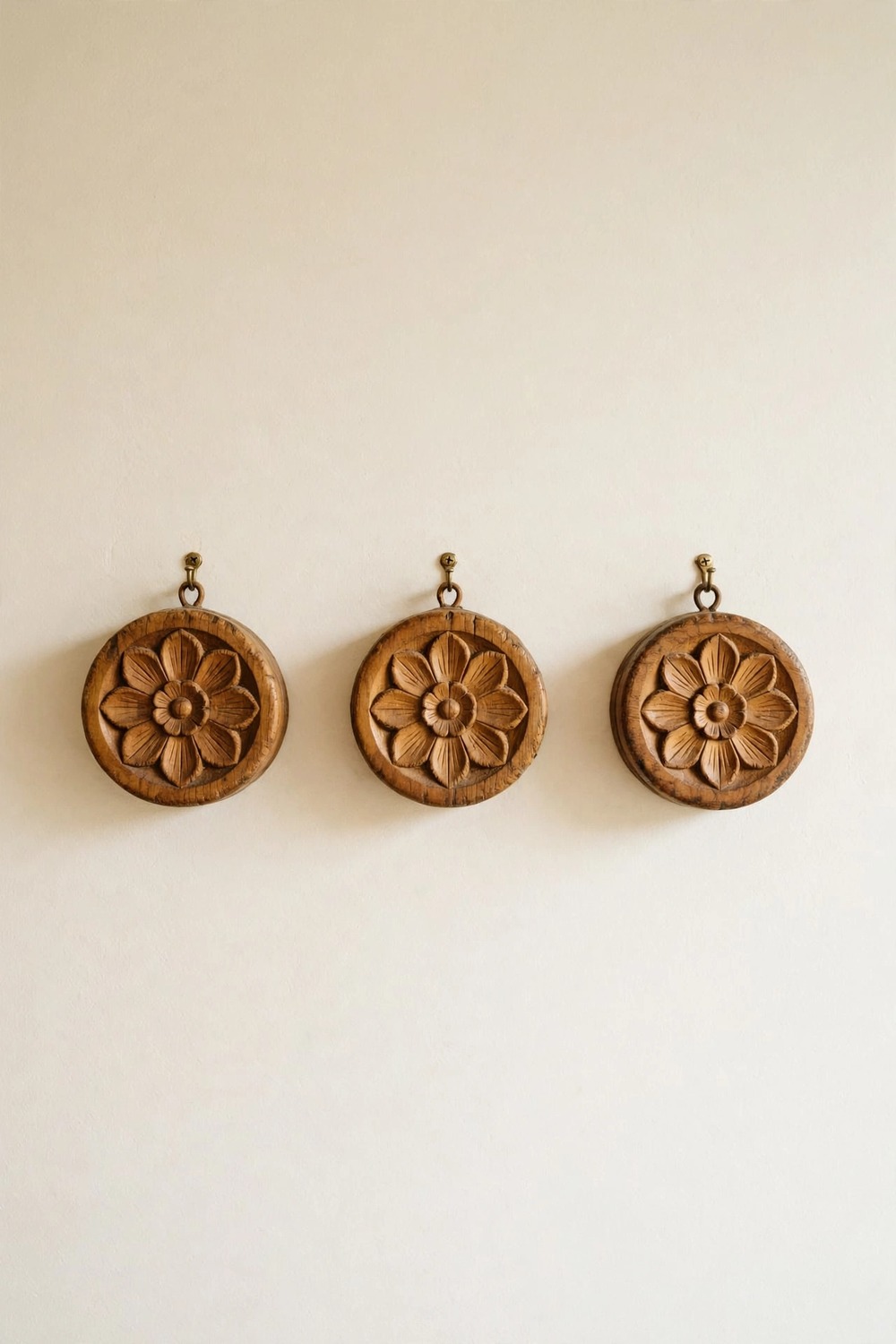
Old butter moulds make a charming little wall collection. Look for small carved wooden moulds with a flower or wheat pattern pressed into the cup.
Hang three in a row on small picture hooks, with even gaps between them. The carved side faces out, so the pattern shows.
Pick moulds in warm honey wood, and do not worry if they are not a matched set. Slightly different sizes look collected, not bought together.
Keep them away from the steamiest spot above the stove. Dry heat suits old wood, and steam can crack it over time.
5. Rustic Wooden Crate Shelves
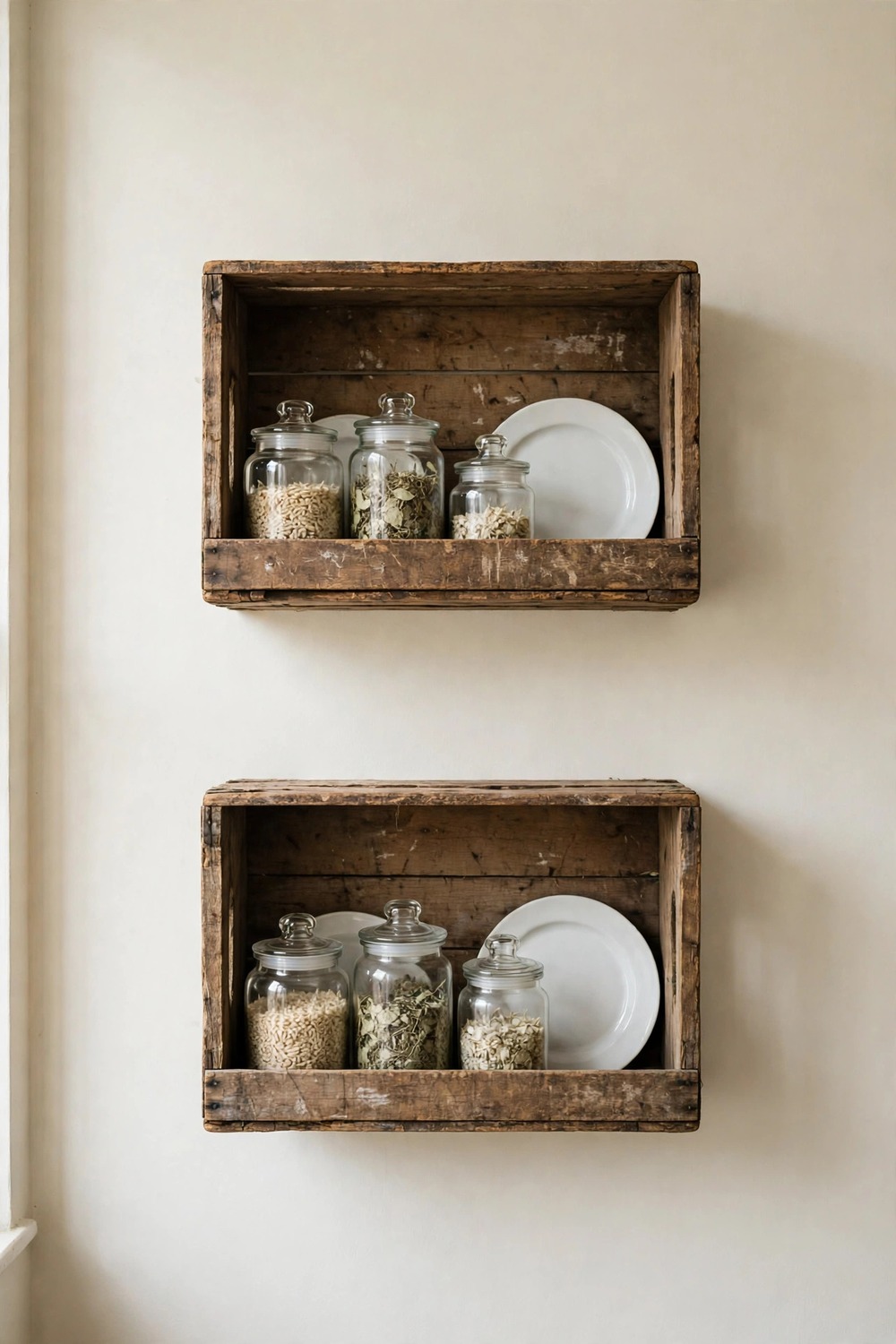
Old wooden crates make chunky open shelves with real character. Fix two crates to the wall, one above the other, and fill them with jars and crockery.
The wood grain and old stencilled labels are part of the look. Pick solid crates with no broken slats.
Use two screws per crate into a wall stud or a proper wall plug. Crates full of jars are heavy, and a single screw will not hold them.
Leave some empty space inside each crate. A packed crate looks like storage, while a half full one looks like a display.
6. Dried Wheat Wreath on a Wooden Peg Rail
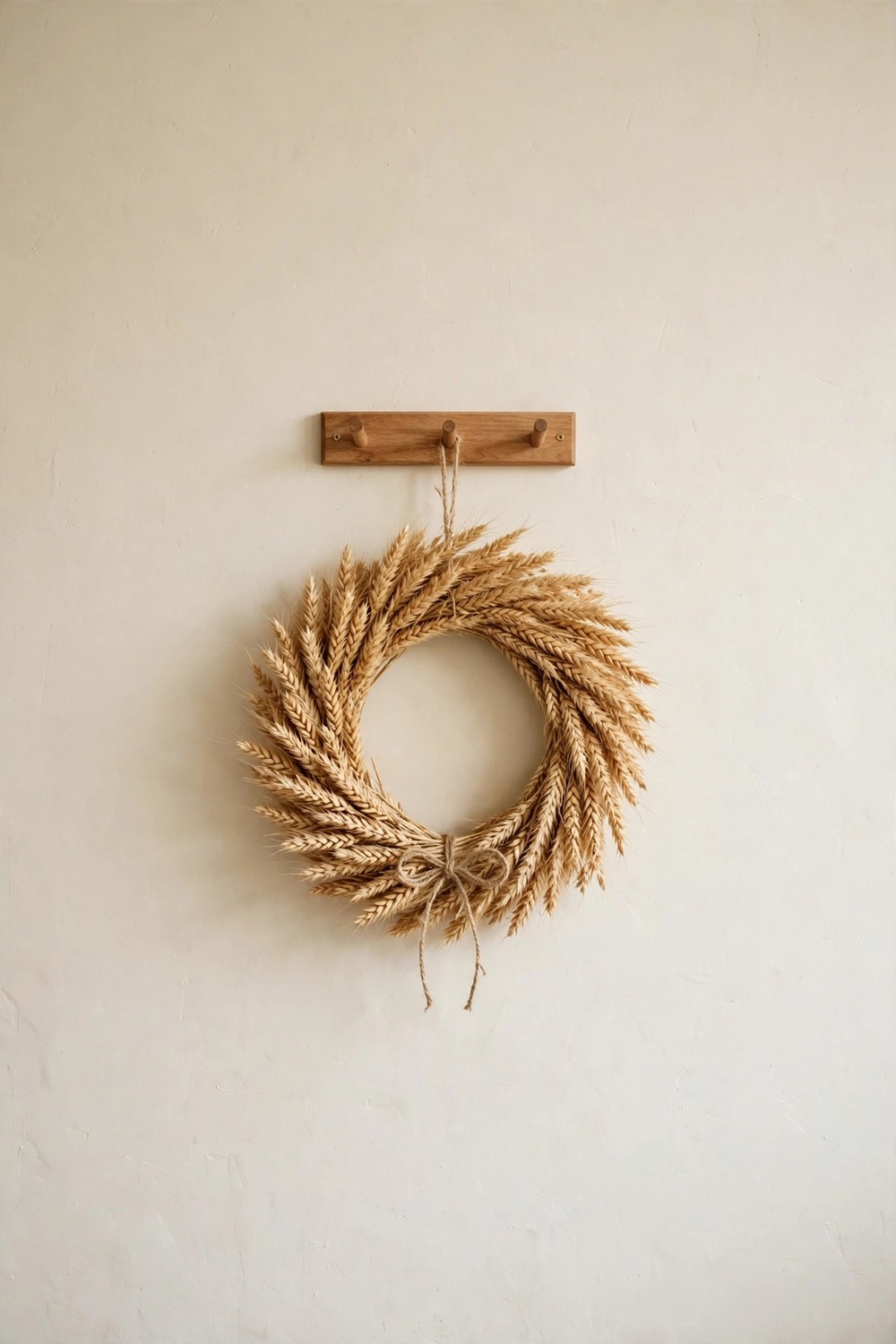
A wheat wreath on a wooden peg rail is country decorating at its simplest. Hang the wreath from one peg by the back door, and leave the other pegs for a basket or a cloth.
The wreath is finished decoration, not a work in progress. Make or buy a full, even wreath.
Thin patches show the wall through, and the shape loses its charm. Tie the stems with twine, and keep the tie at the bottom where it looks neat.
Change the wreath with the seasons if you like. A plain wheat wreath suits most of the year.
7. Vintage Tin Ceiling Tile as Wall Art
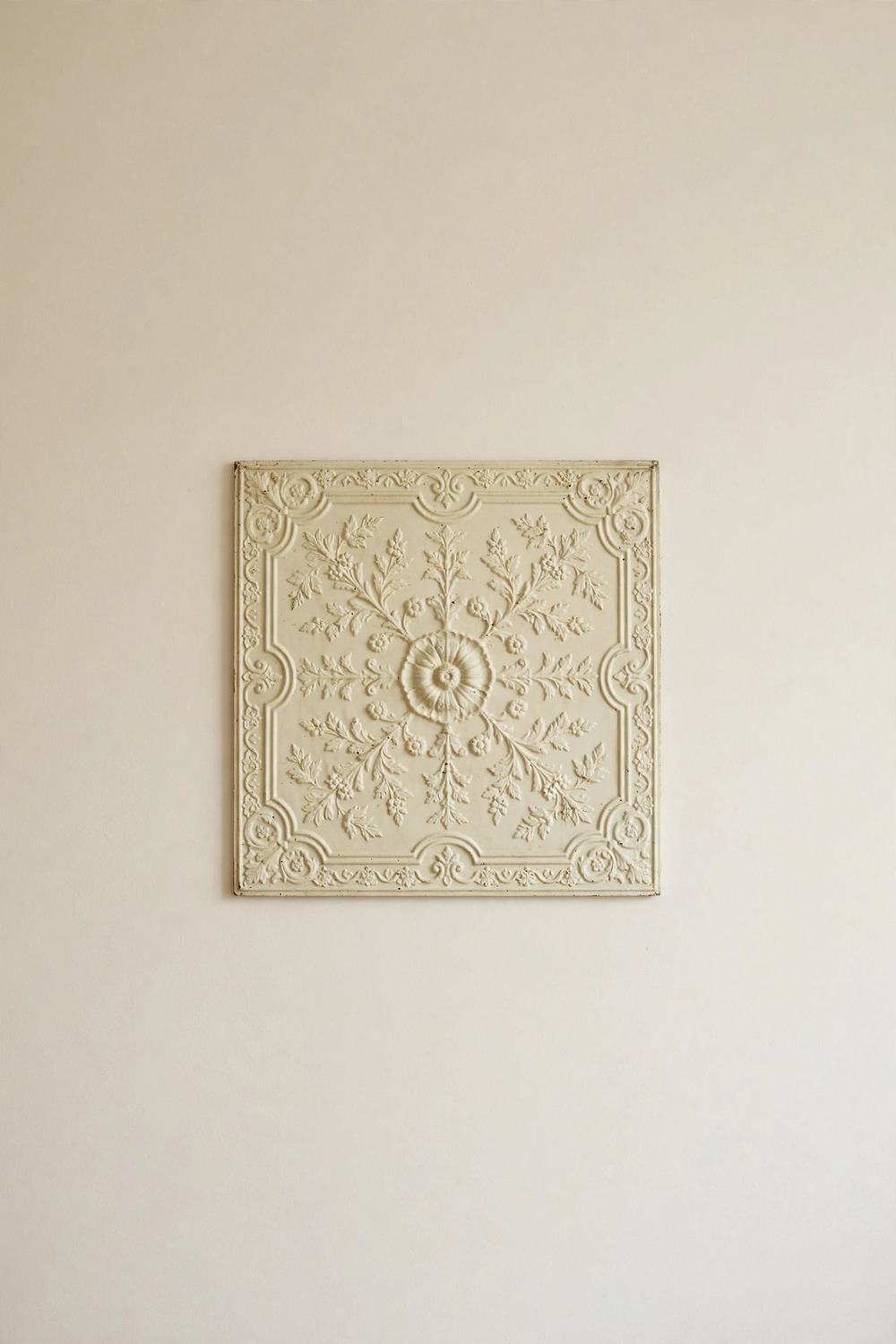
One ornate pressed tin tile, hung alone, makes a beautiful piece of wall art. Salvage yards often sell single tiles for very little.
Paint it soft cream or leave its aged finish, and hang it flat against the wall. Look for a tile with a clear raised pattern and no bent corners.
A bent corner catches the light and draws the eye for the wrong reason. A simple frame is optional, because the tile looks just as good bare.
A tile about 30 centimetres square suits a narrow wall, and two small picture hooks spread the weight evenly.
8. Wall-Mounted Wooden Egg Holder with Brown Eggs
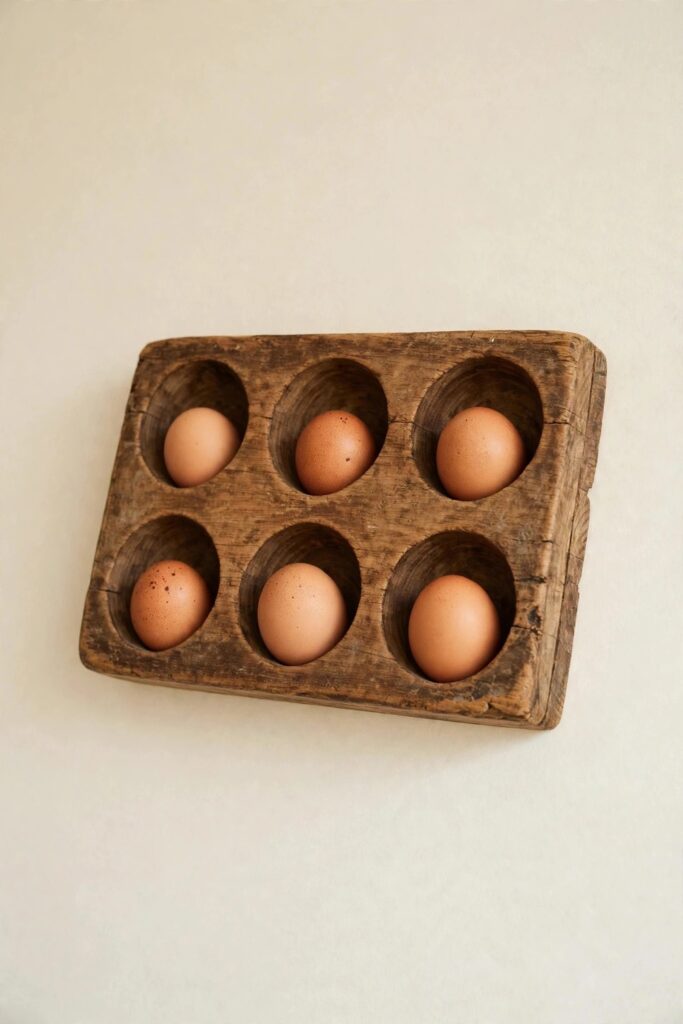
A small wooden egg holder on the wall is pure farmhouse. Fix it flat and level beside the kettle or the pantry door, and fill it with brown eggs.
The warm shells against worn wood look like a still life you can actually use. Choose a holder with deep cups that cradle each egg.
Shallow cups let eggs roll, and a broken egg on the floor ruins the charm fast. Keep the holder at arm height so you can reach the eggs while you cook.
A farmhouse kitchen should feel gathered over time, not bought in one afternoon.
9. Woven Willow Wreath with Dried Lavender
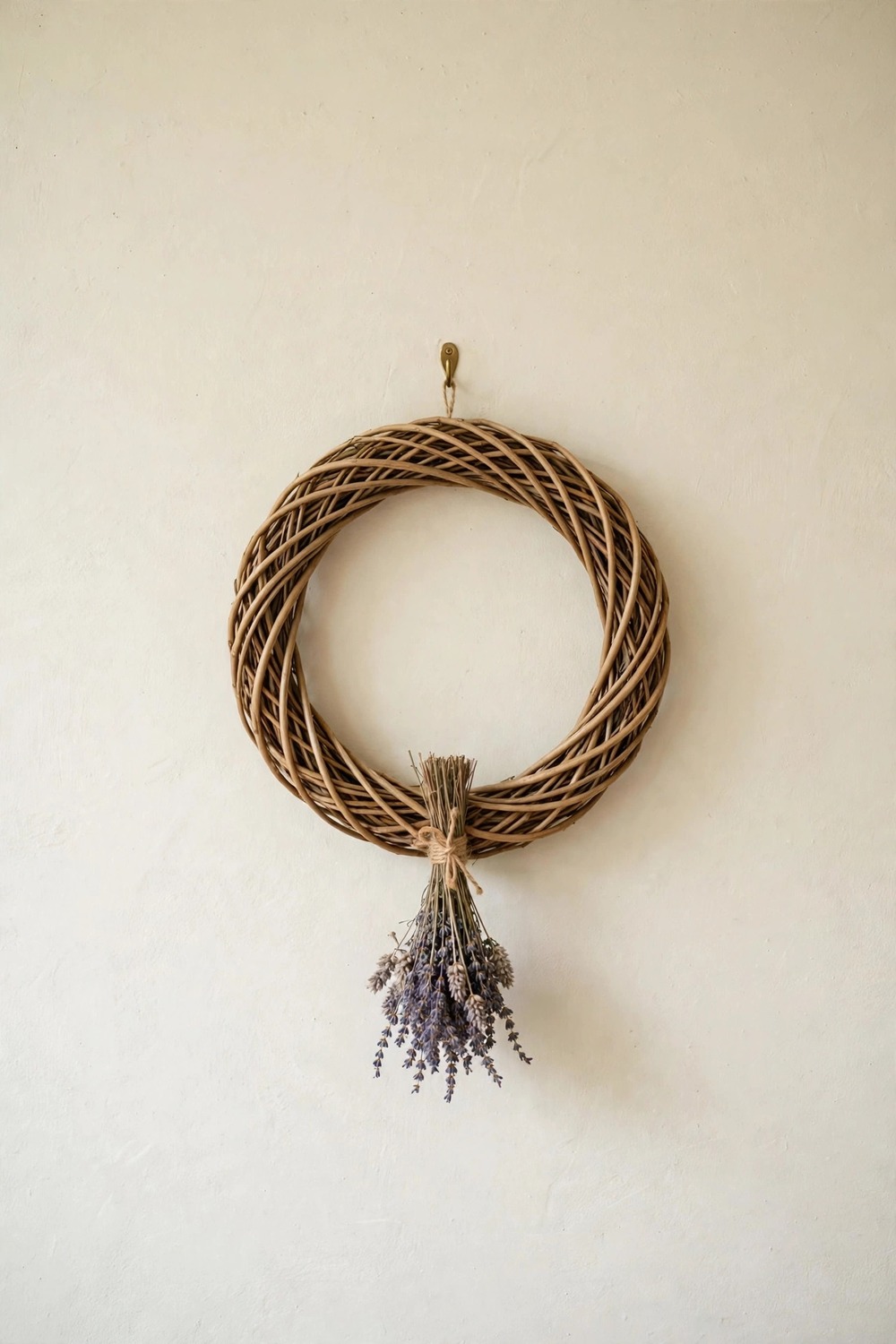
A willow wreath with dried lavender is soft colour and soft scent in one piece. Hang it on a single hook, and let the round wreath shape be the first thing you see.
The lavender sits in a small bunch at the bottom, not scattered all over. Tie it with twine, and trim the stems so they end neatly.
Loose stems poke out and spoil the round shape. Keep the bunch small, about a third of the wreath at most, so the willow still shows.
10. Antique Wooden Dough Bowl Hung as Wall Art
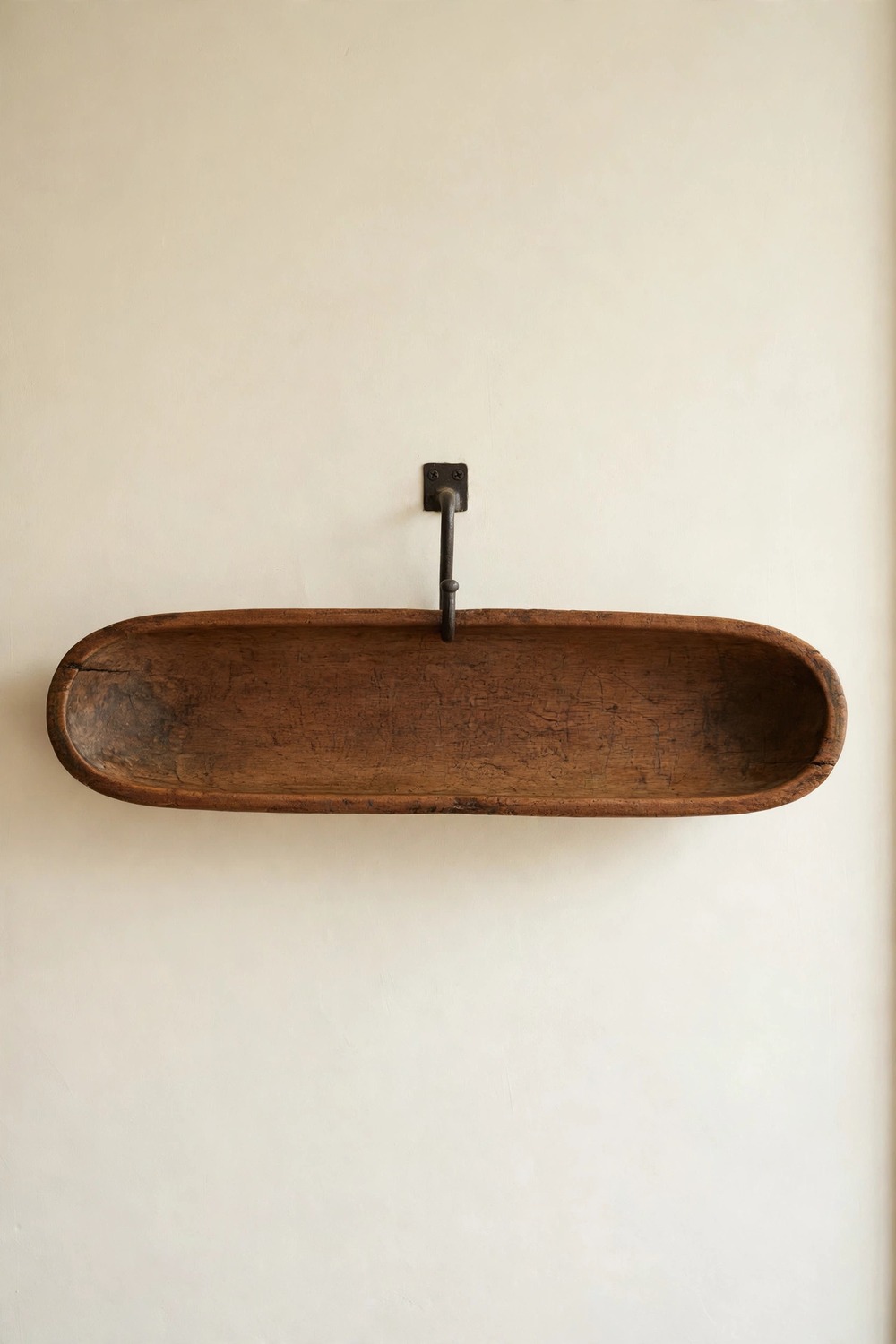
A long worn dough bowl hung flat on the wall is a striking piece. Its shape and patina are the whole point, so hang it empty.
Nothing inside it would add anything, and a full bowl hides the wood. Pick a bowl with a smooth worn inside and a solid base.
Hang it with a strong picture hook or a small wall bracket, and check it sits level. A tilted bowl looks like a mistake, not a feature.
11. Framed Cross-Stitch Sampler
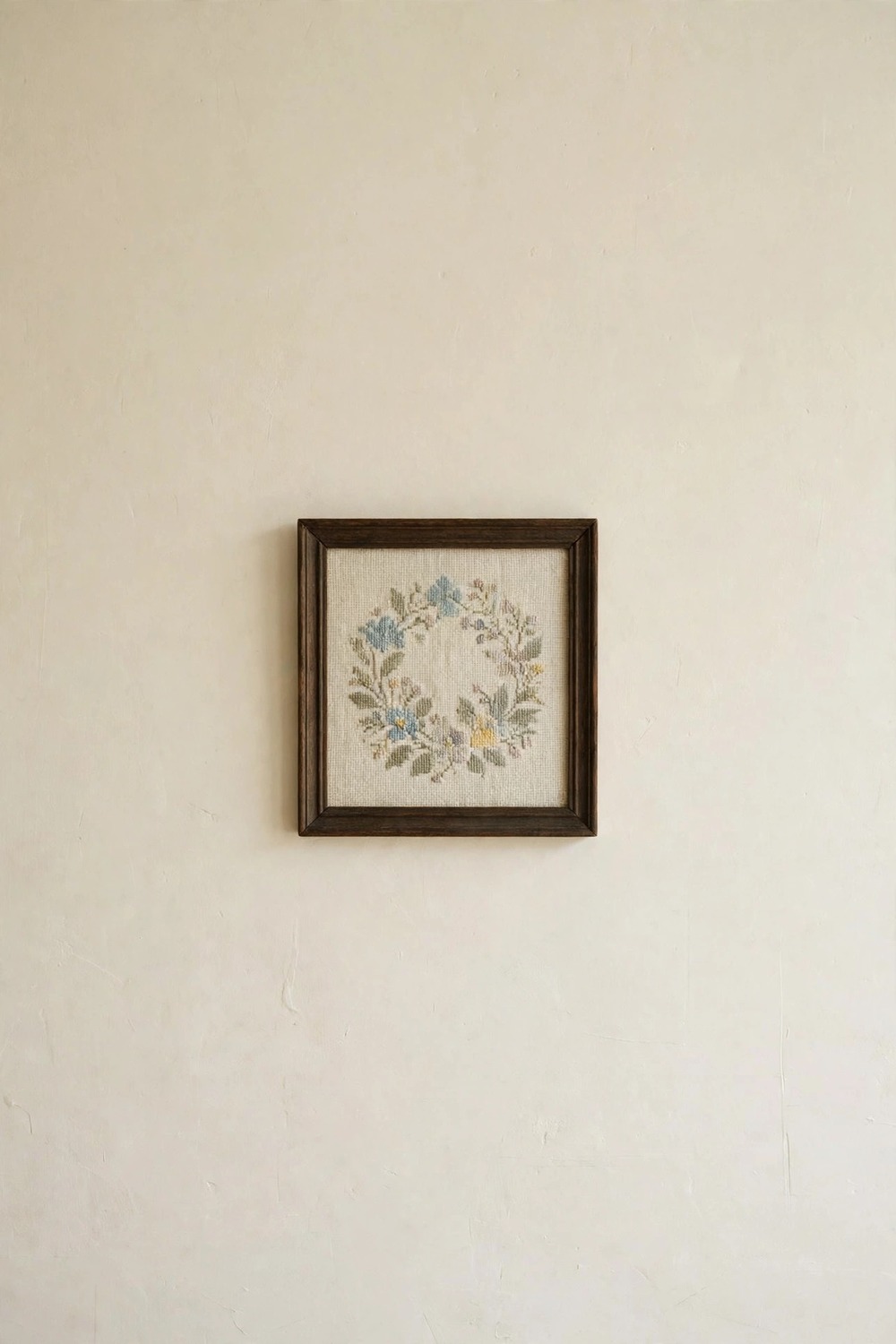
A small framed cross-stitch sampler brings handmade warmth to a narrow spot. Look for one with a simple pattern and soft faded colours.
Slightly uneven stitching is a good sign. It means a real person made it, not a machine.
Choose a plain wooden frame that matches the sampler’s age. A fancy gilt frame would fight with the humble cloth.
Hang it alone in a small gap, like the wall beside a window or a door frame. Keep it out of direct sun, which fades the threads.
Look for cotton thread on linen, because wool fades faster in a warm kitchen, and check the back for neat knots.
12. Vintage Iron Wall Hooks with Hanging Aprons
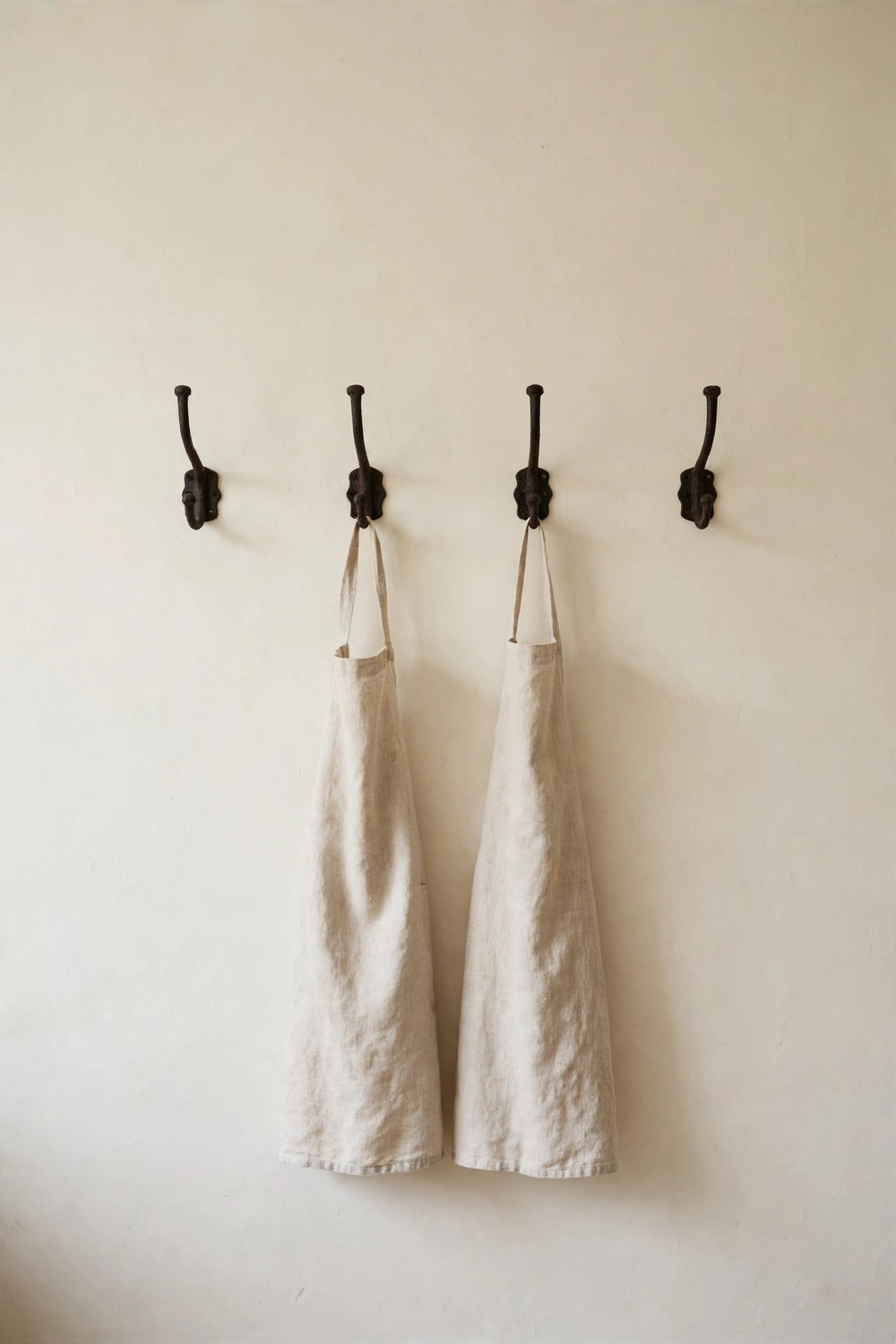
A row of old iron hooks holding two linen aprons looks like a still life you can use. Fix the hooks to the wall near the stove, and hang one apron on each of two hooks.
Leave the middle hooks empty for a cloth or a basket. Pick hooks with a dark aged finish, and fix them into a stud or a solid plug.
Aprons are light, but the hooks should still feel firm when you pull one off in a hurry. Natural linen aprons suit the look best.
13. Old Farmhouse Door as a Wall Feature
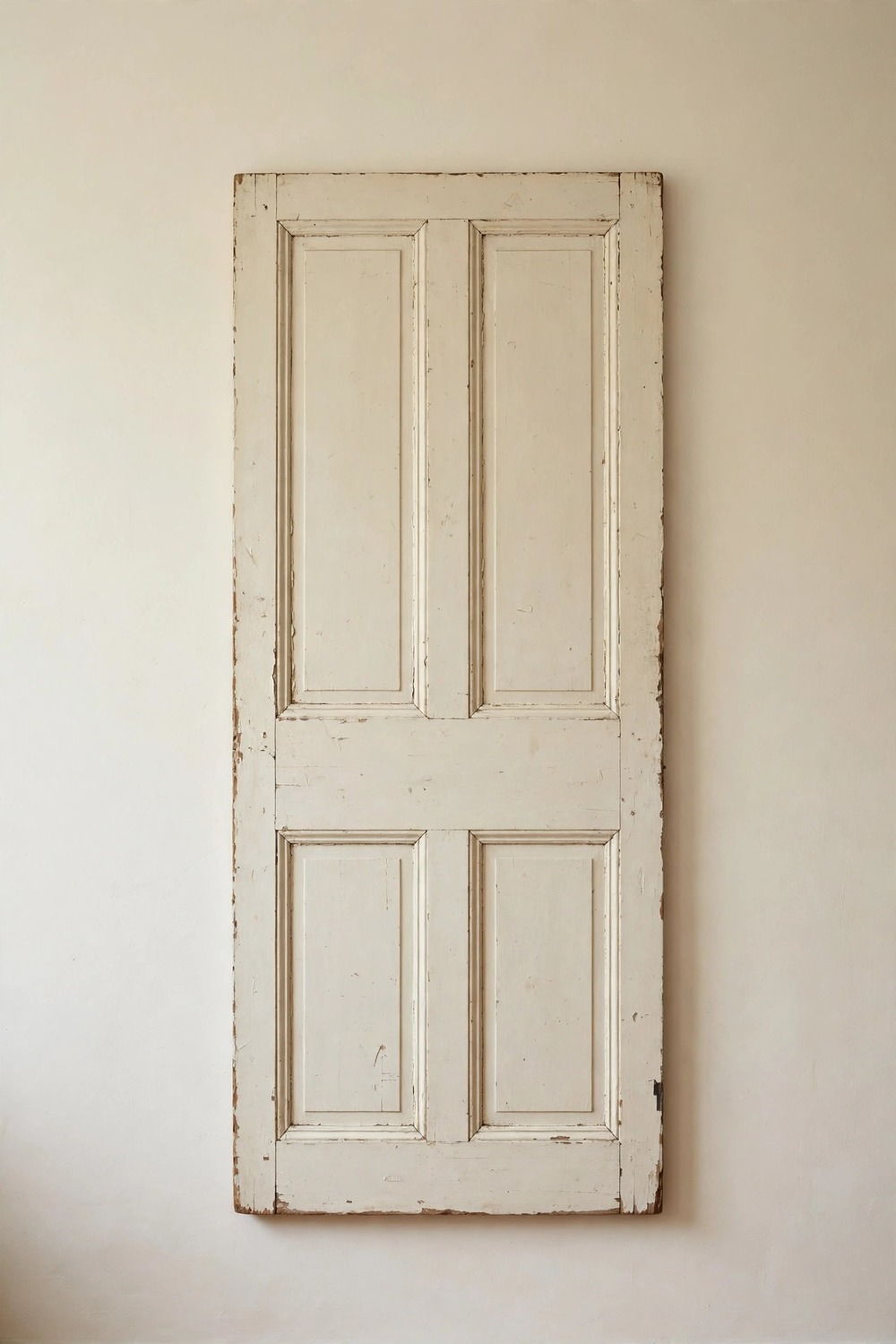
A salvaged panelled door fixed flat on a large blank wall fills space no picture can. It is bigger and plainer than a window frame, and that plain size is its charm.
Paint it soft cream, and let its panels and worn edges show. Fix it with strong brackets into studs, and check it sits flat and level.
A door is heavy, so do not trust a single picture hook. Leave at least a hand’s width of bare wall around it, so it reads as a feature and not as a door that lost its frame.
14. Framed Botanical Seed Prints in a Group
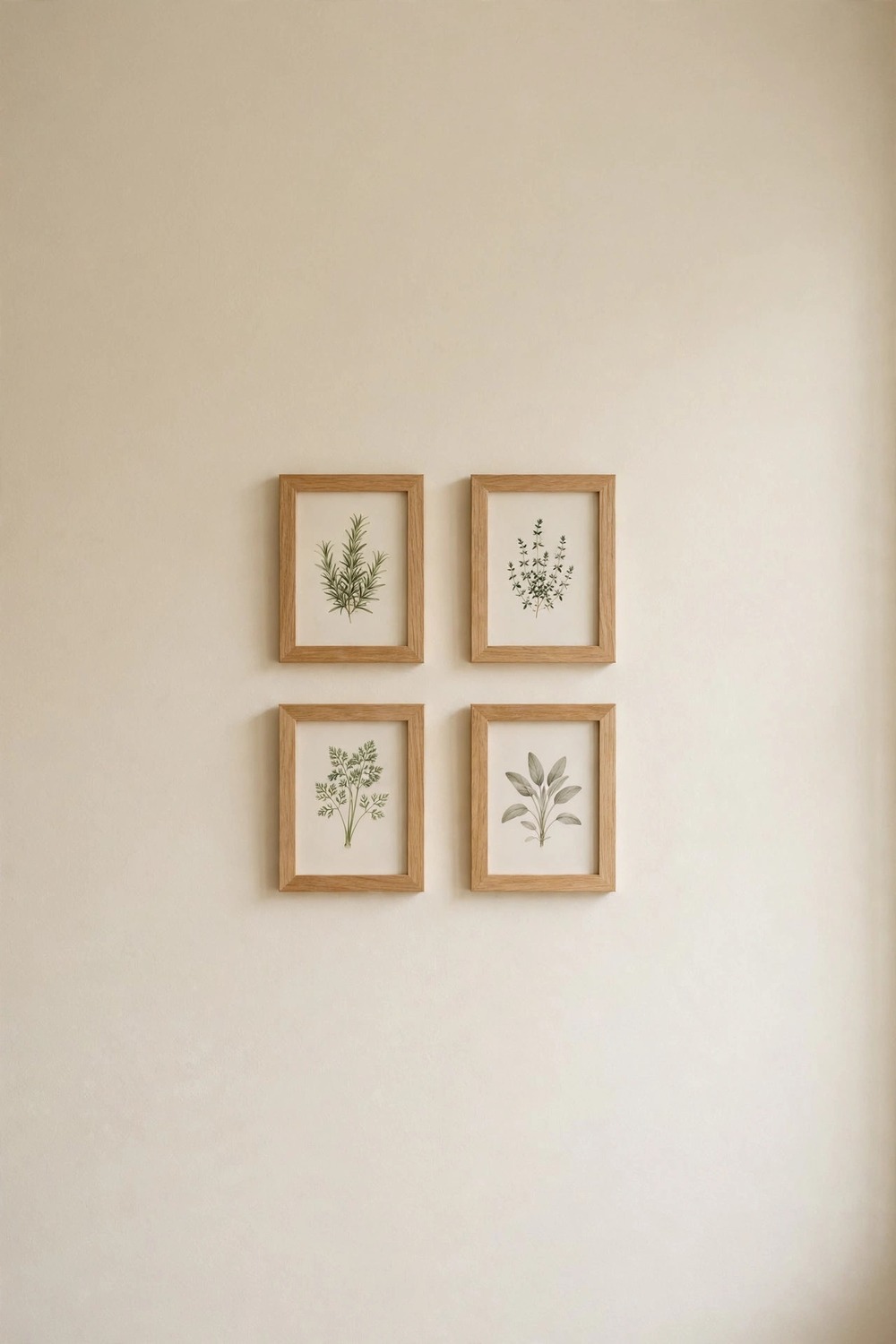
Four small framed botanical prints in a neat square make a tidy little gallery. Choose herb and vegetable prints with soft colours, and use matching frames.
The square arrangement keeps the group calm and easy to look at. Hang the four frames with even gaps, about five centimetres apart.
Measure twice before you drill. A wonky square is worse than no square at all, because the eye spots uneven gaps at once.
15. Rustic Plate Rack with Everyday Plates
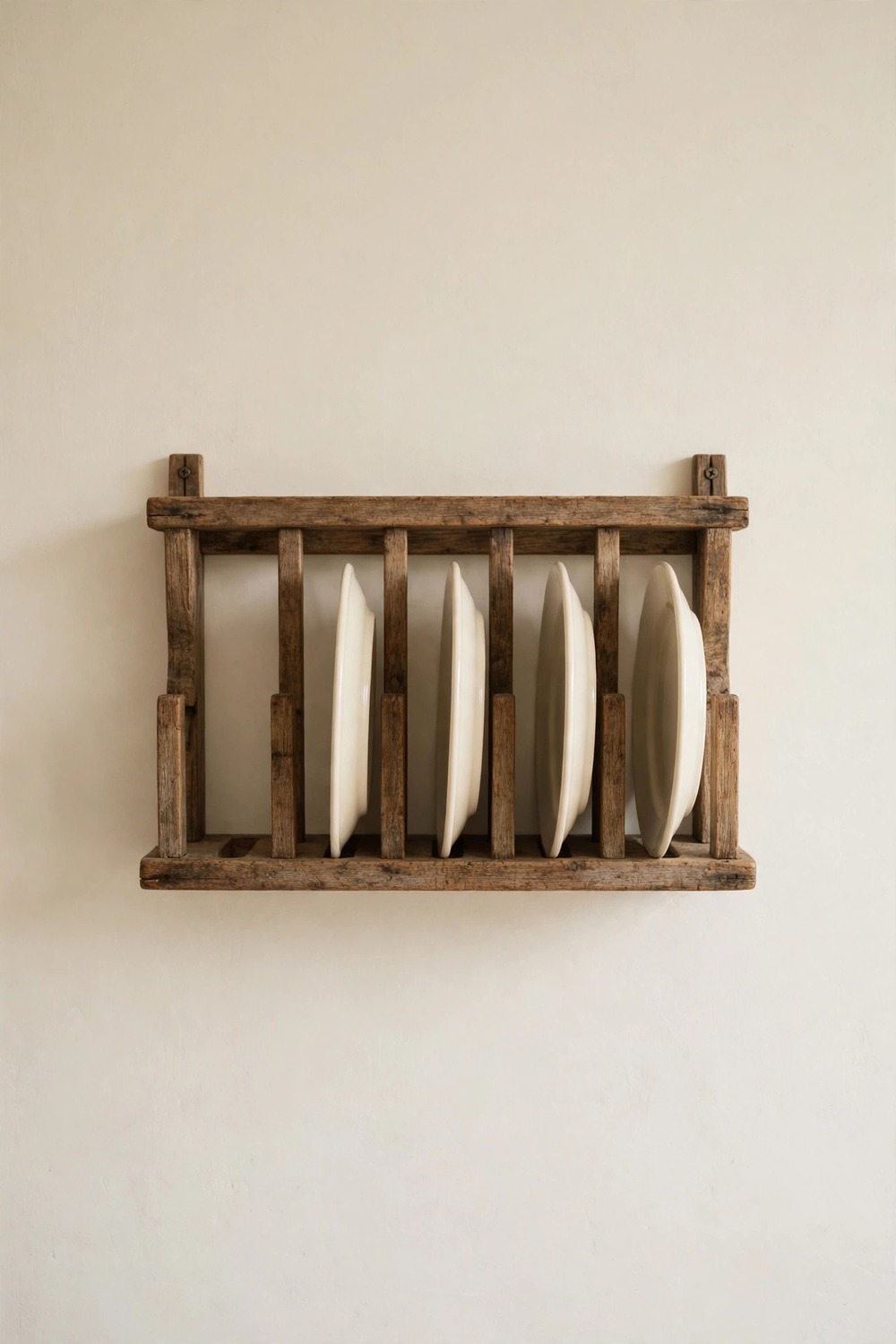
A wooden plate rack holding plain everyday plates is farmhouse storage at its best. The plates you eat from every day become the display, so nothing sits there just to be looked at.
Fix the rack where you can reach it easily. Choose plain plates in cream or soft white.
Patterned plates compete with each other, and the rack starts to look busy. Stack two or three plates in each slot, and leave one slot empty so the rack can breathe.
16. Gingham Fabric Panel in a Wooden Frame
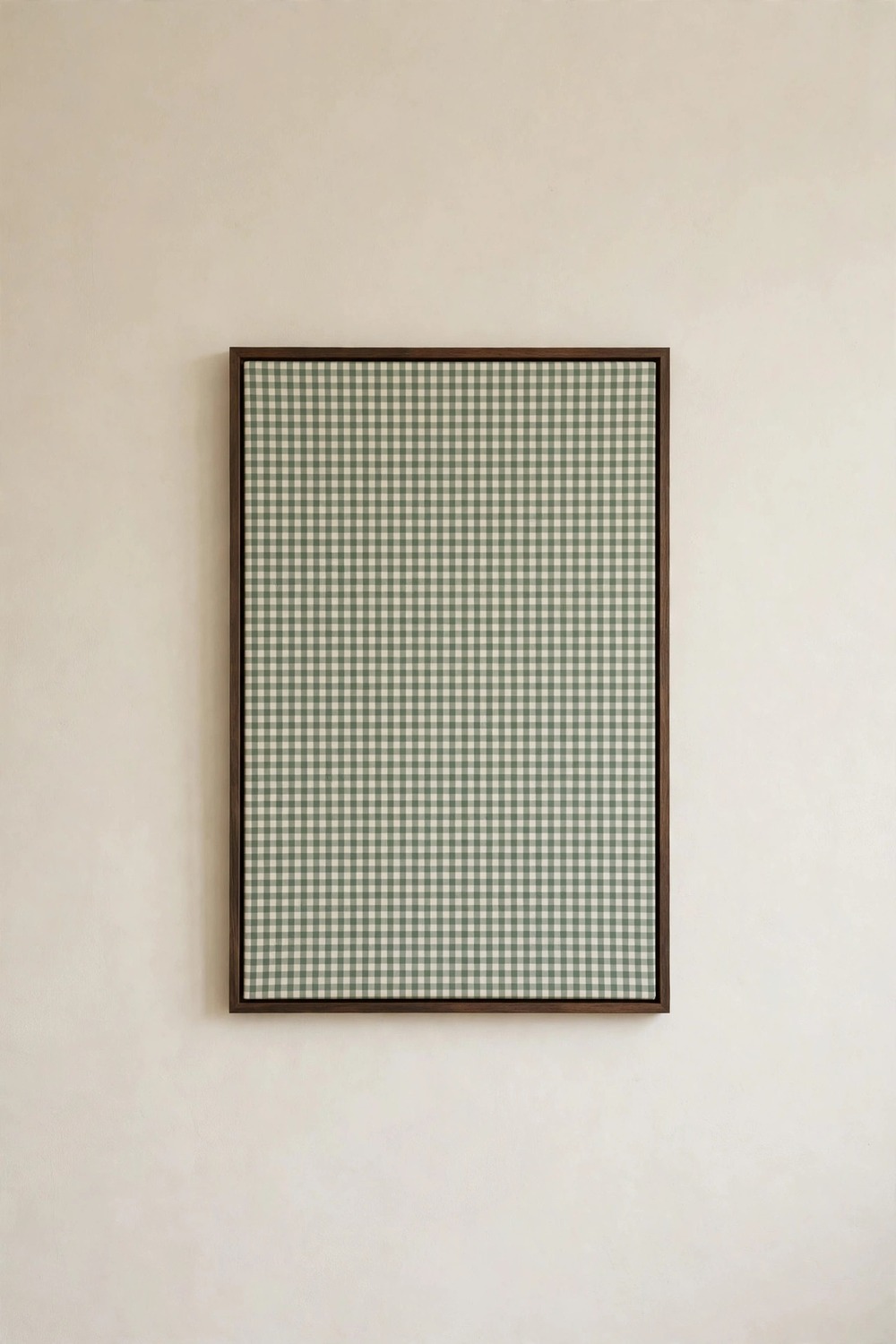
A gingham fabric panel in a simple wooden frame brings the cosy country pattern to the wall without any furniture. Pick a soft red or sage green check, and stretch the fabric smooth inside the frame.
The pattern should sit straight, with no sagging corners. Iron the fabric before framing, and pull it taut as you fix it to the backing board.
A loose panel wrinkles in kitchen steam. A plain wooden frame suits it best, and the frame should be slim so the check stays the star.
A panel about 40 centimetres wide fits a narrow wall beside the fridge, and the check reads best against plain painted wood.
17. Vintage Enamel Mug Hooks by the Kettle
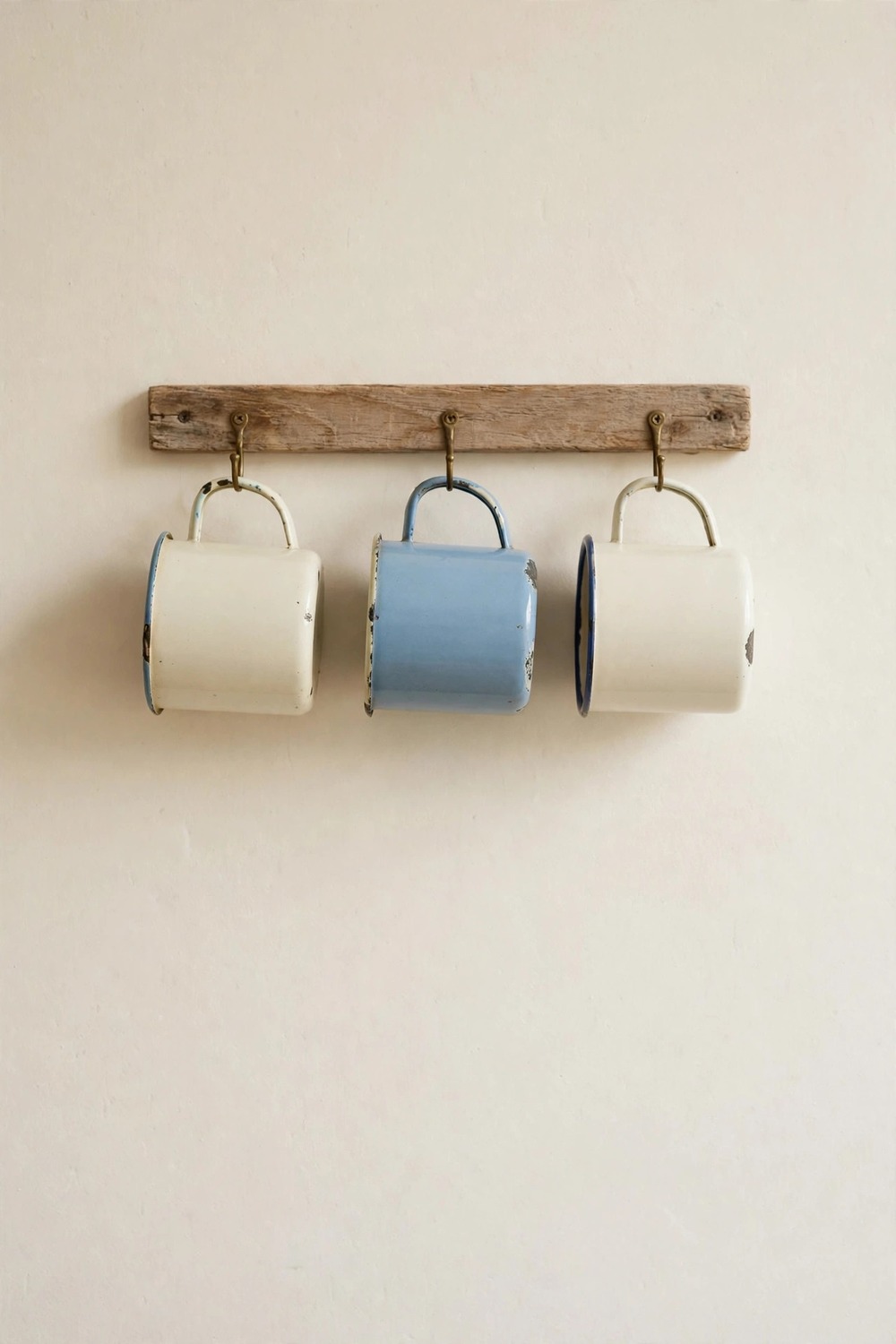
A small wooden strip with hooks holding enamel mugs beside the kettle makes a tiny farmhouse coffee corner. Three mugs are enough.
More than that, and the strip starts to look like a shop display. Fix the strip at arm height, close enough to the kettle that you can grab a mug without crossing the kitchen.
Use hooks that hold the mug by its handle, so the cup hangs straight and does not swing. Pick enamel mugs in cream or soft blue, with a little wear on the rims.