15 Minimalist Kitchen Wall Decor Ideas for a Calm and Tidy Kitchen
A busy kitchen wall can make the whole room feel noisy. Too many frames, hooks, and shelves compete for your attention every time you walk in.
Minimalist wall decor works the opposite way, giving each wall one quiet job and leaving the rest alone. The room feels calmer at once.
I started by taking things down, not adding them. One bare wall at a time, the kitchen began to feel lighter and easier to keep tidy.
These fifteen ideas follow that same rule. Each one uses a single object, a clean line, or a stretch of empty wall.

1. One Empty Black Frame as a Quiet Statement
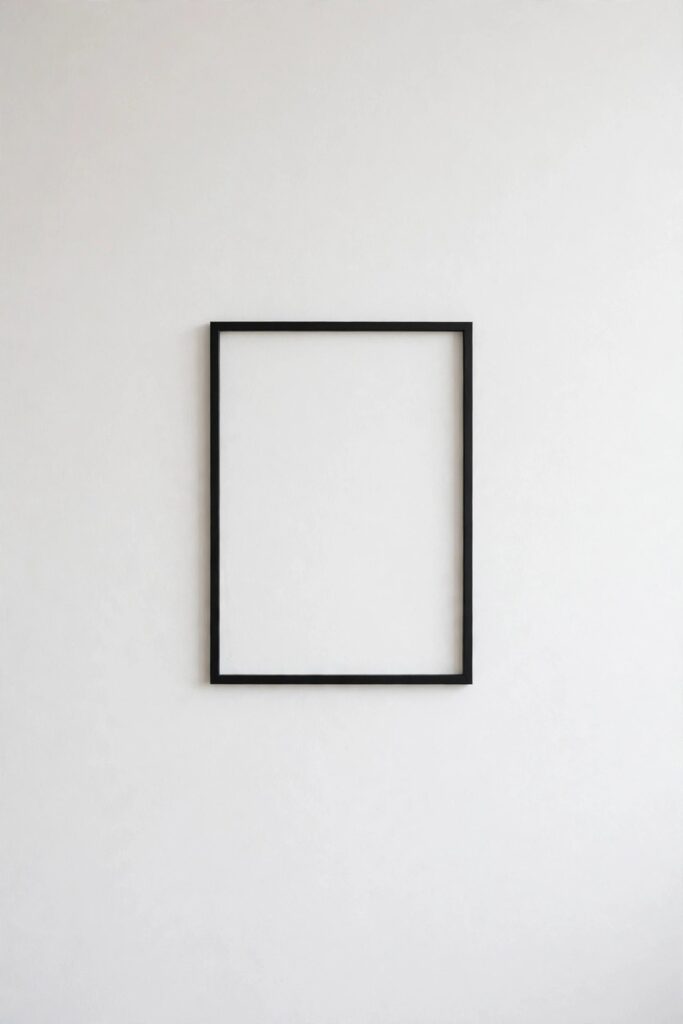
Hang one slim black frame on a plain white wall. Leave it completely empty, with no print or photo inside it.
The frame becomes a shape, not a picture. Its thin black edge draws the eye once, then lets it rest.
Choose a frame about the size of a sheet of paper. Hang it at eye level, with plenty of bare wall around it on every side.
Keep the wall around it bare for at least a foot on every side. That breathing room is what turns a plain frame into a real statement.
2. One Floating Shelf, Left Completely Empty
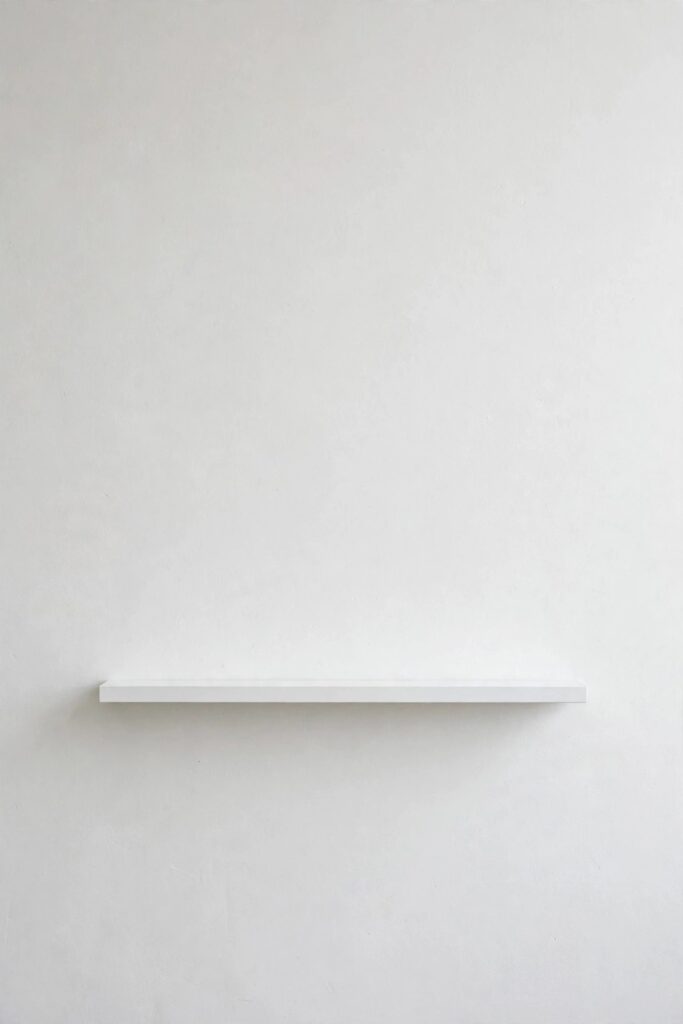
Fix one slim white floating shelf to a bare kitchen wall. Then resist the urge to fill it with jars or plants.
An empty shelf looks deliberate when the wall around it stays clear. It adds one clean horizontal line and nothing else.
Empty space is not missing decor. It is the decor.
Keep the shelf short, about the width of two dinner plates. One shelf is enough, and leave two-thirds of the wall empty around it.
Dust the shelf once a week with a dry cloth. A clean, empty shelf looks intentional, while a dusty one just looks forgotten.
3. A Single Narrow Shelf with One Small Plant
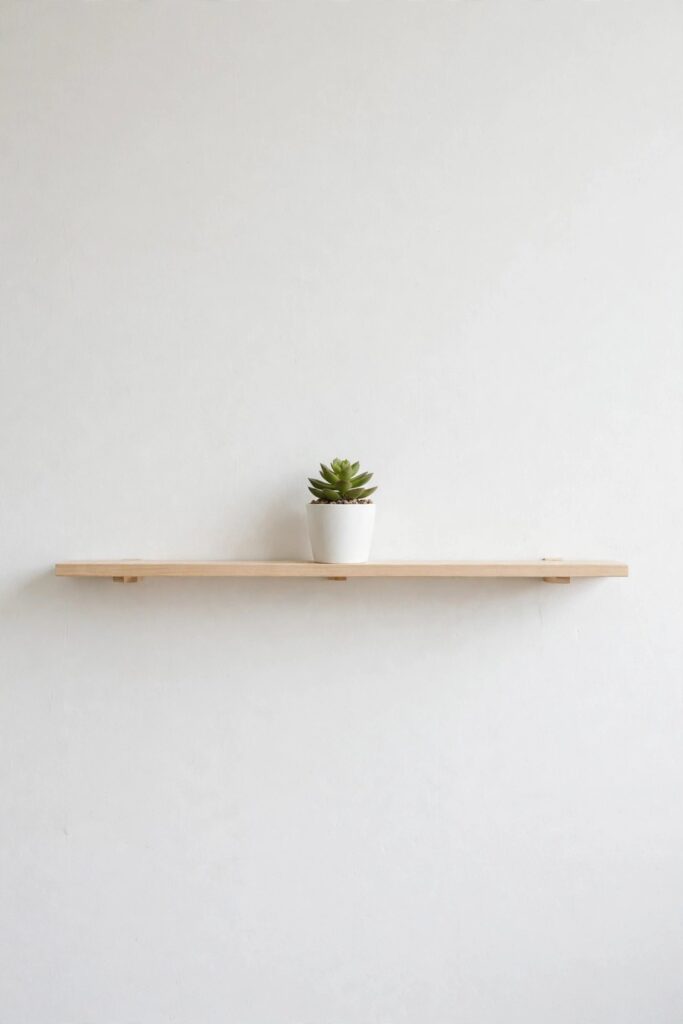
Mount one narrow wooden shelf on a white wall. Place a single small potted plant on it, right in the middle.
Choose a plant with small, neat leaves, like a tiny succulent in a plain white pot. One green shape is all the colour the wall needs.
Water it once a week and trim any long stems. A small plant stays tidy, while a large one would take over the whole wall.
Choose a pot with no pattern and no bright colour at all. The plant should be the only soft shape on the whole wall.
4. Three Slim Black Hooks with One Linen Towel
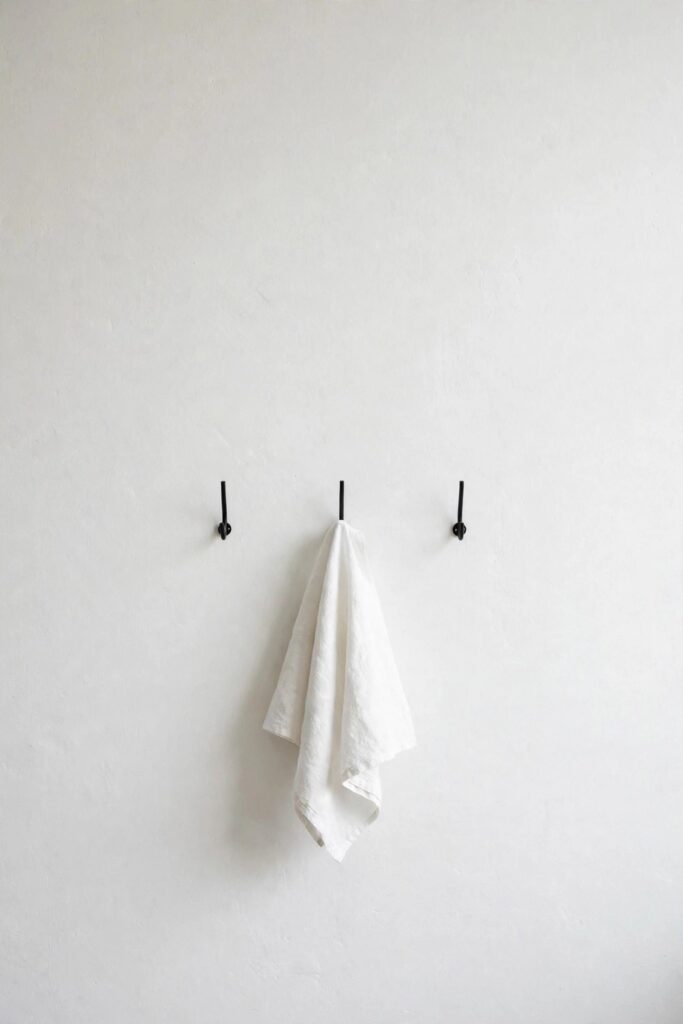
Fix three slim black hooks in a straight row on a plain wall. Hang one folded linen towel on the middle hook only.
The two empty hooks matter as much as the full one. They repeat the same thin line and keep the row feeling calm.
Pick a towel in white or soft grey, folded in half so it hangs flat. Keep the other hooks free, even when you are tempted to use them.
Wash the towel often so it stays soft and white. A fresh towel keeps the row looking neat instead of tired and grey.
5. A Single Soft Grey Circle on a White Canvas
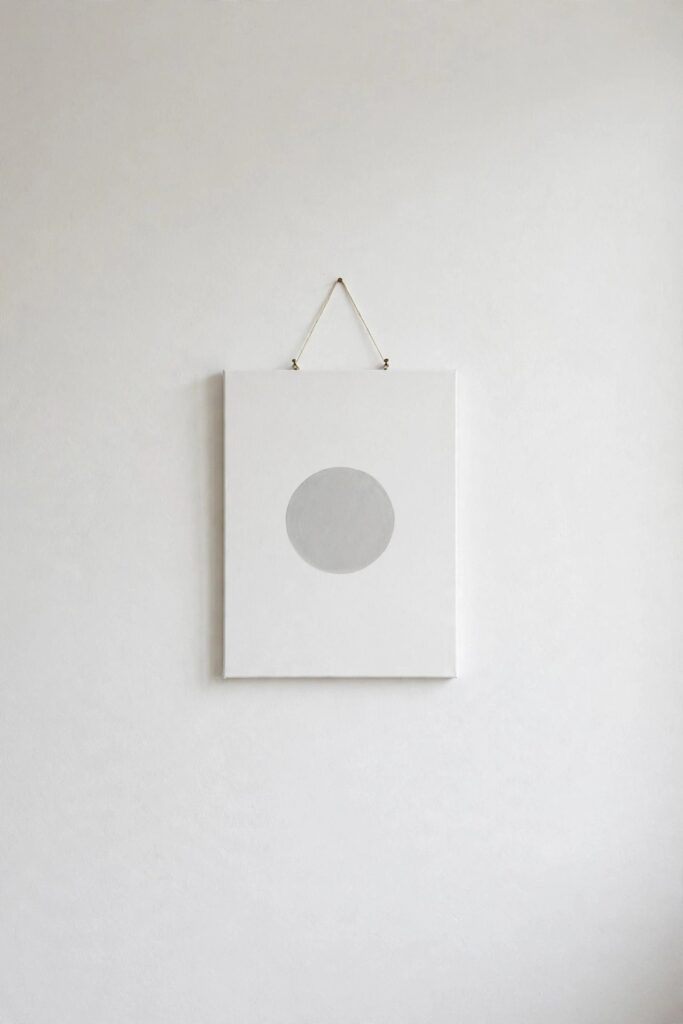
Hang one white canvas with a single soft grey circle painted in its centre. Nothing else should appear on the canvas at all.
The circle feels gentle and quiet against all that white. It gives the wall one soft shape to look at.
Choose a canvas about the size of a large tray. Hang it alone on a bare wall, with no other art nearby to compete with it.
Hang the canvas where soft morning light can reach it. Gentle daylight makes the grey circle glow without adding any colour.
6. Slim Black Metal Wall Rail with One Hanging Plant
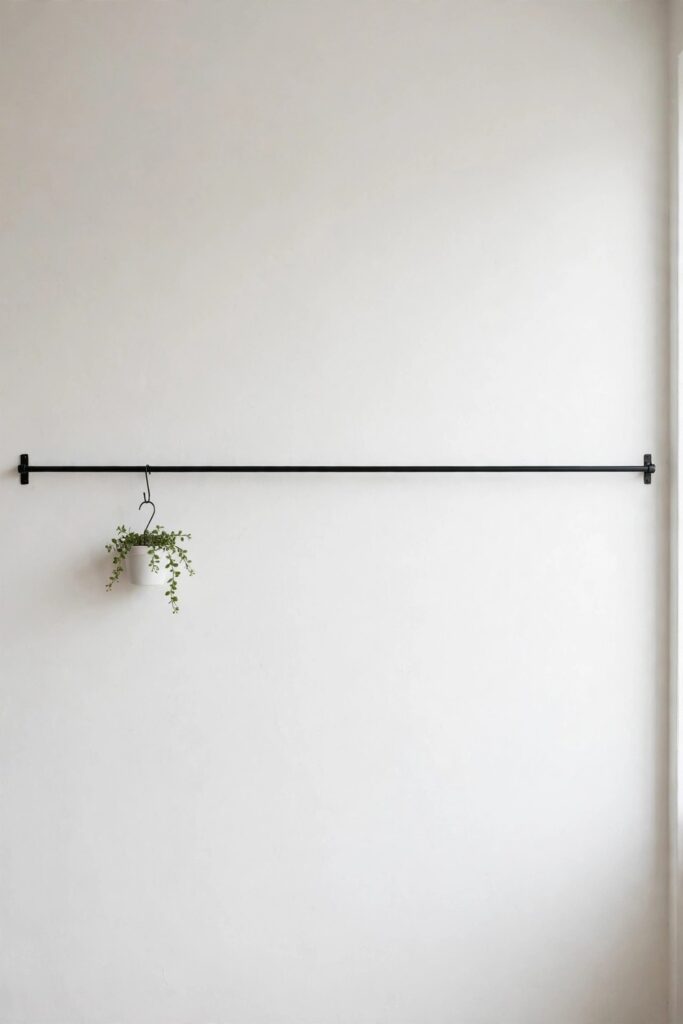
Fix one slim black metal rail across a plain white wall. Hang a single small plant from it in a plain pot.
The rail adds one thin dark line, and the plant hangs below it in soft green. Together they make one quiet vertical shape.
Hang the plant near one end of the rail, not in the centre. The uneven spacing makes the rail feel calm and unforced.
Water the plant over the sink, then hang it back on its hook. That way no drips ever mark the clean white wall below it.
7. One Slim Vertical Mirror on a Bare Wall
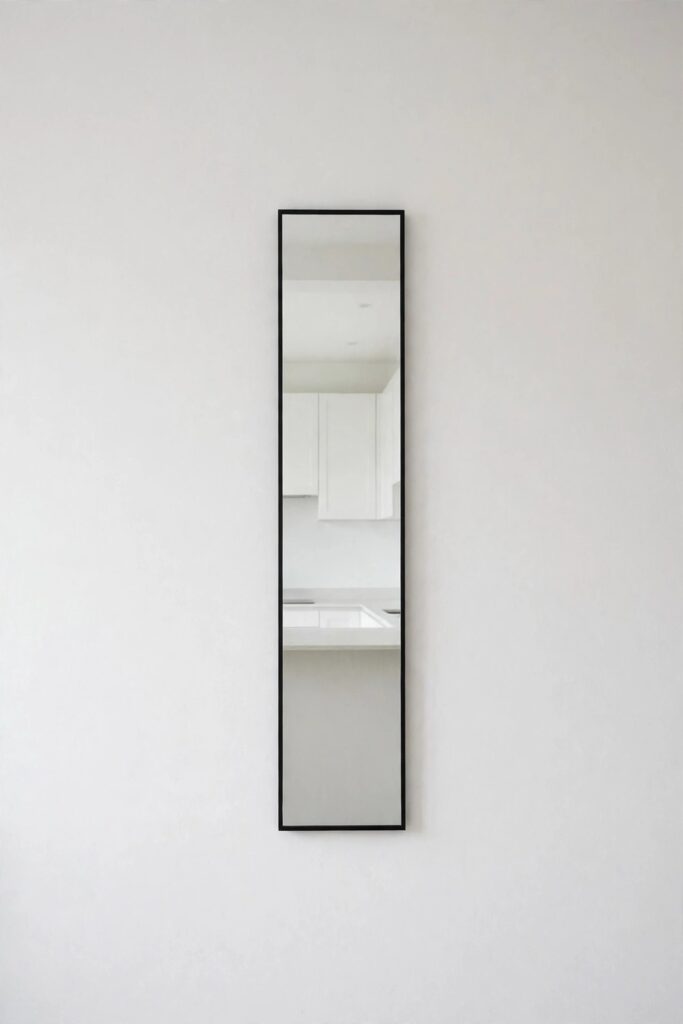
Hang one slim vertical mirror on a bare white wall. Choose a plain frame in black or pale wood, with no extra detail.
The mirror reflects light and makes a small kitchen feel wider. Its tall, narrow shape suits a wall beside a door or a counter.
Hang it at eye level, so you see the room reflected, not the ceiling. Wipe it once a week to keep the glass clear.
Keep the wall beside the mirror free of hooks and frames. The clear space lets the mirror do its quiet work undisturbed.
8. A Single Row of Plain White Tiles
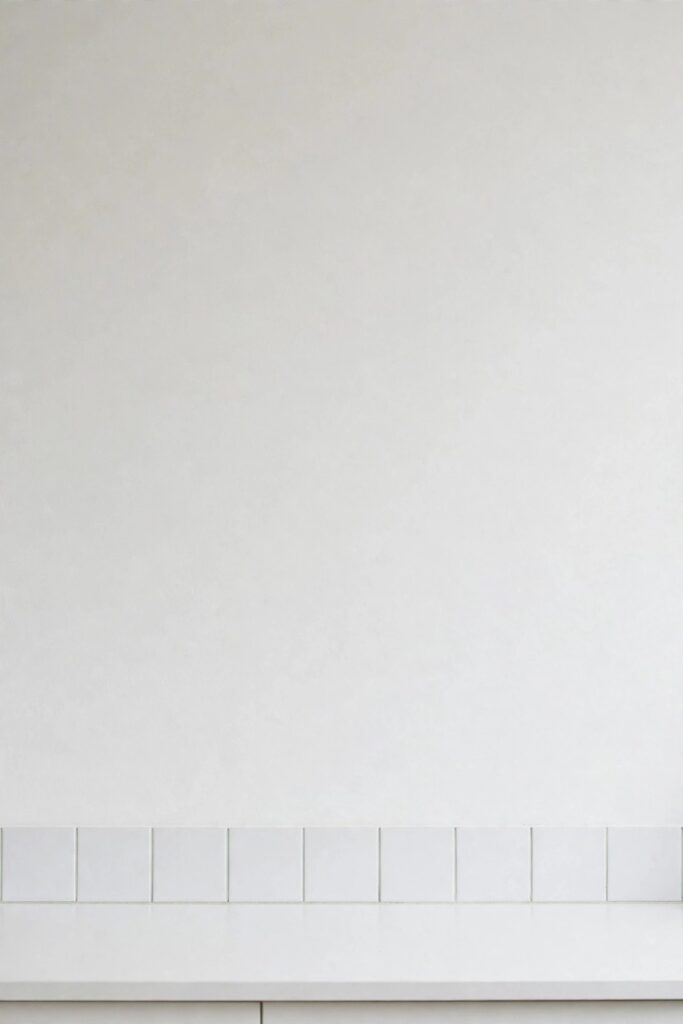
Fix one single row of plain white tiles across a kitchen wall. Use simple square tiles with thin, pale grout lines.
The row reads as one clean stripe, not a busy pattern. It protects the wall behind a counter without covering it in colour.
Keep the row to one tile high and stop it well short of the corners. The bare wall above and below it is part of the look.
Wipe the tiles with a damp cloth once a week. Plain white grout stays bright when it never gets a chance to dull.
9. A Single White Bowl on a Slim Wall Bracket
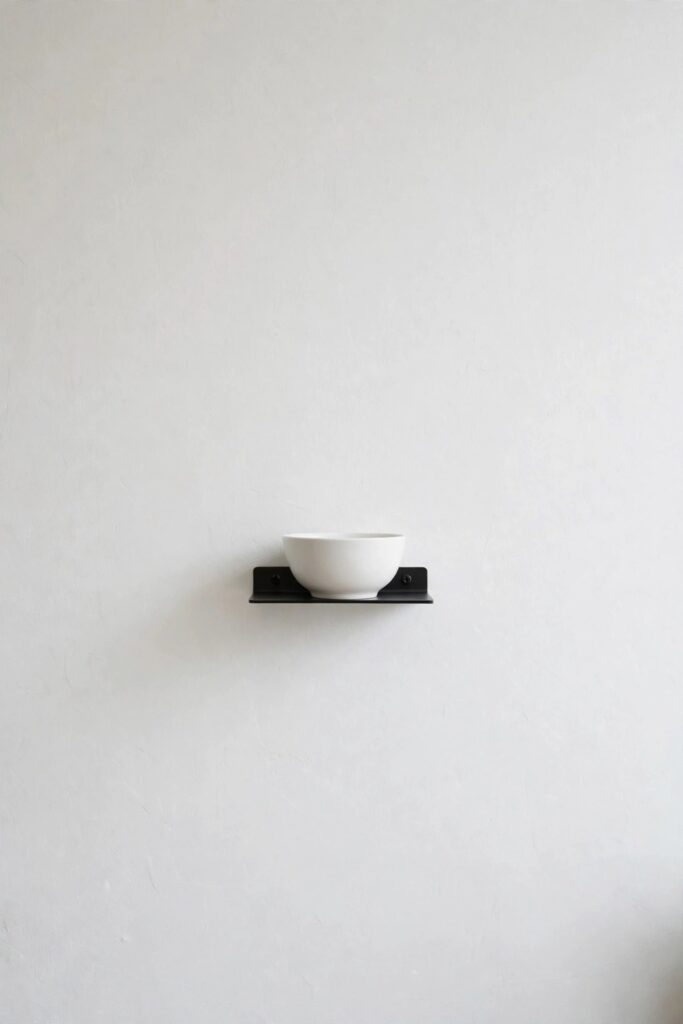
Fix one slim black wall bracket to a plain white wall. Set a single plain white bowl on it, centred and alone.
The bowl becomes a small sculpture when nothing else shares the bracket. Its smooth curve stands out against the flat wall.
Choose a bowl with a simple round shape and no pattern. Dust it once a week, since a white bowl shows every mark.
Pick a bowl you already love, not one bought just for display. A familiar shape feels honest sitting on an open bracket.
10. One Print Hung from a Wooden Dowel
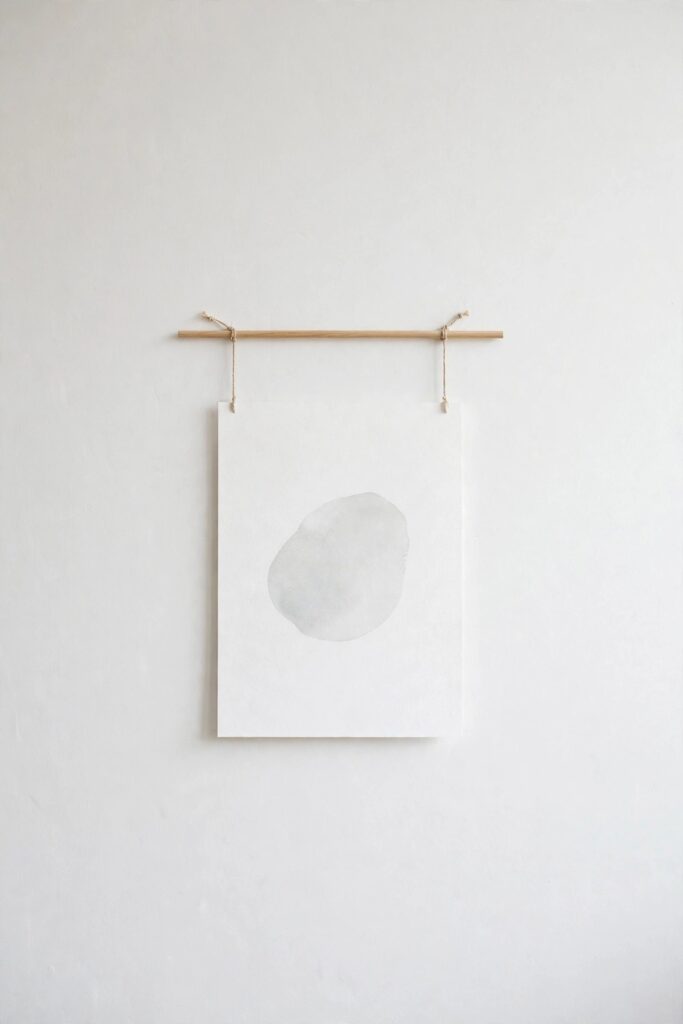
Hang one plain print from a slim wooden dowel, using two short cords tied to each end. Let the print hang flat and straight.
The dowel adds a warm wooden line at the top, while the print below stays simple. No frame is needed at all.
Pick a print with one soft shape or a few pale lines. Keep the cords short, so the print sits close to the dowel.
Straighten the print each time you walk past it. A print that hangs level looks calm, while a tilted one draws the eye.
11. Three Identical Small Frames in One Straight Line
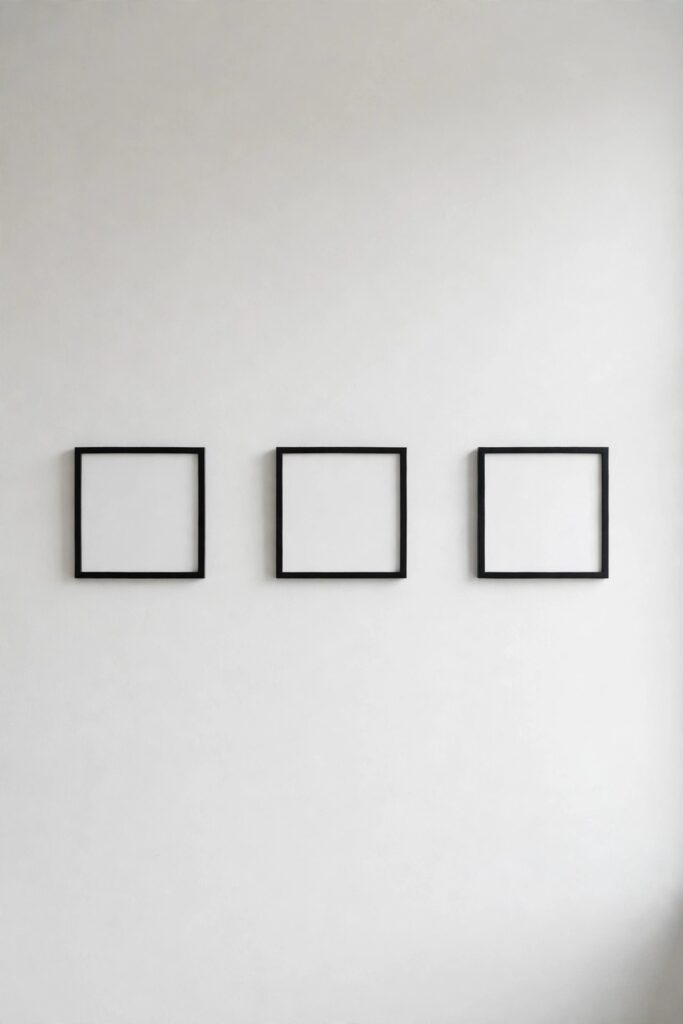
Hang three identical small frames in one straight horizontal line. Use the same frame, the same size, and the same spacing between each one.
The repetition feels calm because nothing changes from frame to frame. Three matching shapes read as one quiet row.
Space them evenly, about a hand width apart, and use a level to keep the line straight. Simple matching prints work best inside them.
Step back after hanging the third frame and check the line. Small shifts are easy to miss up close but clear from the doorway.
12. A Numberless Black Clock on a White Wall
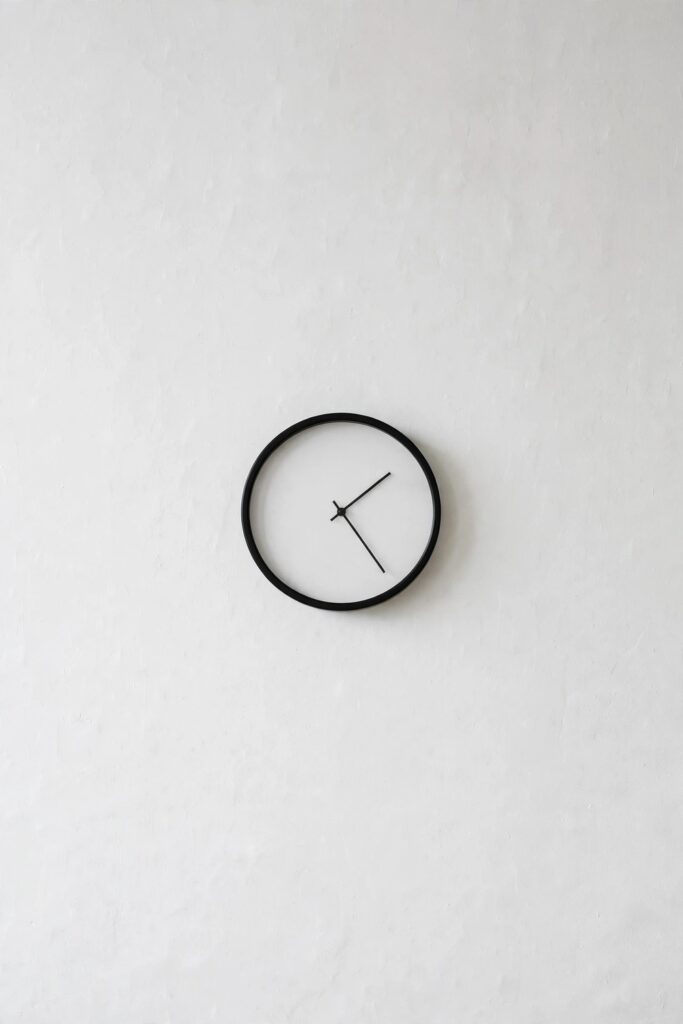
Hang one round black clock with no numbers on its face. Two slim hands are all it needs to tell the time.
The plain face keeps the wall quiet, while the round shape softens all the straight lines around it. It is useful and calm at once.
Choose a clock about the size of a dinner plate. Hang it alone on a bare wall, well away from shelves or frames.
Change the battery the moment the hands stop moving. A silent, still clock looks like decor, not like a clock that gave up.
13. One Small Stack of Books on a Slim Black Shelf
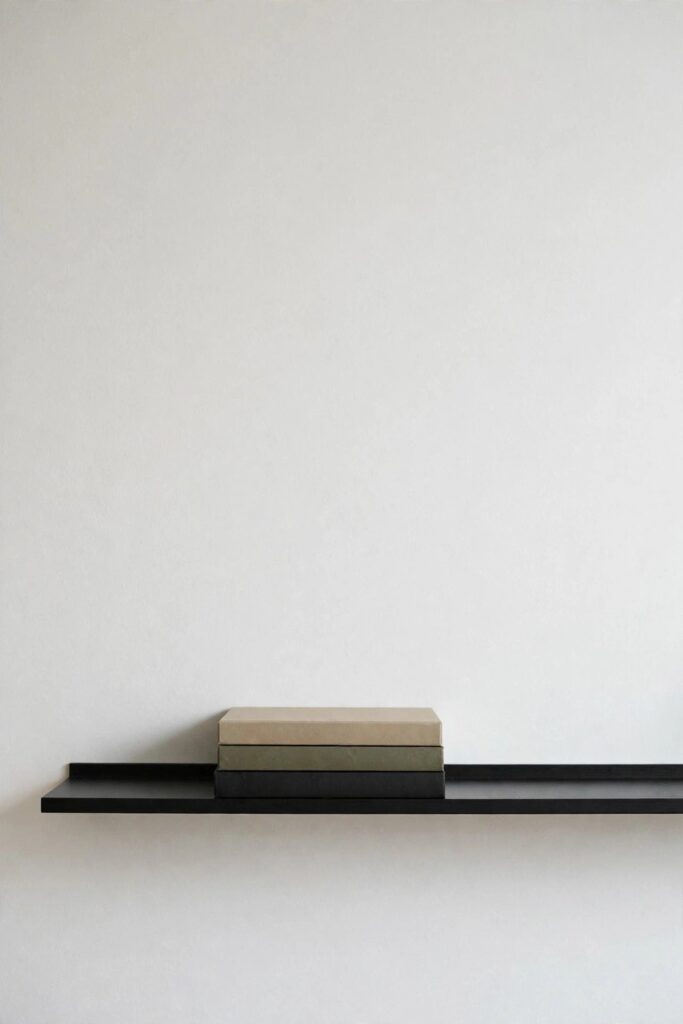
Fix one slim black shelf to a plain white wall. Stack three cookbooks flat on it, one on top of the other.
The small stack adds a little height and colour without filling the shelf. Keep the books neat, with their spines facing the same way.
Choose books with plain covers in soft, muted colours. Leave the rest of the shelf empty, so the stack stays the only object there.
Keep the spines facing out and the edges neatly lined up. A tidy stack reads as decor, while a messy one reads as storage.
14. One Dried Stem in a Slim Wall-Mounted Glass Tube
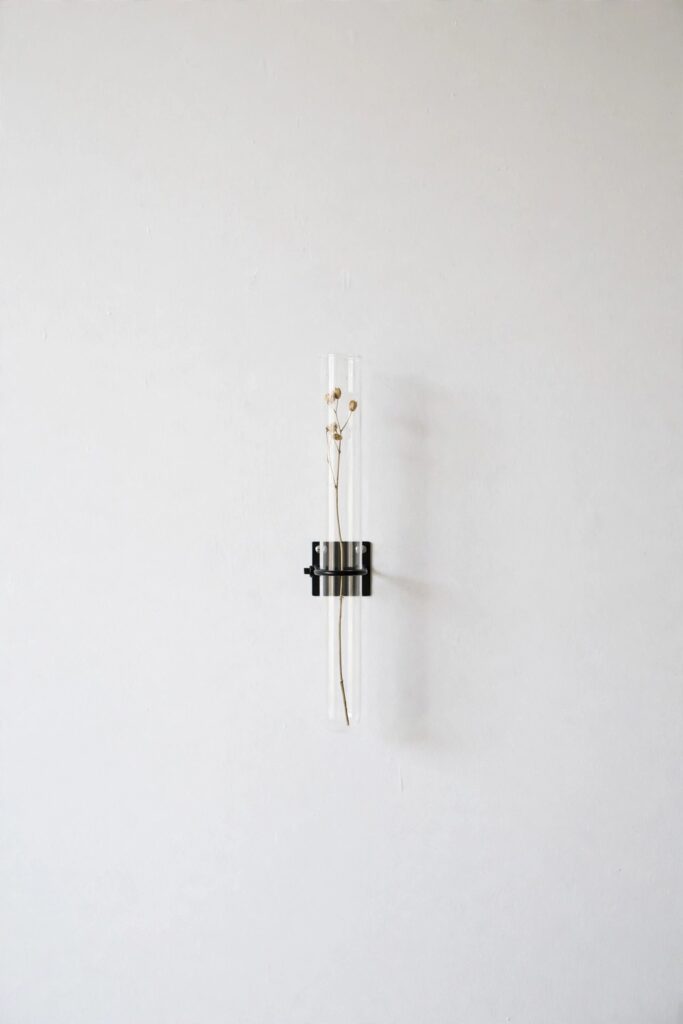
Fix one slim glass tube to a plain white wall with a small metal bracket. Place a single dried stem inside it, standing upright.
The clear glass almost disappears, so the stem looks like it floats against the wall. One thin stem is all the detail needed.
Pick a stem with a few small seed heads or leaves. Keep it dry, and replace it only when it starts to look dusty or faded.
Keep the tube out of direct sunlight so the stem fades slowly. A pale, dry stem suits a white wall better than a bright one.
15. A Mostly Empty White Pegboard
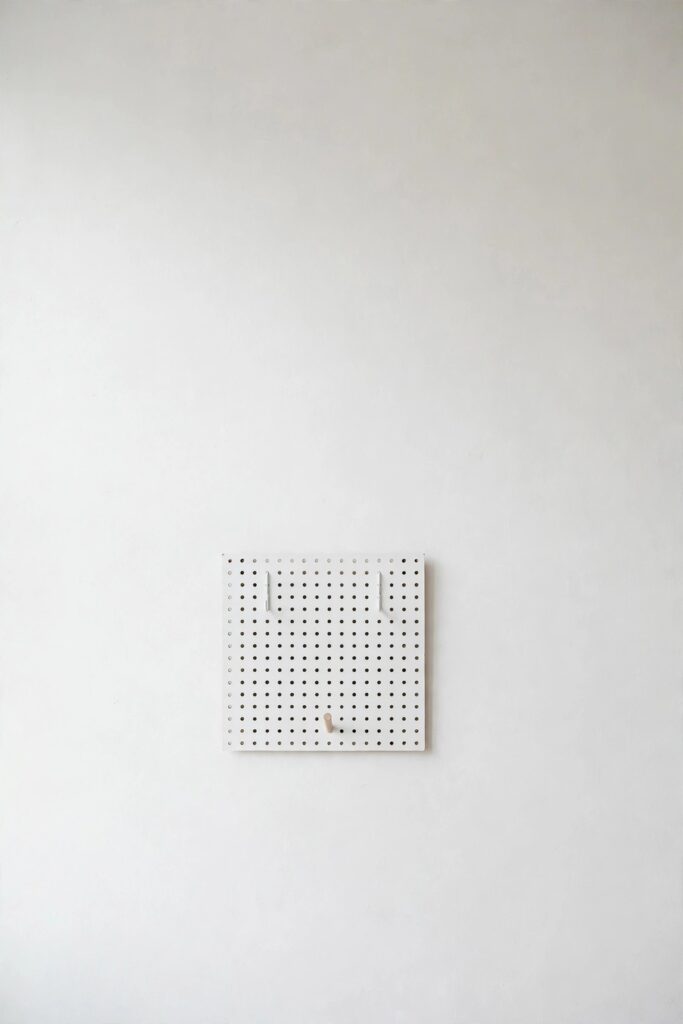
Fix one small white pegboard to a plain kitchen wall. Hang just two or three plain items on it, and leave most of the holes empty.
The empty holes form a quiet grid that needs no filling. One object per wall is enough, and a mostly empty board proves it.
Choose pale wooden pegs and simple white hooks. Step back often, and take something down if the board starts to feel full.
Move the pegs only when you truly need a new spot. A board that rarely changes stays calm instead of becoming a project.