Dairy-Free Lavender Honey Cake That Still Tastes Indulgent
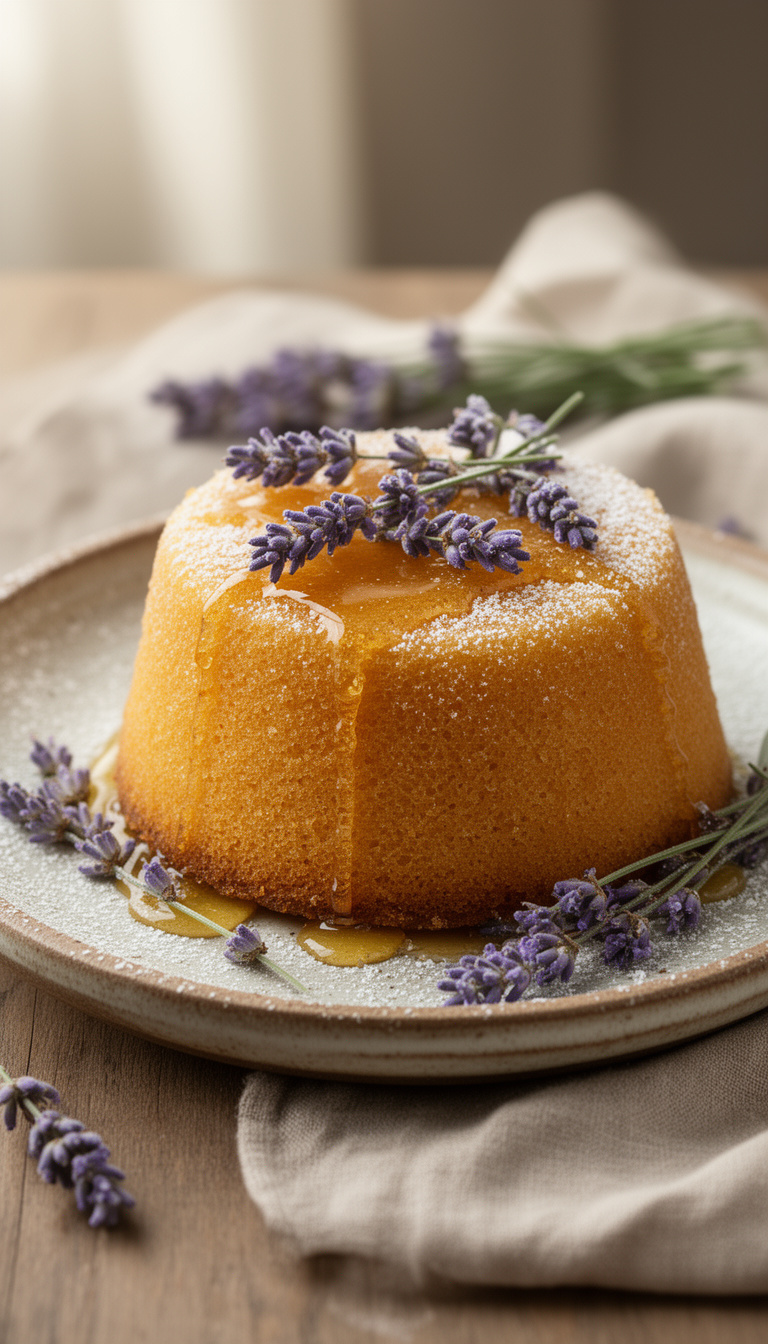
Lavender and honey belong together in a cake — floral, warm, and just sweet enough to feel like a treat worth sitting down for. Skipping dairy doesn’t mean skipping richness, and this cake proves it with every bite.
Coconut oil and oat milk do the heavy lifting here, keeping the crumb tender and moist without any butter or cream. You’d never guess it was dairy-free unless someone told you.
It’s a great option for guests with dietary restrictions, weekend baking, or any time you want something a little more interesting than vanilla.
Getting Lavender Right So It Doesn’t Taste Like Soap
Culinary lavender is the only kind you should use here — not dried lavender from a craft store or potpourri blend. The difference matters because non-culinary varieties can taste bitter or medicinal.
Infusing the honey with lavender before it goes into the batter is the key step. Warm the honey gently with the dried buds, let it steep for 10 minutes, then strain it. You get a clean floral flavor that spreads evenly through the cake instead of hitting you in random bites. Don’t skip the straining — loose buds in the batter turn chewy and unpleasant.
Top Picks Today
Choosing Your Dairy-Free Milk and Fat
Oat milk works best in this recipe because its mild flavor doesn’t compete with the lavender and honey. Almond milk is a fine substitute, but avoid canned coconut milk — it makes the cake too dense and the coconut flavor takes over.
For fat, refined coconut oil is the right call. Unrefined coconut oil carries a strong coconut scent that clashes with the floral notes. Refined coconut oil is neutral and keeps the texture soft. Measure it melted, not solid, so it incorporates evenly into the batter.
Dairy-Free Lavender Honey Cake That Still Tastes Indulgent
Lavender Honey
Dry Ingredients
Wet Ingredients
Glaze
- 🔪9-inch round cake pan
- 🥣Small saucepan
- ⚡Fine mesh strainer
- 🍳Two large mixing bowls
- 🥄Whisk
- 📏Rubber spatula
- 🔧Wire cooling rack
- 🍰Measuring cups and spoons
Prep the Pan
Preheat your oven to 350°F (175°C). Grease a 9-inch round cake pan with coconut oil and line the bottom with a circle of parchment paper.
Infuse the Honey
Combine the honey and 2 tablespoons of culinary lavender buds in a small saucepan over low heat. Warm the mixture for 8 to 10 minutes, stirring occasionally, until the honey is fragrant and lightly steaming — don’t let it boil.
Remove from heat and let it steep for another 5 minutes, then pour through a fine mesh strainer into a small bowl. Discard the buds.
Set aside 1 tablespoon of the infused honey for the glaze.
Mix Dry Ingredients
In a large bowl, whisk together the flour, baking powder, baking soda, and salt until evenly combined. Set aside.
Build the Batter
In a second large bowl, whisk the melted coconut oil and granulated sugar together for about 1 minute until slightly thickened. Add the eggs one at a time, whisking well after each addition.
Pour in the remaining lavender honey (not the reserved tablespoon), oat milk, vanilla extract, and apple cider vinegar. Whisk until smooth and uniform.
Combine Gently
Pour the wet ingredients into the dry ingredients. Use a rubber spatula to fold them together with broad strokes, stopping as soon as no dry flour streaks remain.
A few small lumps are fine — overmixing will make the cake tough.
Bake Until Done
Pour the batter into the prepared pan and smooth the top with your spatula. Bake on the center rack for 32 to 38 minutes.
The cake is done when the top is golden and springs back lightly when pressed in the center, a toothpick inserted in the middle comes out clean or with a few dry crumbs, and the edges have pulled slightly away from the sides of the pan.
Cool Completely
Let the cake cool in the pan for 15 minutes, then run a thin knife around the edge and invert it onto a wire rack. Peel off the parchment and let it cool completely — at least 45 minutes — before glazing.
Glazing a warm cake will cause the glaze to run off completely.
Glaze and Garnish
Whisk together the sifted powdered sugar, 3 tablespoons oat milk, and reserved tablespoon of lavender honey until smooth. The glaze should fall from the whisk in a slow, thick ribbon.
If it’s too thick, add oat milk half a teaspoon at a time. Pour the glaze over the center of the cooled cake and let it spread naturally toward the edges.
Scatter a pinch of dried lavender buds over the top before the glaze sets.
Per serving (1 slice (1/10 of cake)) — values are estimates
Most Loved Products