12 Spring Cake Ideas That Are Colorful, Fresh, and Beautiful
Spring baking is all about lemons that actually taste like lemons, floral notes that don’t veer into soap, and frostings tinted with real fruit instead of food dye.
The cakes in this collection lean into that — think honey chamomile chiffon with a tender, cloud-light crumb, or a strawberry ombré where the color comes from a reduction, not a bottle.
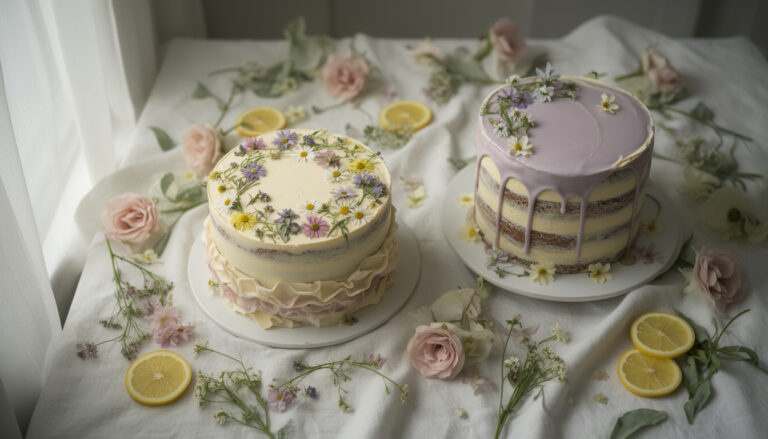
Pressed edible flowers get their own moment here too, set into near-naked frosting so you can actually see them.
Twelve cakes, all built around the flavors that make this season worth baking for.
1. Lemon Lavender Layer Cake
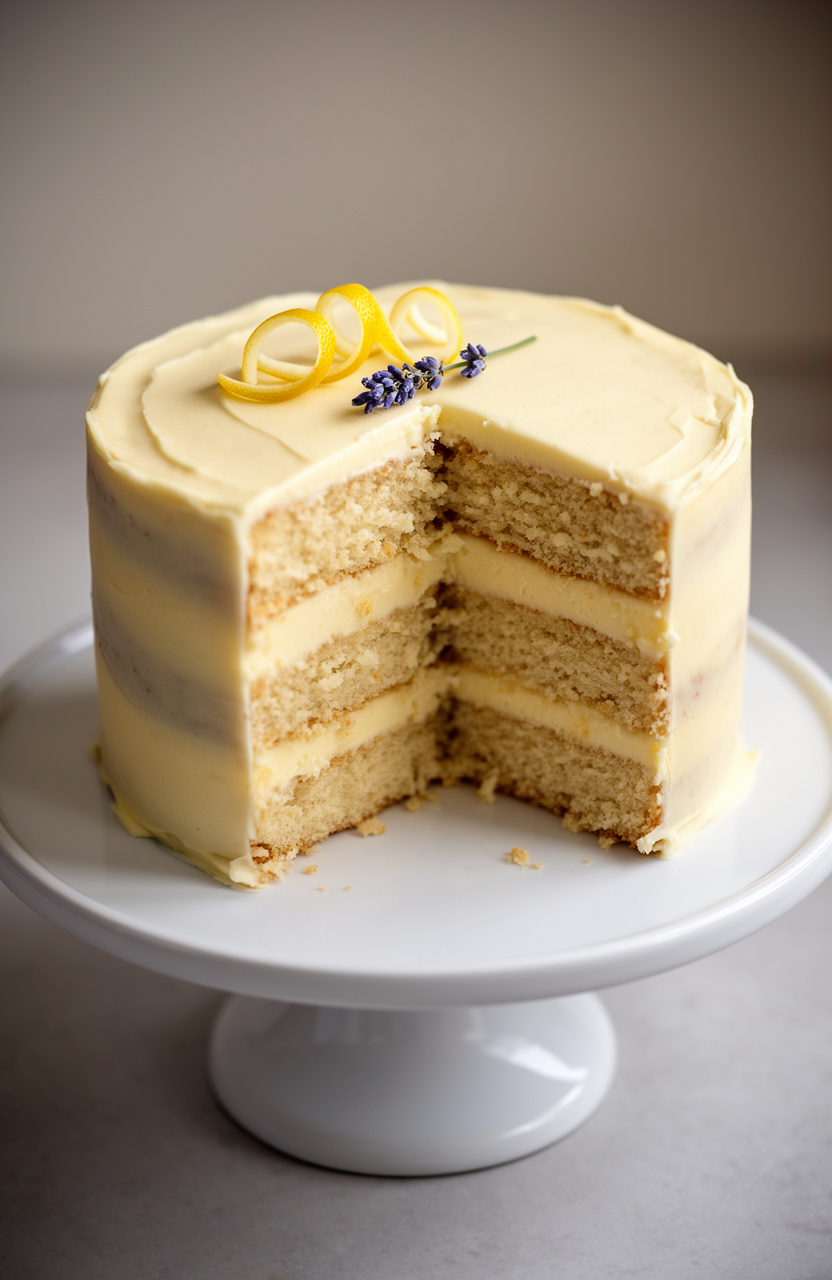
Dried lavender buds steeped in warm milk pull out a floral, faintly herbal note that threads through each tender, fine-crumbed layer without tipping into soapy territory. Bright lemon cuts through the richness, keeping the frosting clean and sharp against the soft, pillowy crumb.
Lemon Lavender Layer Cake
Lavender Infusion
Cake Layers
Lemon Lavender Buttercream
Lemon Curd Filling
Decoration
- 🍰Three 8-inch round cake pans
- 🔌Stand mixer or hand mixer
- 🥣Large mixing bowls
- 🪣Fine mesh strainer
- 🫕Small saucepan
- 🥄Rubber spatula
- 🪜Wire cooling racks
- 🥄Offset spatula
- 🍴Cake turntable
- 🍴Bench scraper
- 📄Parchment paper
- 🔪Zester or microplane
- 🍴Citrus juicer
- 🔪Serrated knife
Infuse Lavender Milk
Heat 1 cup of whole milk in a small saucepan over medium-low heat until it just begins to steam, about 180°F — do not boil. Remove from heat, stir in 2 tablespoons of dried culinary lavender buds, and let steep for 15 minutes.
Strain through a fine mesh strainer, pressing the buds gently to extract maximum flavor. Discard the lavender buds and allow the infused milk to cool to room temperature.
Prepare Pans and Oven
Preheat your oven to 350°F (175°C). Grease three 8-inch round cake pans with butter or nonstick spray, line the bottoms with parchment paper circles, then grease and flour the parchment and sides.
Tap out any excess flour. Set pans aside.
Whisk Dry Ingredients
In a large mixing bowl, whisk together 3 cups (360g) all-purpose flour, 1 tablespoon baking powder, 1/2 teaspoon baking soda, and 1/2 teaspoon fine sea salt until evenly combined. Set aside.
Cream Butter and Sugar
In the bowl of a stand mixer fitted with the paddle attachment, beat 1 cup (226g) softened unsalted butter and 2 cups (400g) granulated sugar together on medium-high speed for 4 to 5 minutes, until the mixture is very light, pale, and fluffy. Scrape down the sides of the bowl as needed.
Add Eggs and Flavorings
With the mixer on medium speed, add 4 large eggs one at a time, beating for 30 seconds after each addition and scraping down the bowl between additions. Mix in 2 teaspoons vanilla extract, 1 tablespoon lemon zest, and 3 tablespoons fresh lemon juice.
The mixture may look slightly curdled at this point — that is normal.
Combine Wet Ingredients
Stir 1/2 cup sour cream into the cooled lavender-infused milk until combined. This is your wet ingredient mixture.
Alternate Mix Batter
With the mixer on low speed, add the flour mixture in three additions, alternating with the lavender milk mixture in two additions (flour, milk, flour, milk, flour). Begin and end with the flour mixture.
Mix each addition just until incorporated — do not overmix. Finish folding by hand with a rubber spatula, scraping the bottom of the bowl to ensure no streaks remain.
Bake Cake Layers
Divide the batter evenly among the three prepared pans, using a kitchen scale for accuracy if possible (approximately 580g per pan). Smooth the tops with an offset spatula.
Bake at 350°F for 30 to 35 minutes, rotating the pans halfway through, until a toothpick inserted into the center comes out clean and the tops spring back lightly when touched. The edges will just begin to pull away from the sides of the pans.
Rest and Cool Layers
Remove the cake pans from the oven and set them on wire cooling racks. Let the cakes rest in their pans for 20 minutes before turning them out.
Run an offset spatula around the edges, invert onto the racks, peel off the parchment paper, then flip right-side up. Allow the layers to cool completely to room temperature before frosting, at least 1 hour.
Make Lemon Buttercream
In the bowl of a stand mixer fitted with the paddle attachment, beat 1 cup (226g) softened unsalted butter on medium-high speed for 3 minutes until pale and creamy. Reduce speed to low and gradually add 4 cups (480g) sifted powdered sugar, 1 cup at a time.
Once incorporated, add 3 tablespoons fresh lemon juice, 1 teaspoon lemon zest, 2 tablespoons heavy cream, 1/4 teaspoon lavender extract (if using), and a pinch of salt. Increase speed to medium-high and beat for 3 to 4 minutes until light and fluffy.
Adjust consistency with more cream (1 teaspoon at a time) if needed.
Level and Stack Layers
If the cake layers have domed tops, use a serrated knife to level them so they are flat. Place the first cake layer on a cake board or serving plate.
Spread a thin, even layer of buttercream (about 1/2 cup) over the top, then pipe a buttercream border around the edge to act as a dam. Spoon half of the lemon curd (about 2 1/2 tablespoons) inside the dam and spread gently.
Place the second cake layer on top and repeat the process. Add the third layer, bottom-side up.
Apply Crumb Coat
Using an offset spatula and bench scraper, apply a thin crumb coat of buttercream over the entire cake — top and sides — to seal in any loose crumbs. Do not worry about perfection at this stage.
Transfer the cake to the refrigerator and chill for 1 hour until the crumb coat is firm to the touch.
Frost and Decorate
Remove the cake from the refrigerator. Apply the remaining buttercream in a thick, even layer over the top and sides of the cake.
Use the bench scraper and offset spatula to smooth the sides and create a clean finish, or create soft swoops and swirls for a more rustic look. Garnish the top with fresh lavender sprigs, lemon twists or slices, and a sprinkle of edible dried lavender buds.
Slice and serve at room temperature.
Per serving (1 slice (1/12 of cake)) — values are estimates
5. Honey Chamomile Chiffon Cake
Dried chamomile flowers steep in boiling water until the liquid turns golden and faintly floral, then fold into a cloud-light batter that bakes into a tender, airy crumb with a delicate honey sweetness underneath.
Honey Chamomile Chiffon Cake
Chamomile Infusion
Cake Batter
Honey Glaze
- 🍴10-inch tube pan (ungreased)
- 🔌Stand mixer or hand mixer
- 🥣Two large mixing bowls
- 🫕Small saucepan
- 🪣Fine mesh strainer
- 🥄Whisk
- 🥄Rubber spatula
- 🍴Sifter
- 🪜Wire cooling rack
- 🥣Small bowl
- 📍Toothpick or skewer
Infuse Chamomile Tea
Pour 1/2 cup boiling water over 3 tablespoons dried chamomile flowers (or 4 tea bags) in a small heatproof bowl. Allow to steep and infuse for exactly 15 minutes.
Strain through a fine mesh strainer, pressing the flowers gently to extract maximum flavor. Discard the flowers.
Let the chamomile tea cool completely to room temperature before using. You should have approximately 1/3 cup of concentrated chamomile infusion.
Preheat Oven and Prep
Preheat your oven to 325°F (165°C) with a rack positioned in the lower third of the oven. Do not grease your 10-inch tube pan — the batter must cling to the sides to rise properly.
Set the pan aside. Make sure your egg whites are at room temperature, as this is critical for achieving maximum volume when whipping.
Combine Dry Ingredients
In a large mixing bowl, sift together 2 1/4 cups cake flour, 1 1/2 teaspoons baking powder, and 1/2 teaspoon fine sea salt. Whisk briefly to combine evenly.
Create a well in the center of the dry ingredients and set aside.
Mix Wet Ingredients
In a medium bowl, whisk together 1/2 cup neutral oil, 7 egg yolks, 1/2 cup (170g) of the honey (reserve the remaining 1/4 cup honey for the meringue), 1 teaspoon vanilla extract, and the cooled chamomile infusion until smooth and fully combined. The mixture will be glossy and fragrant.
Form Cake Batter
Pour the wet ingredient mixture into the well of the dry ingredients. Using a whisk, stir from the center outward until the batter is completely smooth with no lumps, about 1 minute of mixing.
Do not overmix. The batter will be thick but pourable.
Set aside while you prepare the meringue.
Whip Egg White Meringue
In the clean, grease-free bowl of a stand mixer fitted with the whisk attachment (or using a hand mixer), beat 7 egg whites on medium speed until foamy, about 1 minute. Add 1/2 teaspoon cream of tartar and increase speed to medium-high.
Beat until soft peaks form, about 2-3 minutes. With the mixer running, slowly drizzle in the remaining 1/4 cup (85g) honey in a thin, steady stream.
Continue beating on high speed until stiff, glossy peaks form and the meringue holds its shape firmly, about 3-4 more minutes. Do not overbeat.
Fold Meringue Into Batter
Using a large rubber spatula, gently fold one-third of the meringue into the chamomile batter to lighten it. Use sweeping motions from the bottom of the bowl upward, rotating the bowl as you go.
Once incorporated, add the remaining two-thirds of the meringue in two additions, folding gently and carefully each time to preserve as much air as possible. Stop folding as soon as no white streaks remain — do not deflate the batter.
Bake the Cake
Pour the batter into the ungreased 10-inch tube pan, spreading it evenly with a spatula. Run a thin knife or skewer through the batter in a circular motion to eliminate any large air pockets.
Bake at 325°F (165°C) for 50-55 minutes, until the top is deep golden brown, the cake springs back when lightly pressed, and a toothpick inserted into the thickest part comes out clean. Do not open the oven door during the first 45 minutes of baking.
Cool Cake Upside Down
Immediately upon removing the cake from the oven, invert the tube pan over its built-in legs, or balance the center tube over the neck of a tall bottle or funnel. Allow the cake to cool completely upside down for at least 1 hour 30 minutes at room temperature.
This step is non-negotiable — cooling upside down prevents the delicate chiffon from collapsing under its own weight.
Unmold the Cake
Once completely cooled, run a thin offset spatula or knife carefully around the outer edge and inner tube of the pan, pressing the blade against the pan (not the cake) to avoid tearing. Gently push the removable bottom up and out, then slide the knife along the bottom to release the cake onto a serving plate or wire rack.
Prepare Honey Glaze
In a small bowl, whisk together 1/4 cup raw honey and 2 tablespoons fresh lemon juice until fully combined and smooth. The glaze should be pourable but slightly thick.
If the honey is too stiff, warm it gently for 10 seconds in the microwave.
Glaze and Garnish Cake
Drizzle the honey-lemon glaze evenly over the top of the cooled cake, allowing it to drip naturally down the sides. Immediately scatter 1 tablespoon dried chamomile flowers and optional edible flowers over the top of the glaze before it sets.
Slice with a serrated knife using a gentle sawing motion and serve at room temperature.
Per serving (1 slice (approximately 115g)) — values are estimates
8. Garden Herb Lemon Bundt Cake
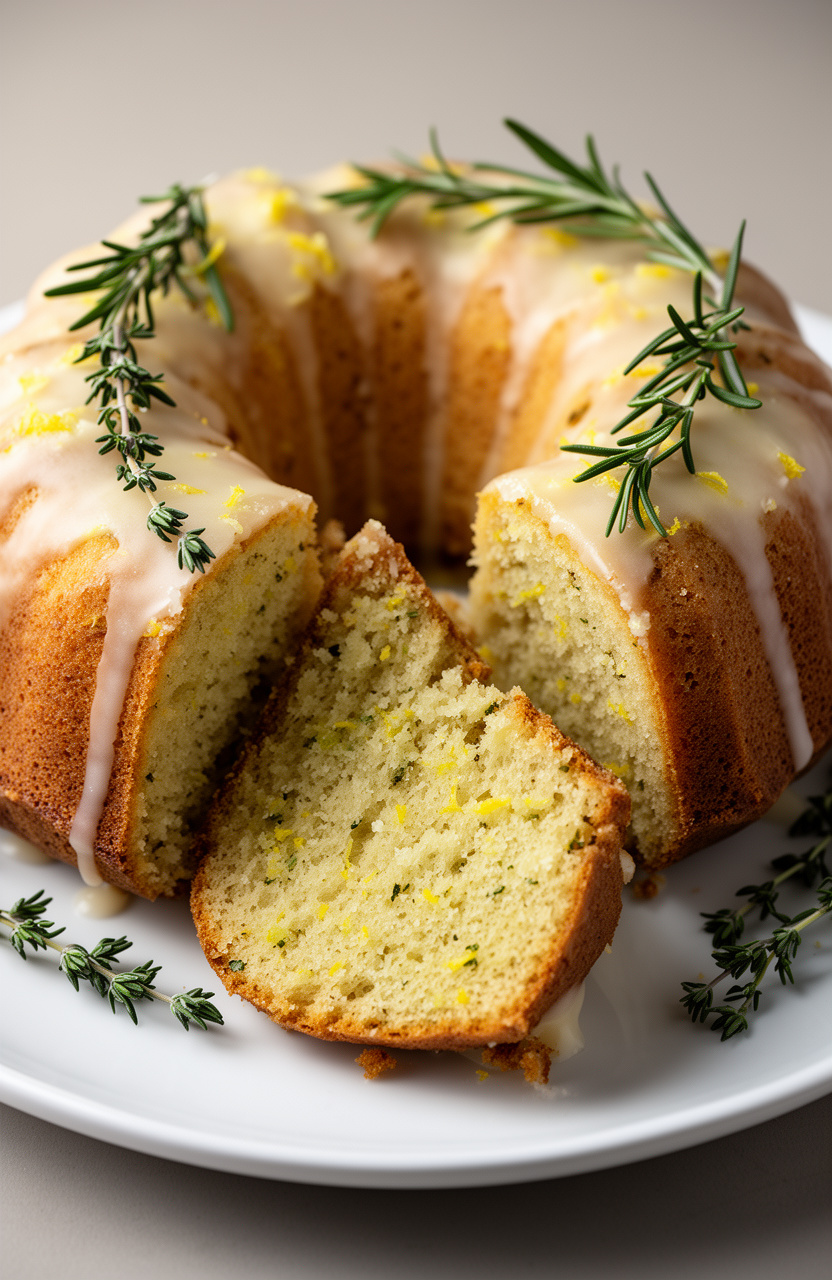
Fresh herbs steeped in warm milk carry their grassy, aromatic oils straight into the crumb, giving this lemon bundt cake a flavor that reads floral without tipping sweet. The crust bakes up with a slight crisp edge while the interior stays dense and moist, with bright citrus cutting through the herb-infused richness.
Garden Herb Lemon Bundt Cake
Cake Batter
Herb-Infused Milk
Lemon Glaze
Garnish
- 🍰12-cup Bundt pan
- 🔌Stand mixer or hand mixer
- 🥣Large mixing bowl
- 🥣Medium mixing bowl
- 🫕Small saucepan
- 🪣Fine mesh strainer
- 🥄Rubber spatula
- 🥄Whisk
- 🔪Microplane or zester
- 🍴Citrus juicer
- 🪜Cooling rack
- 🖌️Pastry brush
- 🥄Measuring cups and spoons
- 📍Toothpick or cake tester
Infuse Herb Milk
Combine 1/2 cup whole milk with 4 sprigs each of fresh rosemary and thyme in a small saucepan over medium-low heat. Warm the milk until it just begins to steam and small bubbles form around the edges, about 3–4 minutes — do not boil.
Remove from heat, cover, and allow the herbs to steep and infuse for 15 minutes. Strain through a fine mesh strainer, discarding the herb sprigs, and set the infused milk aside to cool to room temperature.
Prep Pan and Oven
Preheat your oven to 350°F (175°C). Thoroughly grease every crevice of a 12-cup Bundt pan with softened butter or non-stick baking spray, then dust lightly with flour, tapping out any excess.
This step is critical for clean release — pay special attention to all the ridges and the center tube. Set the prepared pan aside.
Whisk Dry Ingredients
In a medium bowl, whisk together 2 3/4 cups all-purpose flour, 2 teaspoons baking powder, 1/2 teaspoon baking soda, and 1/2 teaspoon fine sea salt until evenly combined. Set aside.
Cream Butter and Sugar
In the bowl of a stand mixer fitted with the paddle attachment (or using a hand mixer), beat 1 cup softened unsalted butter and 1 3/4 cups granulated sugar on medium-high speed for 4–5 minutes until the mixture is very pale, light, and fluffy. Scrape down the sides of the bowl with a rubber spatula as needed.
This extended creaming creates a tender, airy crumb.
Add Eggs and Flavorings
With the mixer on medium speed, add the 4 room-temperature eggs one at a time, beating for 30 seconds after each addition and scraping down the bowl between additions. Add 2 tablespoons lemon zest, 1/4 cup fresh lemon juice, and 1 teaspoon vanilla extract.
Mix on medium speed for 1 minute until fully incorporated. The mixture may look slightly curdled — this is normal and will smooth out when the flour is added.
Fold In Herbs
Add the 2 tablespoons finely chopped fresh rosemary, 2 tablespoons fresh thyme, and 1 tablespoon fresh basil to the butter mixture. Mix on low speed for 20 seconds just until the herbs are evenly distributed throughout the batter.
Alternate Dry and Wet
Combine the cooled herb-infused milk with 1 cup sour cream and whisk until smooth. With the mixer on low speed, add the flour mixture in three additions alternating with the milk-sour cream mixture in two additions, beginning and ending with the flour (flour → milk mixture → flour → milk mixture → flour).
Mix each addition only until just incorporated — do not overmix. Use a rubber spatula to fold the batter a few times by hand to ensure no streaks remain.
Fill and Bake
Spoon the batter evenly into the prepared Bundt pan, smoothing the top with a rubber spatula. Gently tap the pan on the counter 3–4 times to release any air bubbles.
Bake in the preheated 350°F oven for 50–55 minutes, until a toothpick or cake tester inserted into the thickest part comes out clean or with just a few moist crumbs. The top should be golden brown and the cake should begin to pull away slightly from the sides of the pan.
Rest and Unmold
Remove the cake from the oven and place the pan on a wire cooling rack. Allow the cake to rest in the pan for exactly 20 minutes — this resting time allows the cake to firm up enough to hold its shape when unmolded.
After 20 minutes, place a wire rack over the top of the pan and confidently invert the cake onto the rack in one smooth motion. Lift the pan away and allow the cake to cool completely to room temperature before glazing, about 45–60 minutes.
Prepare Lemon Glaze
Once the cake is fully cooled, prepare the glaze. In a medium bowl, whisk together 2 cups sifted powdered sugar, 1 tablespoon melted unsalted butter, 1 tablespoon lemon zest, and 3 tablespoons fresh lemon juice until completely smooth.
The glaze should be thick but pourable — it should fall off the whisk in a slow, steady ribbon. If too thick, add lemon juice 1 teaspoon at a time; if too thin, add powdered sugar 1 tablespoon at a time.
Glaze and Garnish
Set the cooled cake (still on the wire rack) over a parchment-lined baking sheet to catch drips. Slowly pour the lemon glaze over the top of the Bundt cake, allowing it to drip naturally down the ridges and sides.
Let the glaze set for 10 minutes before garnishing. Arrange fresh rosemary sprigs, thyme sprigs, thin lemon slices, and edible flowers (if using) decoratively on and around the cake.
Transfer to a serving plate and slice with a sharp serrated knife.
Per serving (1 slice (1/12 of cake)) — values are estimates
10. Rhubarb Rose Petal Tart Cake
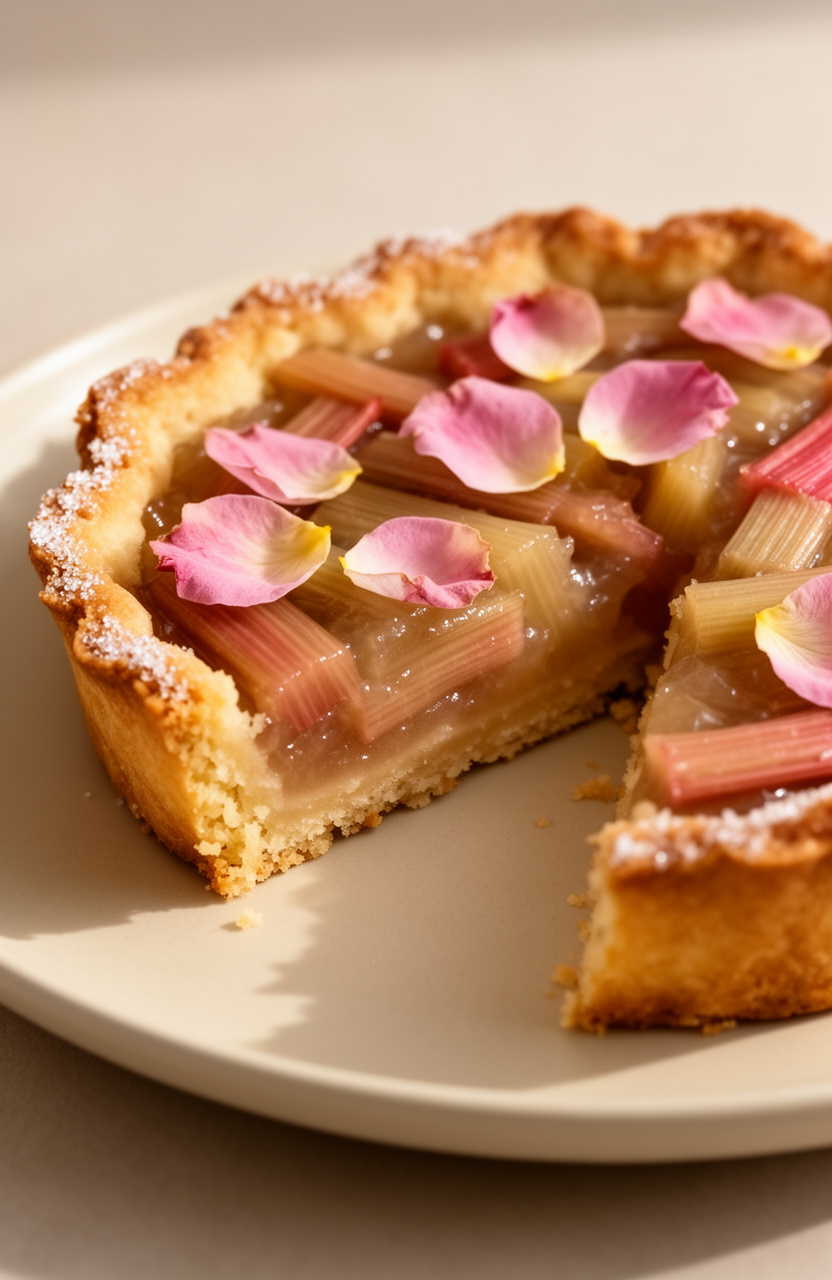
Buttery shortcrust pastry, made by cutting cold butter into flour and powdered sugar until the dough just holds together, cradles layers of tart rhubarb and floral rose petal against a tender, crumbly base.
Rhubarb Rose Petal Tart Cake
Tart Shell
Rhubarb Compote
Rose Petal Cream
Cake Layer
Garnish
- 🍰9-inch fluted tart pan with removable bottom
- 🔌Stand mixer or hand mixer
- ⚙️Food processor
- 🫕Medium saucepan
- 🪣Fine mesh strainer
- 🥣Mixing bowls
- 🥄Whisk
- 🥄Rubber spatula
- 📄Parchment paper
- 🍴Pie weights or dried beans
- 🥄Offset spatula
- 🖌️Pastry brush
- 🪜Cooling rack
- 📄Plastic wrap
- 🔪Sharp knife and cutting board
Make Tart Dough
In a food processor, pulse together 1 1/2 cups all-purpose flour, 1/2 cup sifted powdered sugar, and 1/4 teaspoon salt until combined. Add 1/2 cup cold cubed butter and pulse 10–12 times until the mixture resembles coarse breadcrumbs with some pea-sized pieces remaining.
Add 1 egg yolk and 2 tablespoons ice water, then pulse just until the dough begins to clump together — do not over-process. Turn dough out onto a lightly floured surface, press into a flat disc, wrap tightly in plastic wrap, and refrigerate for 30 minutes to rest.
Infuse Rose Cream
In a small saucepan over low heat, combine 1 cup heavy cream and 1/4 cup rose petals. Heat gently until the cream just begins to steam, about 3–4 minutes — do not boil.
Remove from heat, cover, and allow the petals to infuse for 20 minutes. Strain through a fine mesh strainer, pressing petals gently to extract all the floral cream.
Discard spent petals. Cover the infused cream and refrigerate until fully chilled, at least 30 minutes.
Cook Rhubarb Compote
In a medium saucepan, combine 1 pound rhubarb pieces, 1/2 cup granulated sugar, and 2 tablespoons lemon juice. Cook over medium heat, stirring occasionally, for 12–15 minutes until the rhubarb completely breaks down and softens.
Whisk 1 tablespoon cornstarch with 2 tablespoons cold water to make a slurry, then stir it into the rhubarb mixture. Continue cooking for 2–3 more minutes until the compote thickens noticeably.
Remove from heat, stir in 1 teaspoon rose water, and transfer to a bowl. Let cool to room temperature, then refrigerate until needed.
Blind Bake Shell
Preheat oven to 375°F (190°C). On a lightly floured surface, roll the rested tart dough into an 11-inch circle about 1/8-inch thick.
Carefully drape it over the 9-inch fluted tart pan, pressing it gently into the fluted sides without stretching. Trim any excess dough flush with the pan rim.
Prick the base all over with a fork. Line the shell with parchment paper, fill with pie weights or dried beans, and blind bake for 15 minutes.
Remove the parchment and weights, then bake for an additional 10 minutes until the shell is golden and dry. Transfer to a cooling rack and cool completely.
Bake Cake Layer
Reduce oven temperature to 350°F (175°C). In a stand mixer fitted with the whisk attachment, beat 4 eggs and 3/4 cup granulated sugar on high speed for 5–6 minutes until the mixture is very pale, thick, and has tripled in volume (ribbon stage).
Sift together 1/2 cup flour, 1/4 teaspoon baking powder, and 1/4 teaspoon salt directly over the egg mixture, then fold in gently with a rubber spatula using slow, sweeping strokes to preserve the air. Drizzle in 3 tablespoons cooled melted butter and 1 teaspoon rose water, folding just until incorporated.
Pour batter into a parchment-lined 9-inch round cake pan and bake at 350°F for 20–22 minutes until the center springs back when lightly touched and a toothpick comes out clean. Cool in the pan for 10 minutes, then turn out onto a rack to cool completely.
Whip Rose Cream
In a stand mixer fitted with the whisk attachment, beat the chilled rose-infused heavy cream on medium-high speed until soft peaks form, about 2–3 minutes. In a separate bowl, beat 8 ounces room-temperature mascarpone with 3 tablespoons powdered sugar, 1 teaspoon vanilla extract, and 1 teaspoon rose water until smooth and fluffy, about 1 minute.
Gently fold the whipped rose cream into the mascarpone mixture in two additions until fully combined and light. Refrigerate until ready to assemble.
Assemble Tart Cake
Place the cooled tart shell on a serving plate or cake stand. Carefully trim the cooled cake layer to fit snugly inside the tart shell if needed.
Spread a thin layer of rhubarb compote (about 1/3 cup) evenly across the base of the tart shell. Lay the trimmed cake layer on top, pressing gently so it sits flat.
Spread the remaining rhubarb compote evenly over the top of the cake layer, leaving a 1/2-inch border from the edge. Using an offset spatula, generously dollop and swirl the rose mascarpone cream over the compote layer, creating elegant peaks and swoops.
Chill and Garnish
Refrigerate the assembled tart cake uncovered for 2 hours to allow the layers to set and the flavors to meld. Just before serving, decorate with fresh food-grade rose petals, thin blanched rhubarb ribbons arranged in a decorative pattern, and edible gold leaf if desired.
Slice with a sharp knife, wiping the blade clean between cuts for neat presentation. Serve chilled.
Per serving (1 slice (approximately 180g)) — values are estimates