17 Aesthetic Kitchen Wall Decor Ideas for a Calm and Pretty Kitchen
Some kitchens feel calm the moment you walk in. Nothing shouts for attention, yet every wall looks finished and pretty.
The secret is not buying more decor. It is choosing fewer pieces that share a soft palette, gentle textures, and breathing room.
Aesthetic kitchen wall decor is really about that feeling. Pale colours, natural materials, and a little empty space do more than a crowded wall ever will.

How to Keep an Aesthetic Kitchen Calm
Pick three colours and stick to them across the whole wall. Cream, sage, and pale wood is a good place to start.
Repeat one material, like light oak or matte ceramic, so the pieces feel like a set. Matching materials tie a wall together better than matching colours alone.
Leave at least one-third of the wall empty. Empty space is what makes the pieces you keep look calm and deliberate.
1. Soft Linen Fabric Wall Panel
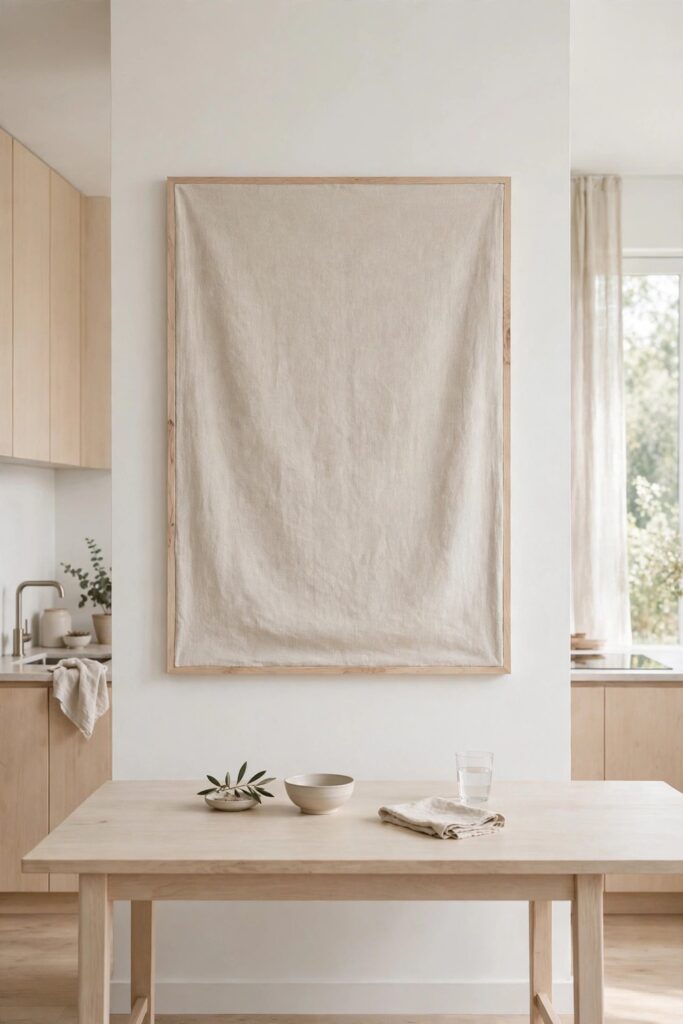
A large linen panel softens a hard kitchen wall in a way framed art cannot. The fabric catches light gently and adds quiet texture.
Choose undyed or oatmeal linen, and stretch it over a slim wooden frame. A panel about 24 inches wide suits most dining walls.
Hang it alone, centred above the table, with bare wall on both sides. The plainness is the point.
Steam can mark raw linen, so keep it away from the hob. A light dusting with a dry cloth keeps it fresh.
2. Pastel Watercolour Landscape Prints
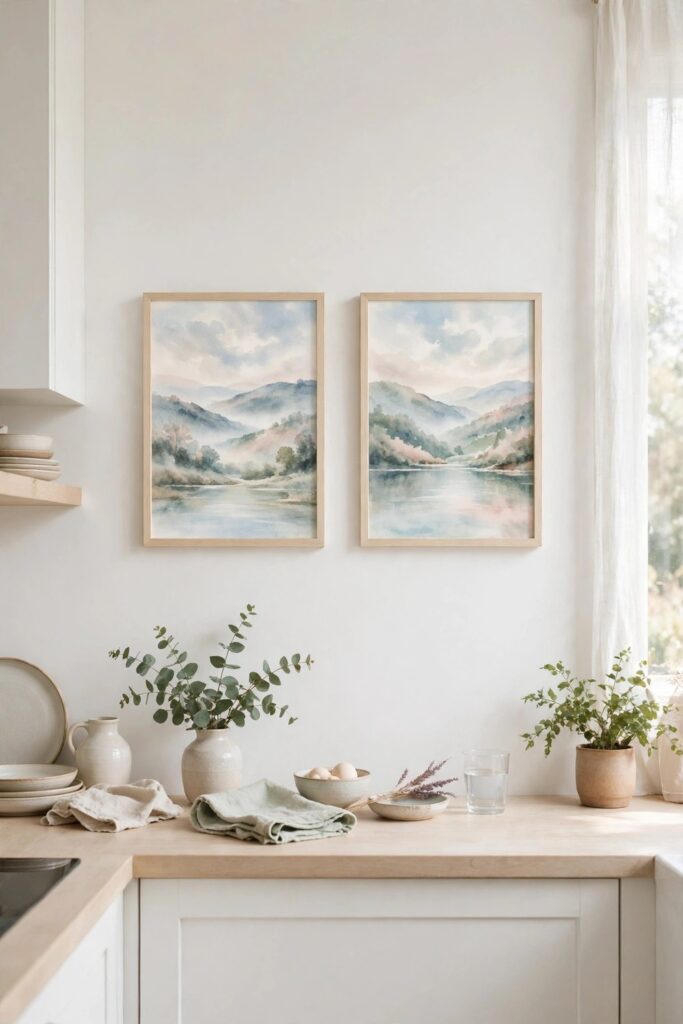
Watercolour landscapes in soft blue, blush, and sage bring a dreamy calm to a kitchen wall. The pale washes feel like a deep breath.
Choose prints of misty hills, quiet lakes, or soft skies. Avoid bold, dark scenes, since they fight the gentle mood.
Frame two prints in identical pale wood frames and hang them side by side. Keep the frames small, about 11 by 14 inches each.
Place them where you see them while cooking, above the counter or beside the window. Pale glass or no glass keeps the colours soft.
3. Minimal Line Art Prints in Matching Frames
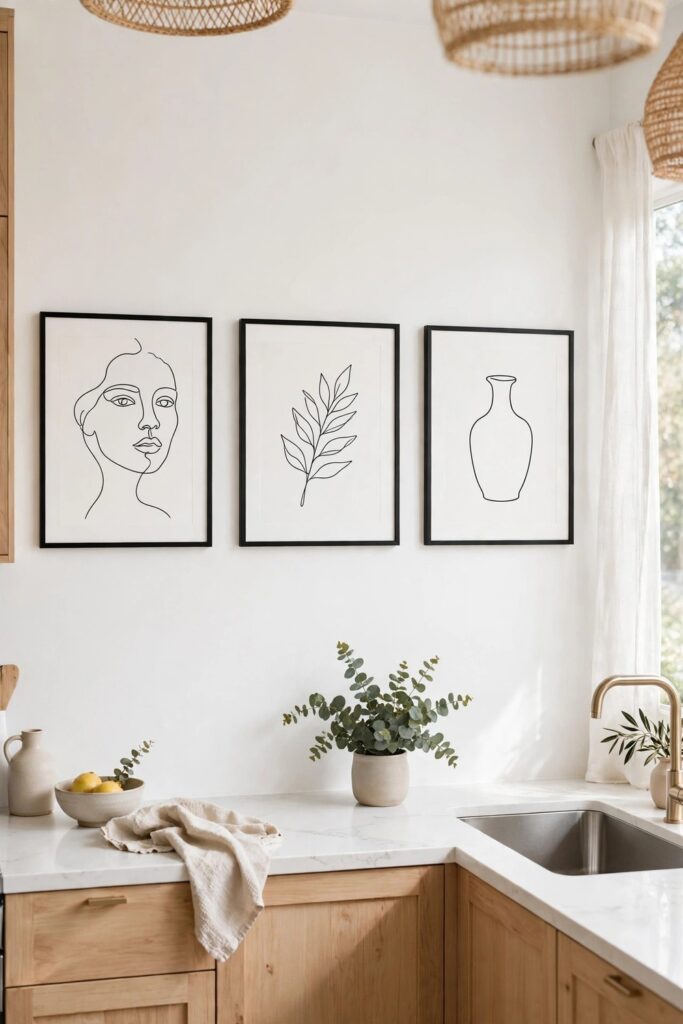
One continuous line drawing a face, a leaf, or a vase feels modern and serene. The simplicity suits a calm kitchen perfectly.
Pick three prints from the same artist or series so the line weight matches. Mixed styles will look jumbled instead of peaceful.
Use thin black frames with wide white mats, all exactly the same size. The mats give each drawing room to breathe.
Hang the trio in a straight row, spacing the frames 2 inches apart for a neat, even rhythm. Step back to check the line before you fix the last nail.
4. Dried Flower Shadow Box
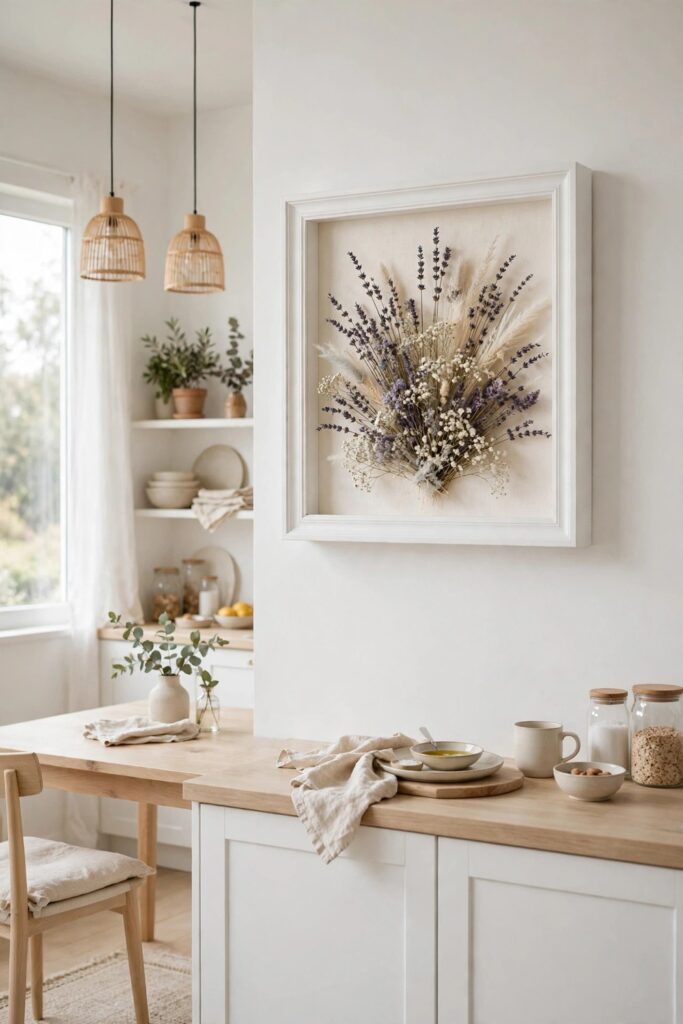
A shadow box of dried lavender, baby’s breath, and pale grasses adds nature without any watering. The soft colours never fade loudly.
Choose a deep white or pale wood frame, about 16 by 20 inches. Arrange the stems in a loose, airy fan, not a stiff bouquet.
Pin the stems to a linen backing in cream or pale grey. The fabric adds warmth behind the delicate flowers.
Hang it away from direct steam, ideally on a dining wall. A single box looks calm, while two in a row can feel busy.
5. Ceramic Wall Vases with Fresh Stems
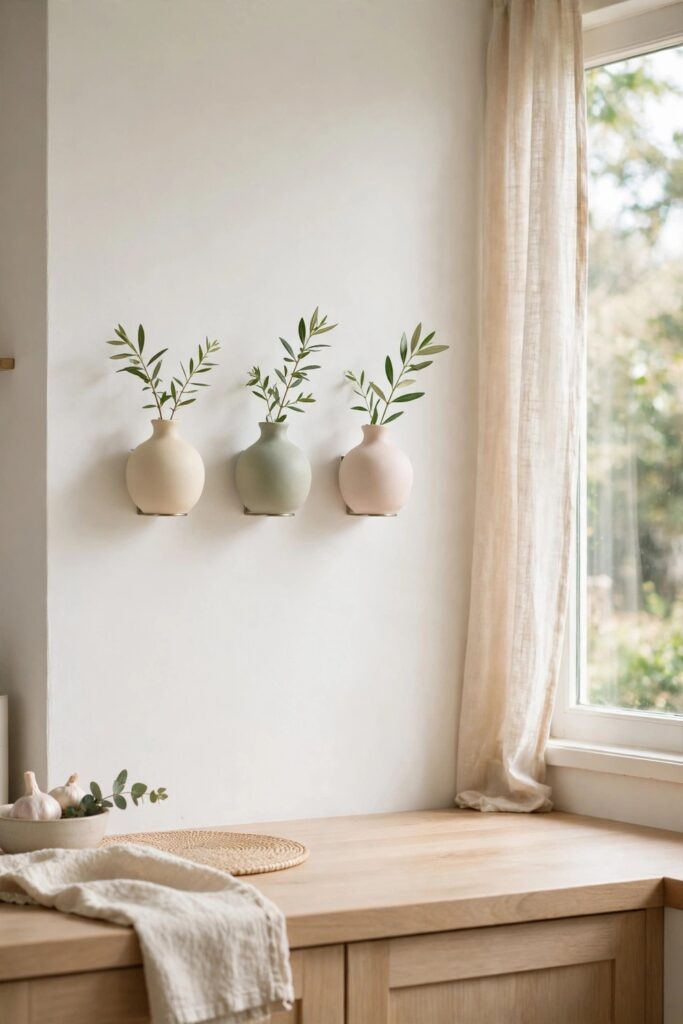
Small ceramic wall vases turn a plain stretch of wall into a living display. One stem in each vase is all you need.
Choose matte vases in cream, sage, and pale blush, all the same shape. Three vases in a row look tidier than a random cluster.
Mount them at eye level, about six inches apart, on a wall near the window. Fresh eucalyptus or a single rose works beautifully.
Change the water every two or three days to keep the stems fresh. Dried grasses work too when you want zero upkeep.
6. Pale Sage Beadboard Accent Panel
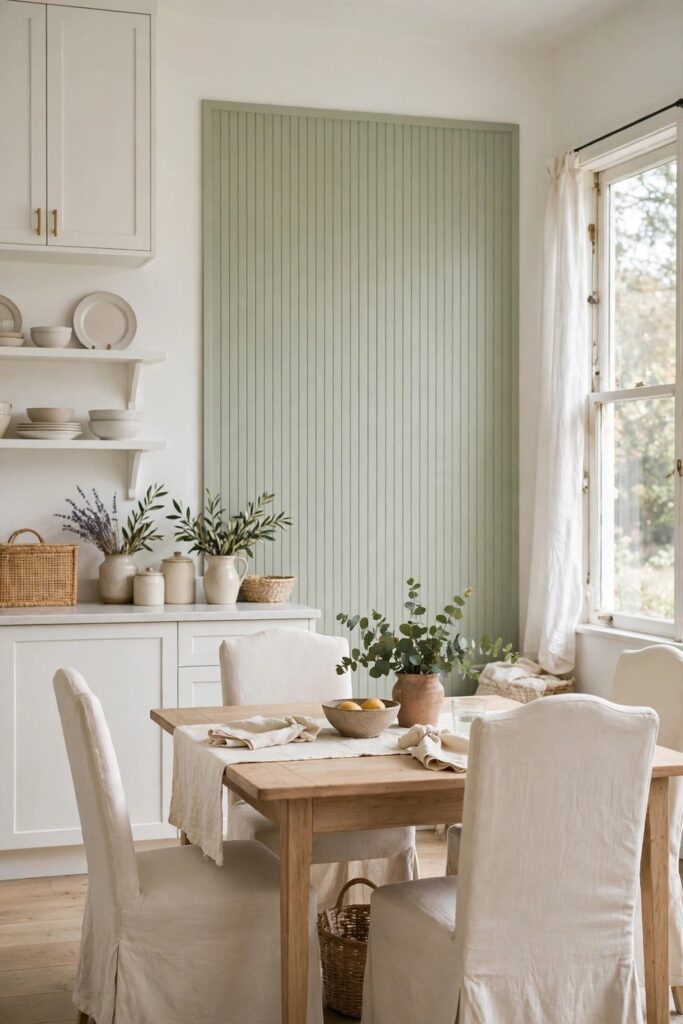
A beadboard panel painted in pale sage adds gentle texture without any pattern. The vertical lines draw the eye upward, making the wall feel taller.
Fit the panel behind the table or on the wall beside the fridge. Keep it to one wall only, so the colour stays a soft accent.
Paint it in a matte finish, which looks calmer than gloss in kitchen light. Two thin coats give the smoothest result.
Pair it with cream chairs and light wood for a fresh, cottage feel. Add one small framed print on the panel, and stop there.
7. Arched Wall Niche with a Single Vase
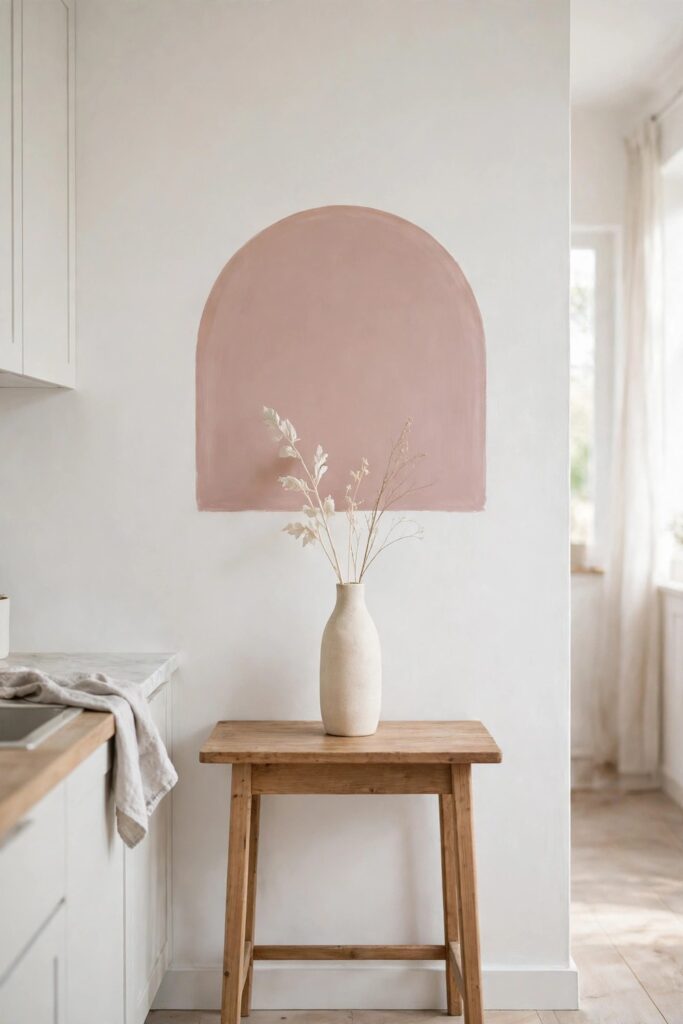
An arched niche is one of the prettiest shapes you can put on a kitchen wall. The soft curve breaks up all the straight cabinet lines.
If your wall has no real niche, paint an arch shape in a slightly darker tone than the wall. A soft clay or dusty rose works well.
Place one vase inside the arch, nothing more. A tall cream vase with a few pale stems is enough.
Keep the arch about 36 inches tall and 18 inches wide for a shape that reads clearly from across the room. Smaller arches can look like a mistake.
Leave the wall around the arch completely bare. The curve needs space to shine.
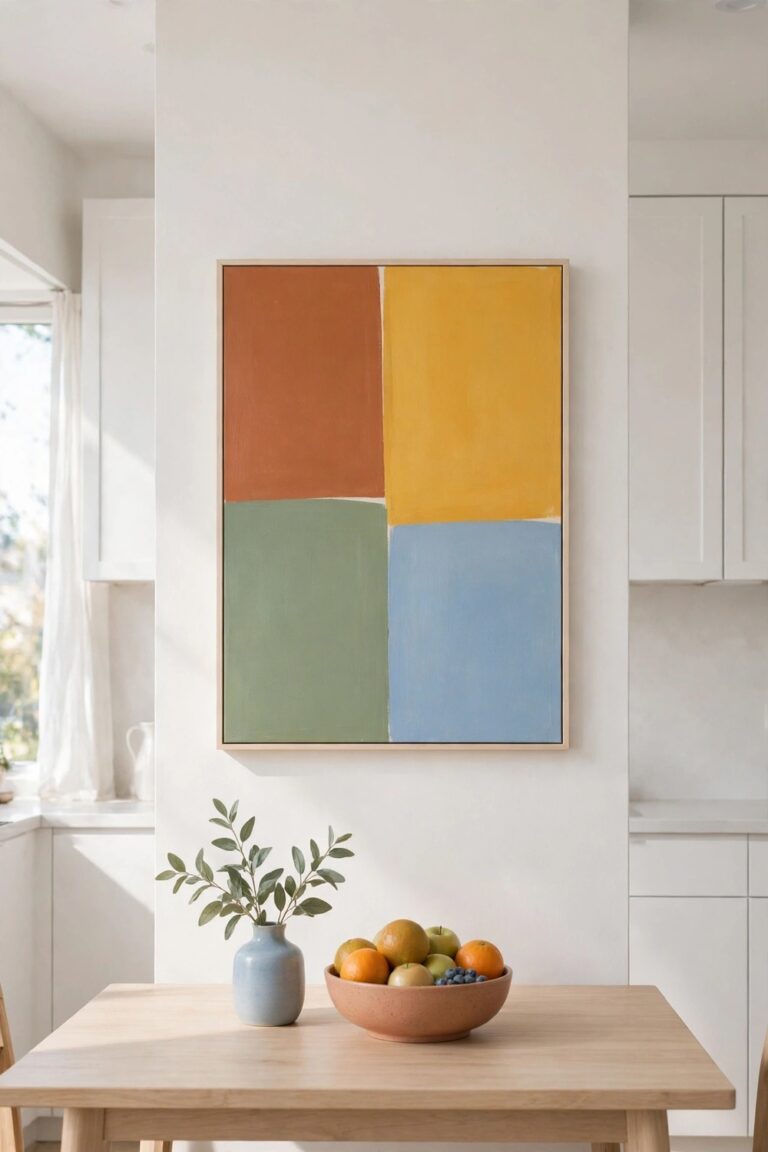
8. Tonal Abstract Prints in a Strict Grid
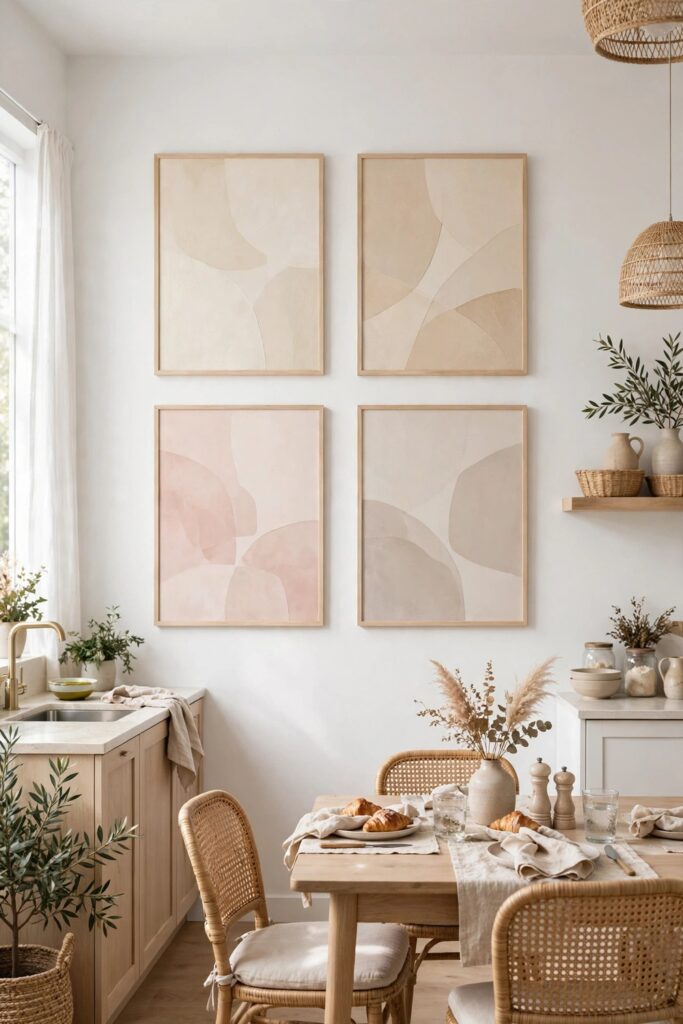
Four abstract prints in shades of one colour look calm and collected. The strict grid gives the softness some structure.
Choose prints in cream, sand, blush, and pale taupe, all from the same series. The shared palette is what makes the set feel peaceful.
Frame them in identical thin frames, and hang them in a two-by-two grid. Keep the gaps even, about two inches on every side.
This works best on a wide, empty dining wall. Measure the whole grid on the floor first, then mark the wall.
9. Slim Picture Ledge with Layered Prints
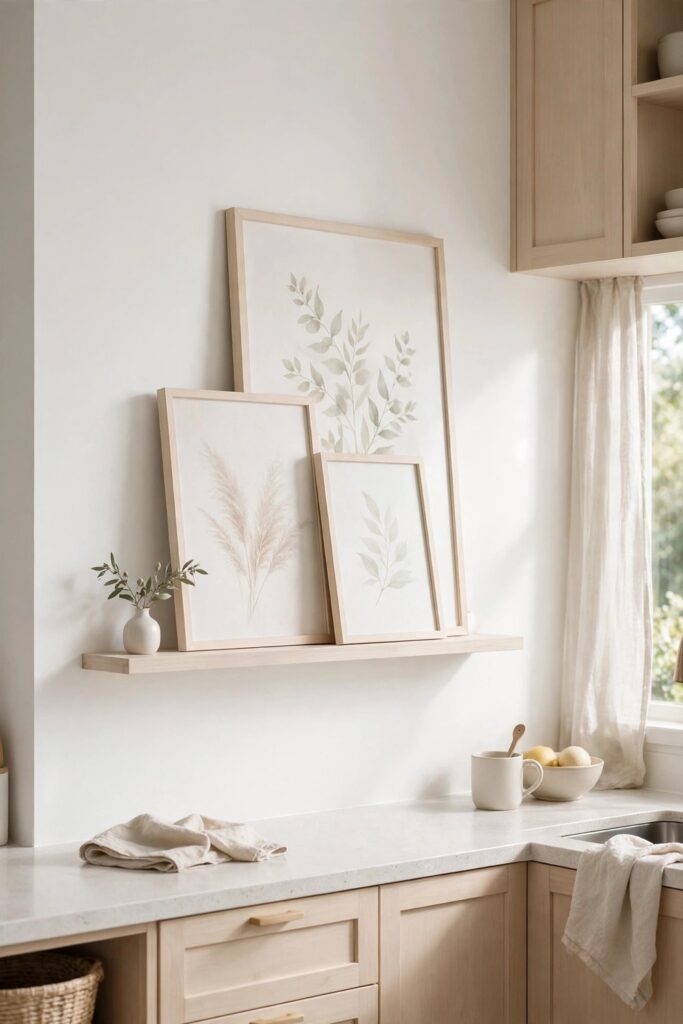
A slim picture ledge lets you layer prints without drilling a dozen holes. The casual lean feels relaxed, yet the matching frames keep it tidy.
Choose a pale wood ledge about 36 inches long, and mount it at eye level. Place three prints on it, leaning at slightly different angles.
Overlap the frames by an inch or two, with the largest at the back. Use soft, pale artwork so the layers blend gently.
You can swap prints in seconds when the mood changes, which is the ledge’s best trick. Keep the ledge dusted, since prints leaning open catch crumbs.
Add one tiny vase at the end of the ledge for a soft, finishing touch.
A calm kitchen wall is not an empty wall, it is a wall where every piece has room to breathe.
10. Soft Colour-Blocked Wall in Blush and Cream
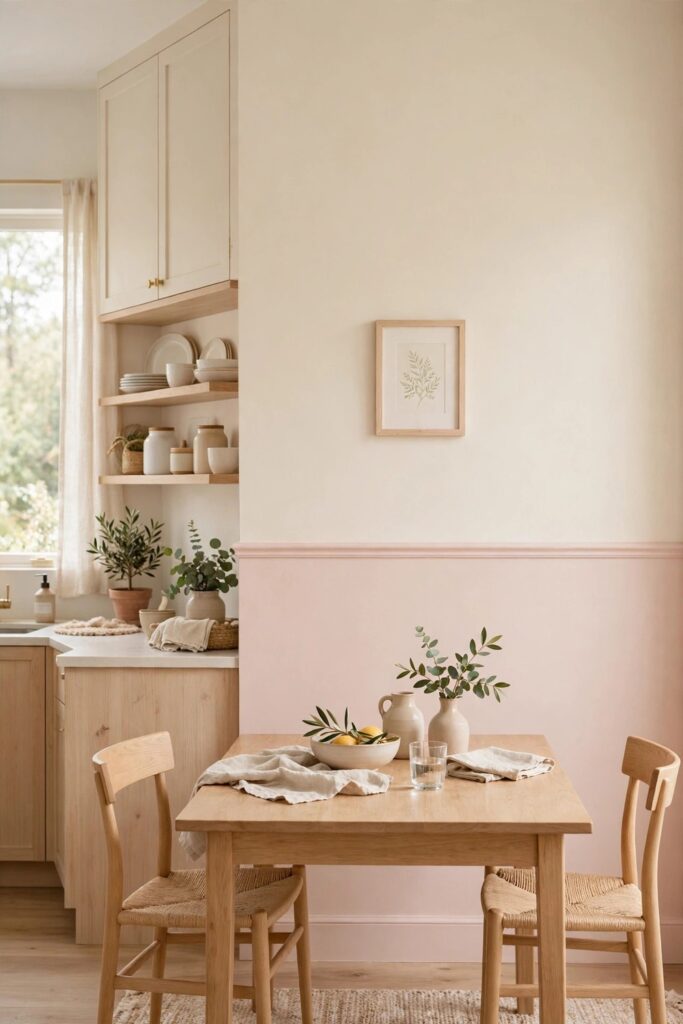
Colour blocking sounds bold, but in blush and cream it feels gentle. Two soft tones meet in a clean horizontal line across the wall.
Paint the lower half in pale blush and the upper half in warm cream. The line should sit at about chair-rail height, near 36 inches.
Keep everything on the wall pale and simple afterwards. One small framed print above the line is plenty.
The two tones add depth without a single pattern or picture. It suits small kitchens, where busy wallpaper would feel crowded.
11. Frosted Glass Wall Vase with Eucalyptus
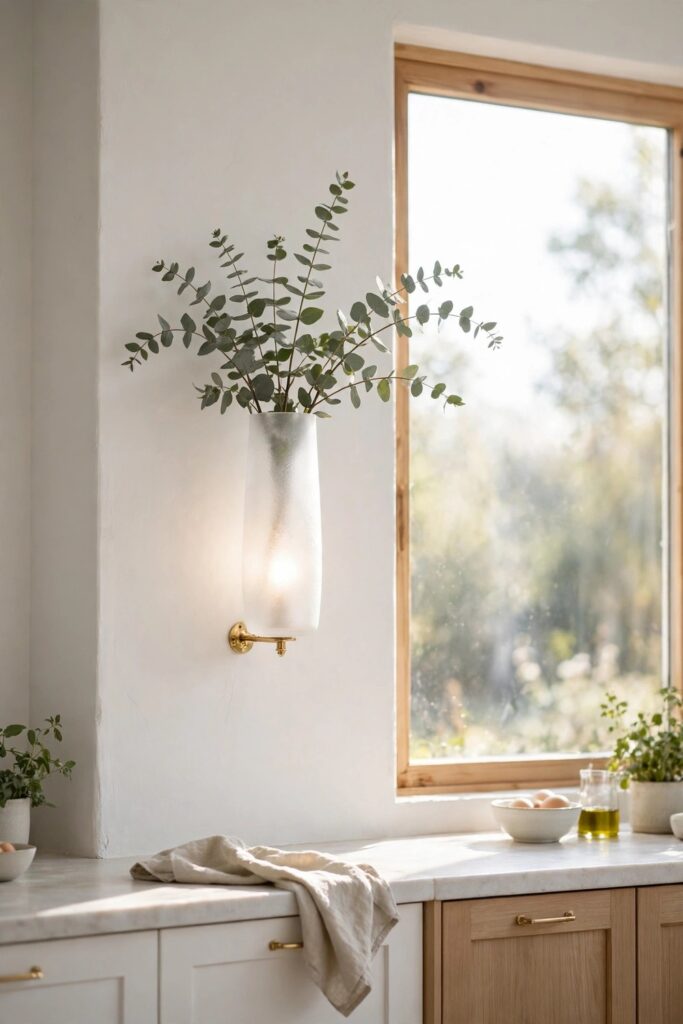
A frosted glass vase glows softly in kitchen light, and eucalyptus adds a quiet, silvery green. Together they feel fresh and unhurried.
Choose one vase, about ten inches tall, with a simple round or tall shape. Hang it on a small brass or pale wood bracket.
Place it on the wall beside a window, where daylight passes through the frosted glass. The glow changes through the day, which is half the charm.
Keep the stems trimmed so they sit just above the rim. Replace the eucalyptus every few weeks, or let it dry in place.
12. Woven Seagrass Wall Panel
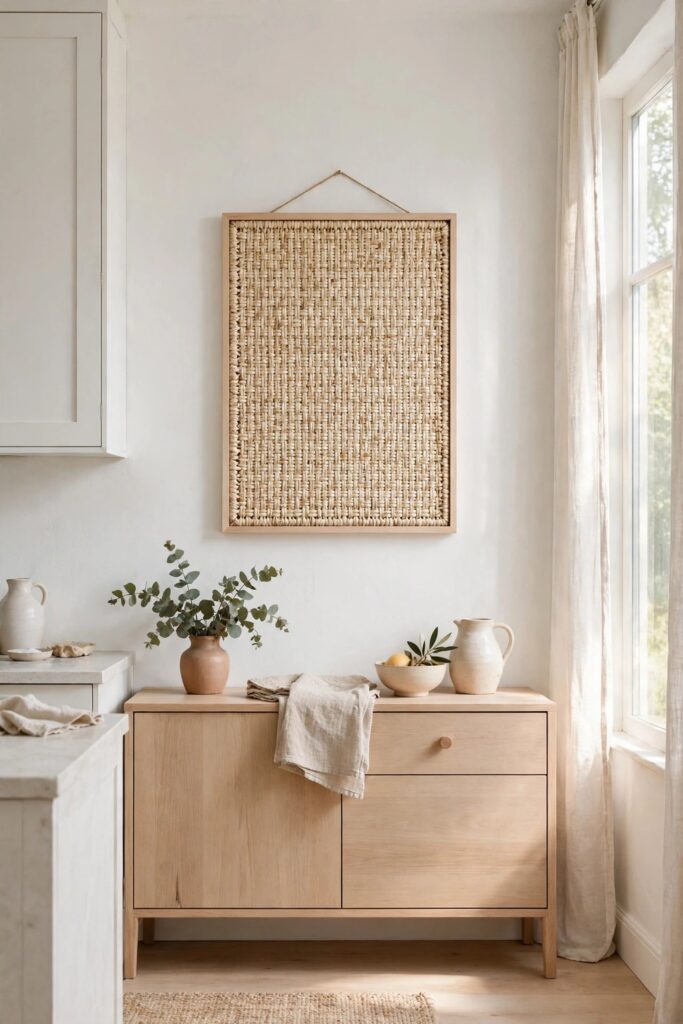
A flat woven seagrass panel brings natural texture to the wall without any clutter. The tight weave reads as calm, not rustic.
Choose a rectangular panel, about 24 by 36 inches, in natural cream and pale tan. The flat shape suits a modern kitchen better than a basket cluster.
Hang it alone above a sideboard or dining table, centred on the furniture below. A slim pale wood frame around the panel keeps the edges neat.
Keep it away from the stove, since grease settles into woven fibres. Dust it monthly with a soft brush.
13. Small Oval Frames with Pressed Leaves
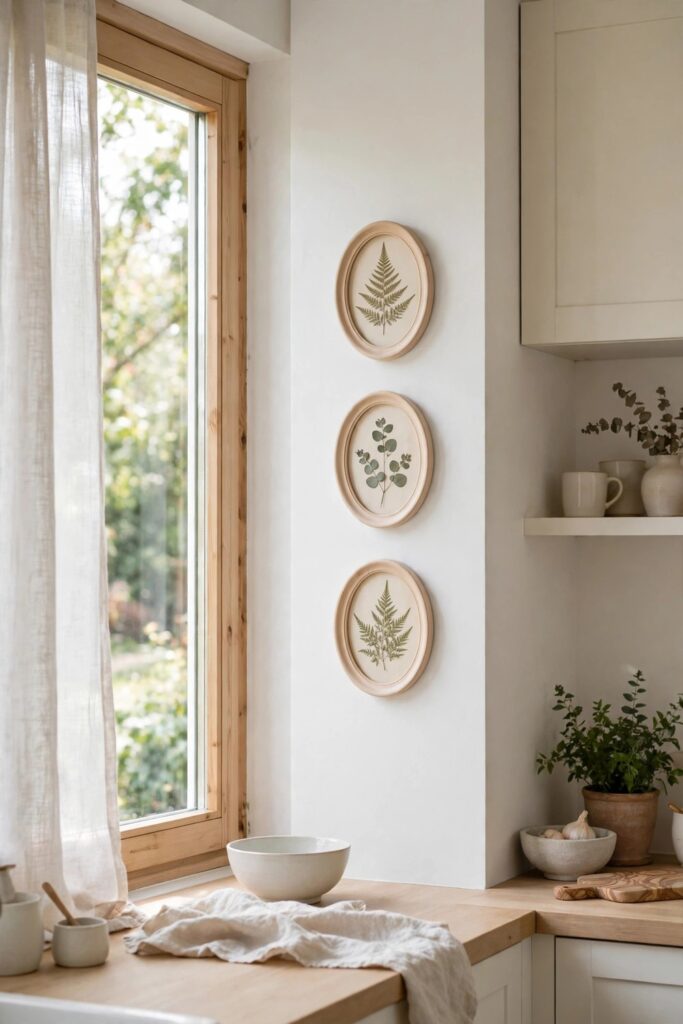
Pressed leaves in small oval frames feel delicate and old-fashioned in the best way. The oval shape softens the wall instantly.
Press fern, eucalyptus, and olive leaves between heavy books for two weeks. Choose pale leaves, since dark ones can look heavy on a light wall.
Mount three ovals in a vertical row, each about five inches tall. Keep the frames identical, in pale wood or cream.
Hang the row on a narrow wall, beside a window or a door frame. The slim shape fits spots where a square frame would crowd.
Label nothing, and add nothing else nearby. The leaves speak quietly for themselves.
14. Plaster Relief Wall Art
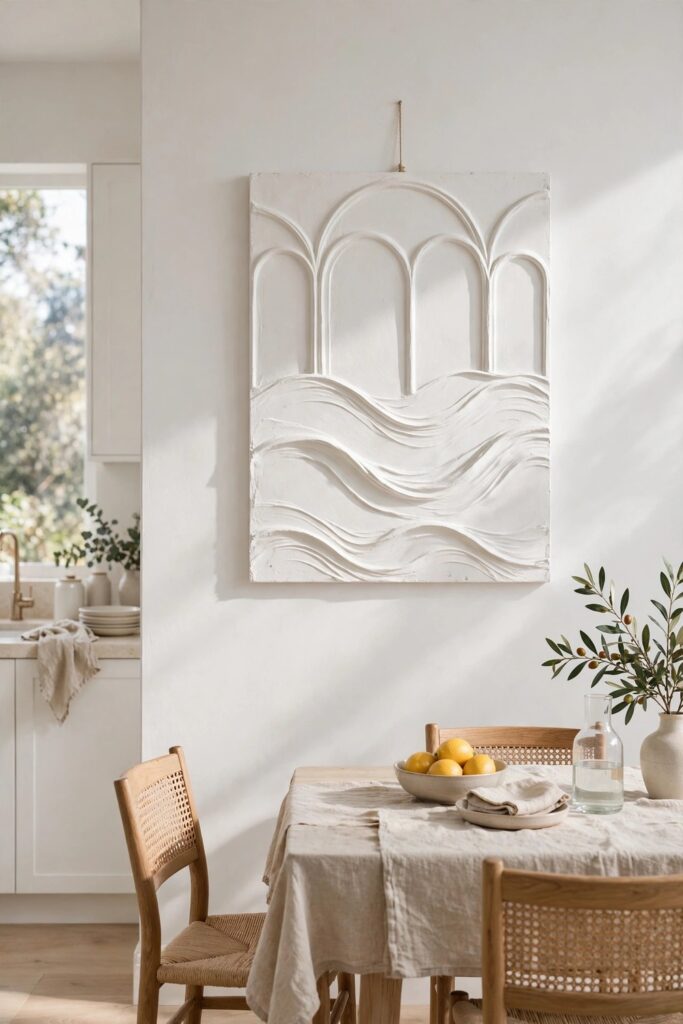
Plaster relief art is a soft, sculptural piece that changes with the light. Raised arches and waves cast gentle shadows all day.
Choose a white or cream panel with a simple arch or wave pattern. A piece about 20 by 24 inches suits a dining wall.
Hang it alone, with plain wall around it, so the shadows stay visible. Strong colour nearby would steal its quiet effect.
Avoid hanging it where steam collects, since plaster and moisture do not mix. A dry dining wall is the safest spot.
15. Candle Sconces with Glass Hurricanes
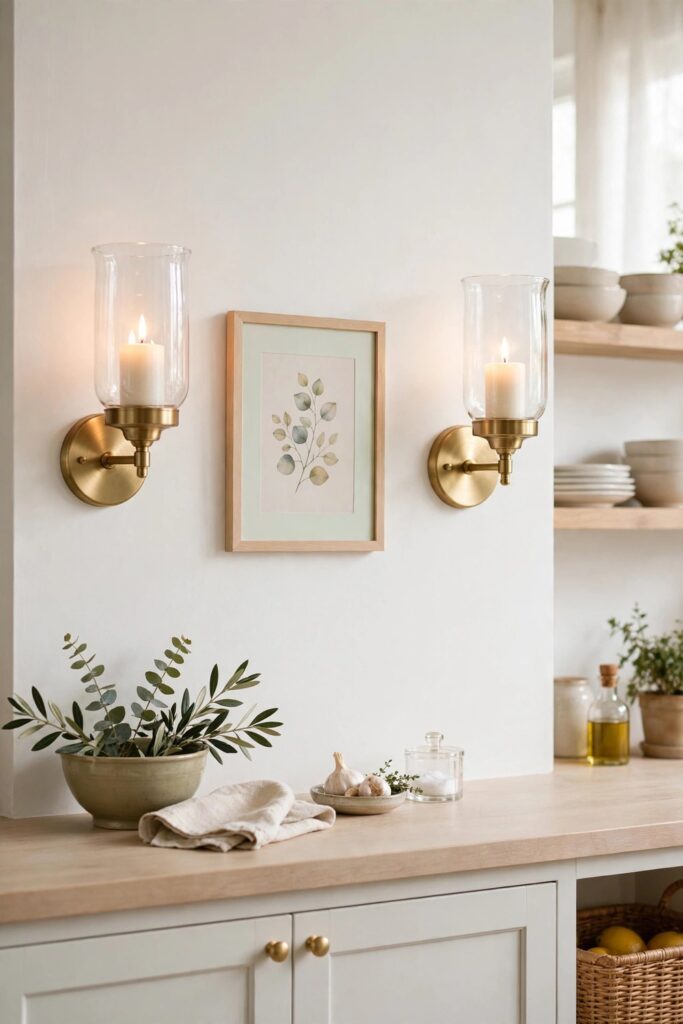
Candle sconces add a warm, flickering glow that overhead lights cannot copy. The glass hurricane keeps the flame safe and the light soft.
Choose a pair of pale wood or brushed brass sconces with clear glass covers. Mount them on either side of a mirror or a favourite print.
Keep the sconces at least 12 inches from anything flammable, and never hang them above the hob. Safety comes first with open flame.
Use unscented white pillar candles for a clean, calm look. Light them at dinner, and the whole kitchen will feel softer.
Wipe the glass weekly, since kitchen grease dulls the glow quickly.
16. Porcelain Wall Pockets in a Row
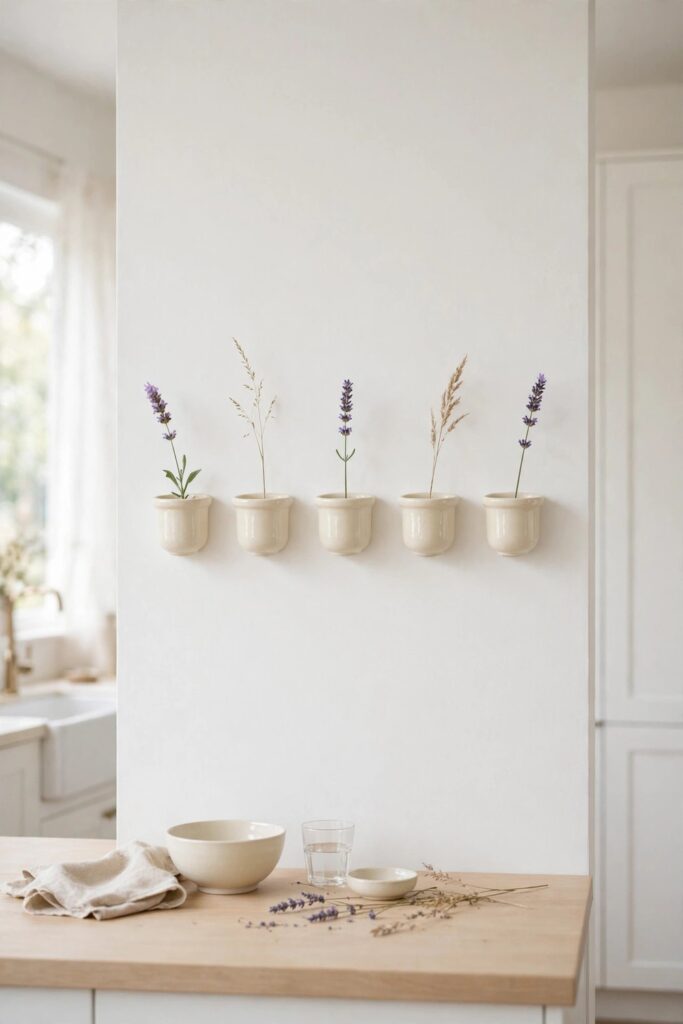
Porcelain wall pockets are small, smooth, and quietly pretty. A row of them holds one stem each, like a tiny garden on the wall.
Choose five pockets in the same cream glaze, all the same size. A row of five looks intentional, while three can feel unfinished.
Mount them in a straight horizontal line at eye level, spaced about four inches apart. Use a level, since a crooked row ruins the calm effect.
Fill each pocket with a single stem of lavender, rosemary, or dried grass. Matching stems keep the row serene.
17. Cream Ceramic Wall Sculpture
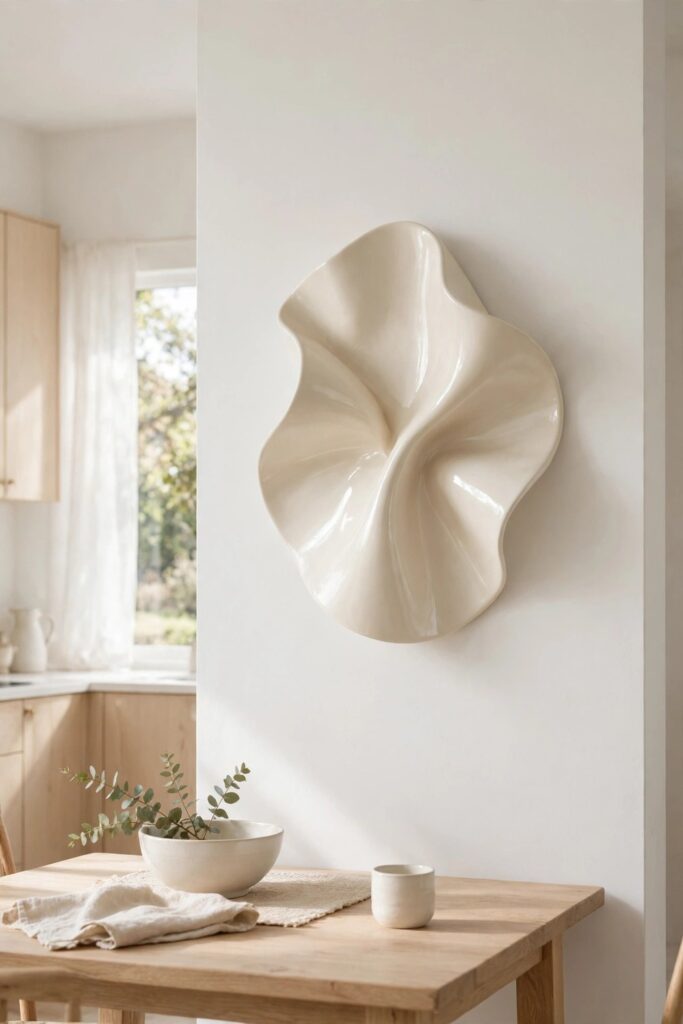
A cream ceramic wall sculpture adds art you can feel as well as see. Soft curves and smooth glaze catch the light beautifully.
Choose an abstract piece in a single cream or ivory glaze, about 18 inches across. One strong piece beats a cluster of small ones here.
Hang it alone on the wall above the table, with nothing else competing nearby. The sculpture needs quiet space around it.
Match the glaze to your plates or mugs for a subtle, collected feel. The repetition ties the room together without shouting.