Subtle and Floral Lavender Honey Cake for Spring Afternoon Tea
Lavender honey cake sits somewhere between a classic Victoria sponge and something a little more grown-up — fragrant, lightly sweet, and genuinely lovely with a pot of Earl Grey on a warm afternoon.
The lavender flavour here is gentle, not soapy. You’re after a floral whisper rather than a mouthful of potpourri.
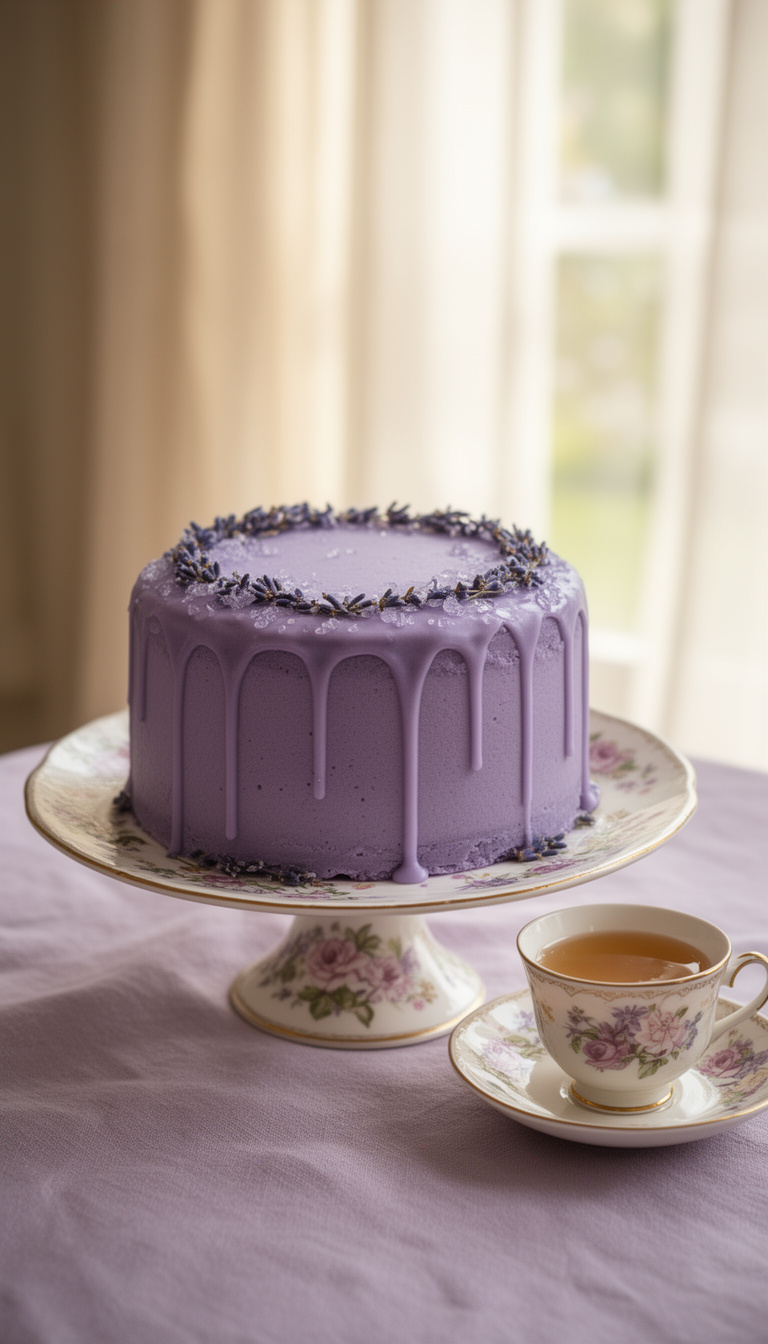
It’s a straightforward bake that looks elegant on a cake stand, and the honey glaze keeps it moist for days.
Choosing the Right Lavender for Baking
Culinary lavender is what you want — specifically dried Lavandula angustifolia, sometimes labelled English lavender. French lavender varieties can taste bitter and medicinal in baked goods, so it’s worth checking the packet.
You’ll find culinary lavender in delis, health food shops, or online. If you’re using lavender from a garden, make sure it’s untreated and fully dried. The quantity matters enormously here — too much and the cake tastes like soap. Start with less than you think you need.
Most Loved Products

Getting the Honey Glaze Right
A good runny honey makes all the difference in the glaze. Acacia honey is mild and won’t overpower the lavender, while a wildflower honey brings a slightly more complex, grassy note that works beautifully in spring. Avoid strongly flavoured honeys like buckwheat — they’ll compete rather than complement.
Pour the glaze over the cake while it’s still just warm, not hot. That way it soaks into the surface slightly rather than sliding straight off, giving you a glossy, lightly sticky top.
Storing and Making Ahead
- The unfrosted cake layers can be baked a day ahead. Wrap them tightly in cling film once completely cool and store at room temperature — the honey glaze actually helps them stay moist overnight.
- If you want a stronger lavender flavour, steep 1 teaspoon of whole dried lavender buds in the 3 tablespoons of warm milk for 20 minutes, then strain before adding to the batter. Don’t exceed this — it’s easy to overdo.
- Leftover frosted cake keeps well covered at room temperature for up to 2 days, or refrigerated for up to 4 days. Bring it back to room temperature for 30 minutes before serving so the frosting softens.
Subtle and Floral Lavender Honey Cake for Spring Afternoon Tea
Cake
Glaze
Frosting
Decoration
- 🔪Two 20cm round sandwich cake tins
- 🥣Stand mixer or electric hand mixer
- ⚡Pestle and mortar or spice grinder (for grinding lavender)
- 🍳Fine mesh sieve
- 🥄Cooling rack
- 📏Small saucepan
- 🔧Offset palette knife or butter knife for frosting
- 🍰Baking parchment
Prep the Tins
Heat your oven to 180°C fan / 200°C conventional / Gas Mark 6. Grease two 20cm round sandwich tins with a little butter, then line the bases with circles of baking parchment.
Grind the Lavender
Grind 2 teaspoons of dried culinary lavender using a pestle and mortar or spice grinder until it becomes a fine powder — this prevents any gritty texture in the finished cake and distributes the flavour more evenly. Set aside.
Cream Butter and Sugar
Beat 225g softened butter and 175g caster sugar together in a stand mixer or with a hand mixer on medium-high speed for 4–5 minutes until the mixture is very pale, almost white, and noticeably fluffy. Scrape down the sides of the bowl halfway through.
Add 3 tablespoons of runny honey and beat for another 30 seconds.
Beat in Eggs
Add the 4 eggs one at a time, beating well for about 20 seconds after each addition. Add 1 teaspoon of vanilla extract with the final egg.
If the mixture looks like it’s starting to curdle, add a tablespoon of the measured flour to bring it back together.
Fold in Flour
Sift the 225g self-raising flour, 1 teaspoon baking powder, ground lavender, and pinch of sea salt directly into the bowl. Fold gently with a large spatula or metal spoon using figure-of-eight movements until just combined — stop as soon as no dry flour is visible.
Add 3 tablespoons of whole milk and fold once more until the batter falls from the spoon in a slow, reluctant ribbon.
Fill the Tins
Divide the batter evenly between the two prepared tins — a kitchen scale is the most reliable way to do this. Smooth the tops with a palette knife or the back of a spoon, then give each tin a gentle tap on the worktop to release any large air bubbles.
Bake the Cakes
Bake on the middle shelf for 25–30 minutes. The cakes are done when they’re a deep golden brown, have pulled away slightly from the sides of the tin, spring back firmly when pressed lightly in the centre, and a skewer inserted into the middle comes out clean with no wet batter.
Don’t open the oven before 22 minutes.
Glaze and Cool
While the cakes are in their final 5 minutes of baking, warm 3 tablespoons of honey and 1 tablespoon of lemon juice together in a small saucepan over low heat, stirring until combined. Remove from heat.
As soon as the cakes come out of the oven, prick the surface of each one all over with a skewer and spoon the warm honey glaze evenly over both. Let the cakes cool in their tins for 15 minutes before turning out onto a wire rack to cool completely — at least 45 minutes.
Make the Frosting
Beat 3 tablespoons of softened butter with 2 tablespoons of cream cheese using a hand mixer until smooth and combined. Sift in 150g icing sugar and beat on low speed until incorporated, then increase to medium and beat for 2 minutes until light.
Add 1 tablespoon of honey and 1–2 tablespoons of milk, one at a time, until the frosting is spreadable but holds its shape. It should be creamy and soft, not stiff.
Assemble and Decorate
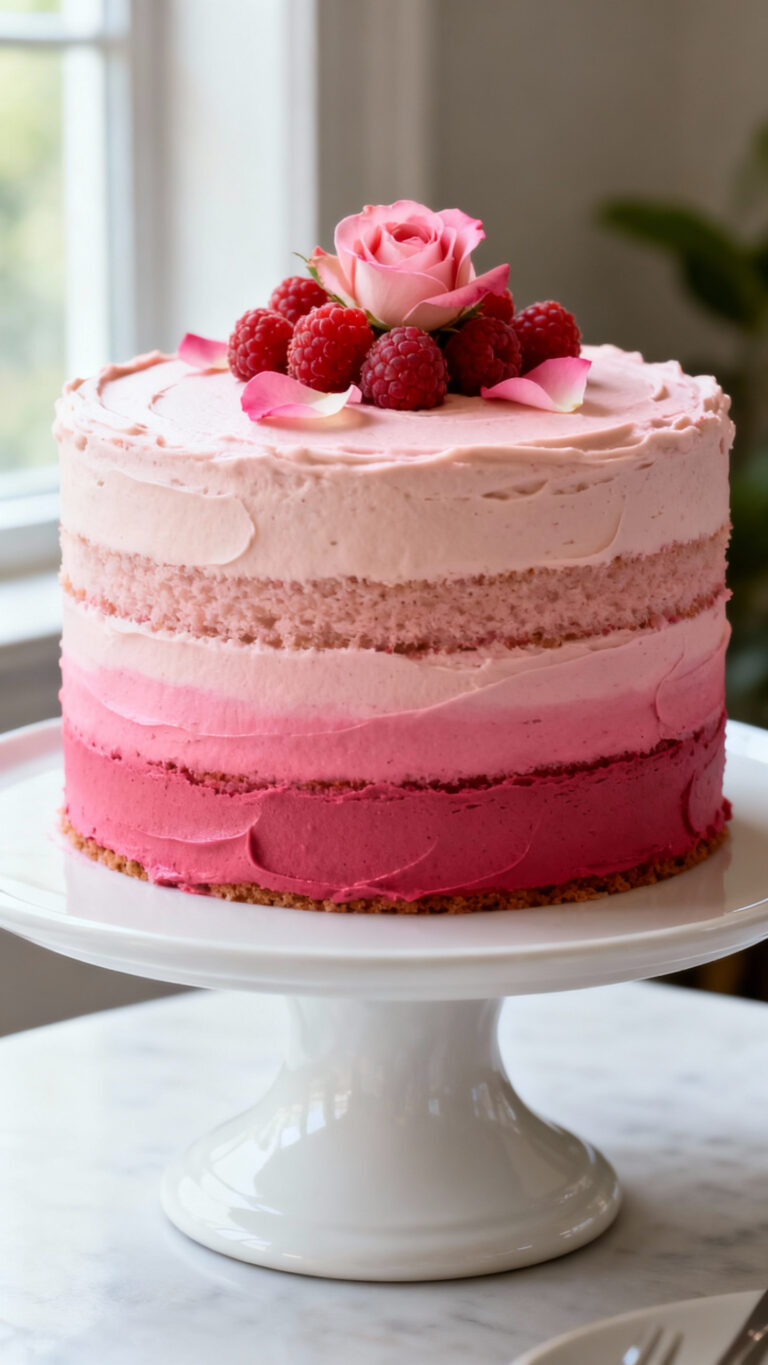
Place one cooled cake layer on a serving plate or cake stand, glazed side up. Spread half the honey frosting over the top in an even layer, going right to the edges.
Place the second cake on top, glazed side up. Spread the remaining frosting over the top — you can leave the sides bare for a relaxed look.
Scatter a pinch of dried lavender buds and a few dried rose petals over the frosting just before serving.
Per serving (1 slice (1/10 of cake)) — values are estimates