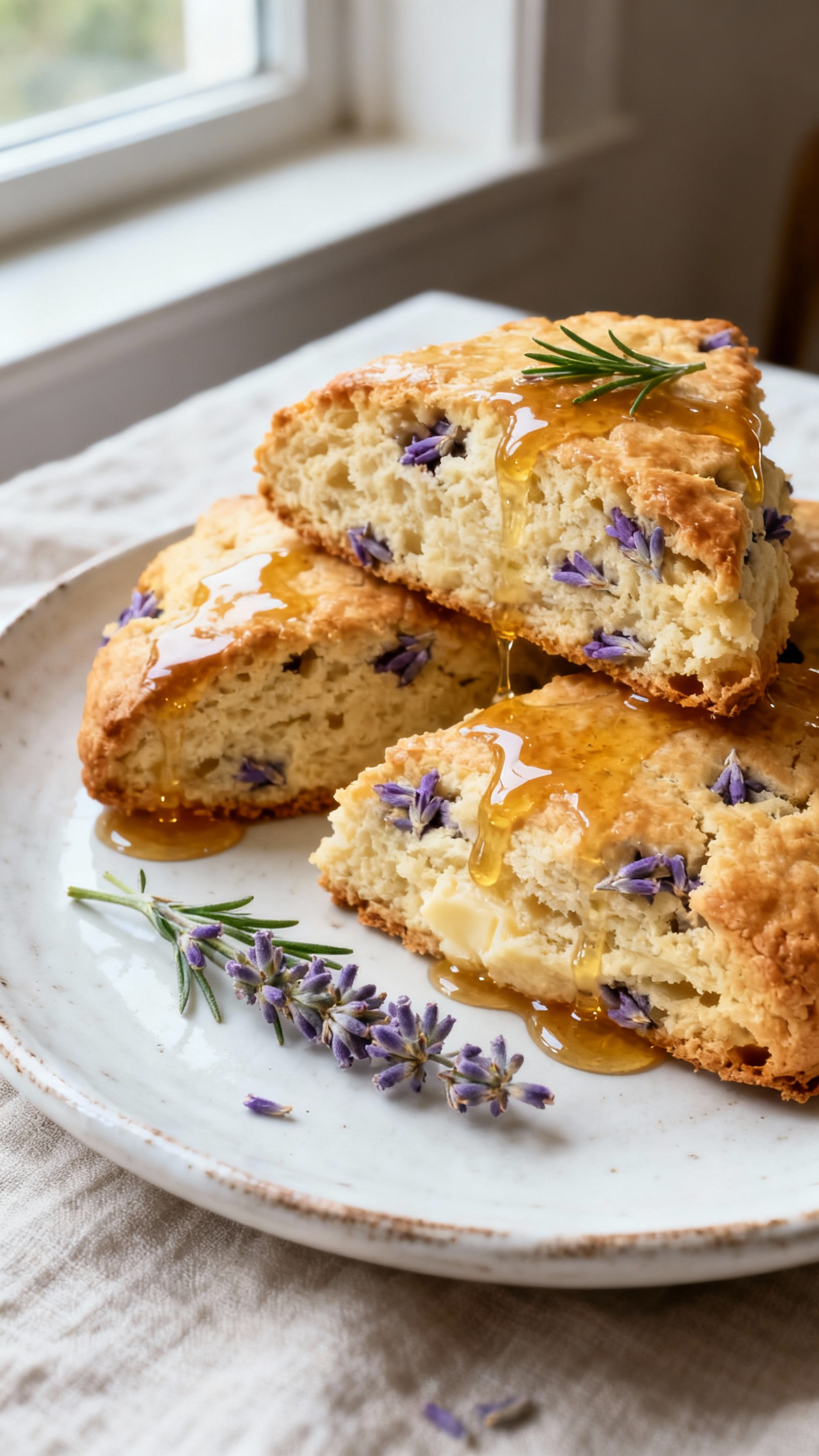
Honey Lavender Scones
Lavender turns regular scones into something special without being overpowering. The floral notes pair perfectly with honey’s sweetness.
You’ll get tender, buttery scones with just enough lavender to make people ask what makes them taste so good.
Culinary Lavender Makes the Difference
Regular lavender from garden centers isn’t food-safe. You need culinary lavender, which is pesticide-free and meant for cooking. English lavender works best – it’s sweeter and less soapy than other varieties. A little goes a long way, so don’t overdo it.
Shop Our Must-Haves
Keep Everything Ice Cold
Cold butter creates steam pockets when it hits the hot oven, giving you flaky layers. Grate frozen butter directly into your flour mixture. If your kitchen is warm, pop the bowl in the freezer for 10 minutes before adding liquid ingredients.
Why Cream Beats Milk
Heavy cream makes these scones incredibly tender and rich. The extra fat content creates a softer crumb than milk or buttermilk. Don’t substitute – the texture won’t be the same. Save any leftover cream for clotted cream if you’re feeling fancy.
Avoid Tough Scones
Mix just until the dough comes together. Overworking develops gluten, making scones dense and chewy instead of light and crumbly. The dough should look shaggy, not smooth. A few dry spots are fine – they’ll hydrate during baking.
Getting Lavender Intensity Right
- Crush lavender buds lightly between your fingers before adding to release more flavor without creating a gritty texture.
- Make dough the night before and refrigerate wrapped in plastic – cold dough bakes up even flakier.
- Substitute maple syrup for honey if you prefer, but reduce cream by 1 tablespoon to compensate for thinner consistency.
Frequently Asked Questions
Where do I find culinary lavender buds?
Most health food stores, spice shops, and online retailers sell food-grade lavender. Whole Foods and Williams Sonoma often stock it too.
Will these taste too floral or perfumy?
Not with the right amount. One tablespoon gives subtle floral notes. If you’re nervous, start with 2 teaspoons and increase next time.
How long do these stay fresh?
Best eaten same day, but they’ll keep covered for 2 days. Warm leftover scones in a 300°F oven for 3-4 minutes.
Must-Have Items
Honey Lavender Scones
Ingredients
Topping
Equipment Needed
- Large mixing bowl
- Box grater
- Measuring cups and spoons
- Baking sheet
- Parchment paper
- Pastry brush
Instructions
- Preheat oven: Preheat oven to 425°F. Line a baking sheet with parchment paper.
- Mix dry ingredients: Whisk together flour, sugar, baking powder, salt, and lavender buds in a large bowl until evenly distributed.
- Grate butter: Grate the frozen butter using the large holes of a box grater directly into the flour mixture. Toss with your fingers to coat butter pieces.
- Combine wet ingredients: In a separate bowl, whisk together 1/2 cup cream, honey, egg, and vanilla until smooth.
- Form dough: Pour the cream mixture into the flour mixture. Gently stir with a fork just until dough starts to come together – don’t overmix.
- Shape dough: Turn dough onto a lightly floured surface and gently pat into an 8-inch circle about 3/4-inch thick.
- Cut scones: Cut into 8 wedges using a sharp knife. Place on prepared baking sheet with pieces slightly separated.
- Add toppings: Brush tops with remaining 2 tablespoons cream and sprinkle with coarse sugar.
- Bake scones: Bake for 16-18 minutes until tops are golden brown and a toothpick inserted in center comes out clean.
- Cool and serve: Cool on baking sheet for 5 minutes before transferring to a wire rack. Serve warm or at room temperature.
Nutrition Facts
Per Serving (1 scone)