Elegant Mother’s Day Fruit Tart to Wow the Table
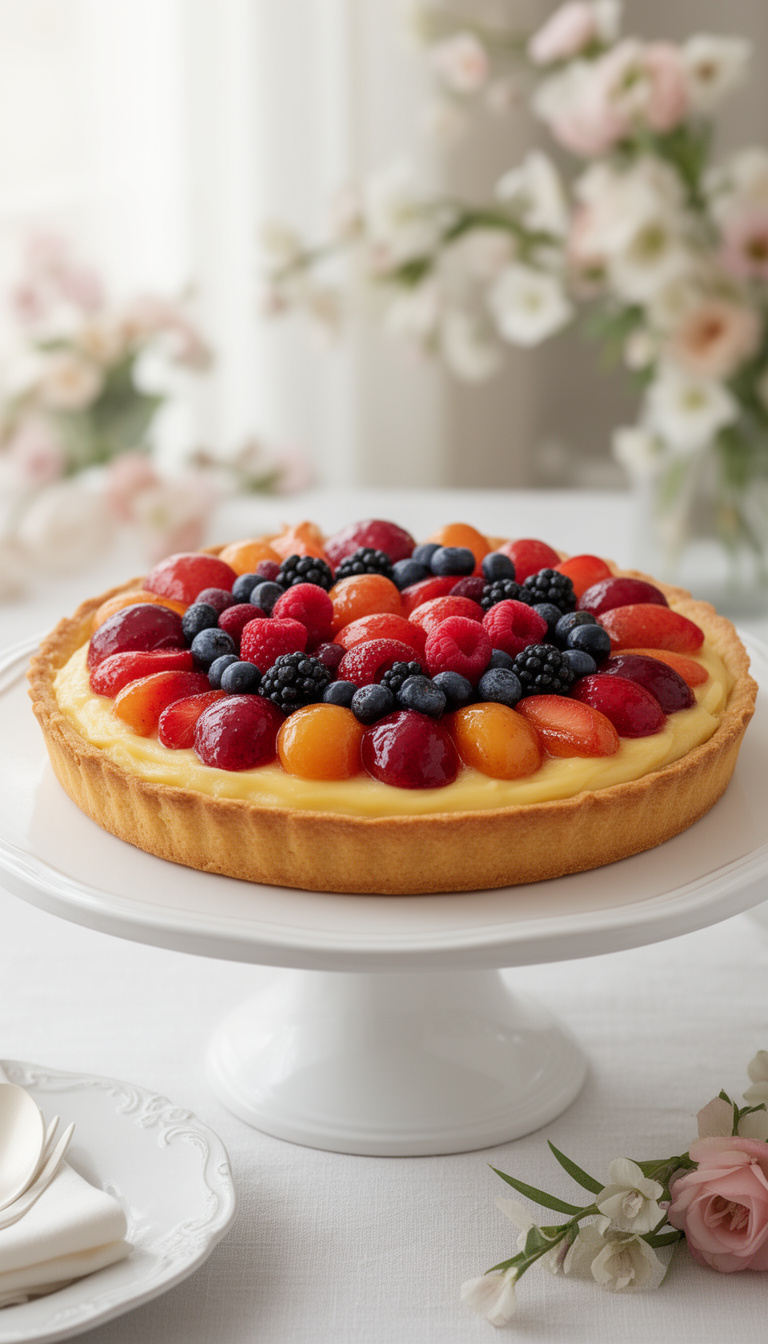
A French fruit tart is one of those desserts that looks like it came from a patisserie window — buttery shortcrust shell, silky vanilla pastry cream, and fresh fruit arranged in concentric rings with a glossy apricot glaze on top.
It’s a labor of love, which makes it exactly right for Mother’s Day. Each component is made from scratch, but none of them is complicated once you understand what you’re doing.
The payoff is real: a stunning centerpiece dessert that tastes as good as it looks, with textures that play off each other beautifully — crisp, creamy, and fresh all at once.
Getting the Pâte Sucrée Right Before You Start
Pâte sucrée is a sweet shortcrust pastry that’s richer and more cookie-like than regular pie dough. The fat-to-flour ratio is high, which means it’s more fragile — it’ll crack if you handle it too aggressively when cold.
Let the dough rest in the fridge for at least 1 hour before rolling. When you roll it out, work quickly and don’t overwork it. If it tears while lining the tart pan, just press the pieces together with your fingers — it patches easily. Blind baking with weights prevents the base from puffing up and ensures a fully cooked, crisp shell that won’t go soggy under the pastry cream.
Trending Now
Pastry Cream Texture: What You’re Aiming For
Crème pâtissière should be thick enough to hold its shape when sliced but still feel smooth and spoonable at room temperature. If it’s too loose, the tart will collapse when cut. If it’s overcooked, it’ll taste eggy and grainy.
The key moment is when the cream starts to bubble in the center of the pan — that’s when the starch fully activates. Keep whisking for a full 2 minutes after those first bubbles appear. Press plastic wrap directly onto the surface before chilling to prevent a skin from forming. It needs at least 2 hours to set properly before you fill the shell.
Make-Ahead and Storage Notes
- The pastry cream can be made up to 2 days ahead and kept refrigerated with plastic wrap pressed directly on the surface.
- The blind-baked tart shell can be stored at room temperature in the pan, loosely covered, for up to 1 day before filling.
- Once assembled and glazed, the tart is best eaten the same day. The shell will soften overnight in the fridge, though it’ll still taste good for up to 2 days.
- If your pastry cream has lumps after cooking, strain it immediately through a fine-mesh sieve while it’s still hot — it’ll smooth out completely.
- Use whatever fruit looks best at the market. Mangoes, blackberries, sliced figs, and fresh cherries all work beautifully in place of or alongside the listed fruit.
Elegant Mother’s Day Fruit Tart to Wow the Table
Pâte Sucrée
Crème Pâtissière
Fruit Topping
Glaze
- 🔪9-inch (23cm) fluted tart pan with removable bottom
- 🥣Food processor or stand mixer with paddle attachment
- ⚡Rolling pin
- 🍳Pie weights or dried beans
- 🥄Parchment paper
- 📏Medium heavy-bottomed saucepan (2–3 quart)
- 🔧Whisk
- 🍰Fine-mesh sieve
- 🫙Mixing bowls (2 medium)
- 🌡️Plastic wrap
- 🔪Pastry brush
- 🥣Small saucepan for glaze
- ⚡Wire cooling rack
Make the Dough
Combine the flour, powdered sugar, and salt in a food processor and pulse twice to mix. Scatter the cold butter cubes over the flour mixture and pulse 8–10 times until the mixture resembles coarse, pea-sized crumbs.
Add the egg yolk and pulse 3–4 times. Drizzle in 1 tablespoon of ice water and pulse until the dough just starts to clump — it should hold together when pinched but not feel wet.
If it’s still crumbly, add the second tablespoon of water a teaspoon at a time.
Rest the Dough
Turn the dough out onto a lightly floured surface and press it into a flat disc about 1 inch thick. Wrap tightly in plastic wrap and refrigerate for at least 1 hour, or up to 24 hours.
Don’t skip this step — the rest relaxes the gluten and firms up the butter, which makes the dough easier to roll and helps it hold its shape in the pan.
Start the Cream
While the dough chills, make the crème pâtissière. Pour the milk into a medium saucepan and add the vanilla bean pod and seeds (or vanilla extract).
Heat over medium heat until the milk just begins to steam and small bubbles form at the edges — about 4–5 minutes. Don’t let it boil.
Remove from heat and let the vanilla infuse for 10 minutes, then remove the pod.
Whisk the Yolks
In a medium bowl, whisk together the egg yolks and granulated sugar until the mixture turns pale yellow and slightly thick, about 1–2 minutes. Sift in the cornstarch and whisk until completely smooth with no lumps visible.
Slowly pour about ¼ cup of the warm milk into the yolk mixture while whisking constantly — this tempers the eggs so they don’t scramble. Then pour the yolk mixture back into the saucepan with the remaining milk, whisking as you go.
Cook the Cream
Set the saucepan over medium heat and cook the mixture, whisking constantly, until it thickens and begins to bubble in the center — about 5–7 minutes. Once you see those first bubbles, keep whisking and cook for exactly 2 more minutes.
The cream should be thick, glossy, and pull away from the sides of the pan. Remove from heat and whisk in the butter cubes one at a time until fully incorporated and smooth.
Chill the Cream
Strain the pastry cream through a fine-mesh sieve into a clean bowl to remove any lumps or cooked egg bits. Press a sheet of plastic wrap directly onto the surface of the cream — it should touch the cream completely with no air gaps.
Refrigerate for at least 2 hours until fully set and cold. The cream can be made up to 2 days ahead.
Line the Pan
Preheat your oven to 375°F (190°C). On a lightly floured surface, roll the chilled dough into a circle about 12 inches in diameter and ⅛ inch thick.
Work quickly — if the dough warms up and becomes sticky, slide it onto a baking sheet and refrigerate for 10 minutes. Carefully drape the dough over the rolling pin and transfer it to the tart pan.
Press it gently into the fluted edges without stretching. Trim the excess flush with the top of the pan by rolling the pin across the rim.
Blind Bake Shell
Prick the base of the tart shell all over with a fork — about 20 pricks. Line the shell with a sheet of parchment paper and fill it with pie weights or dried beans, pressing them into the edges.
Bake for 18 minutes until the edges are set and lightly golden. Remove the parchment and weights, then bake for another 10–12 minutes until the base is golden brown and dry to the touch.
Let the shell cool completely on a wire rack before removing it from the pan — at least 30 minutes.
Fill the Shell
Once the tart shell is completely cool and the pastry cream is fully set, whisk the cream briefly to loosen it — it should be smooth and spreadable. Spoon it into the tart shell and spread it into an even layer with an offset spatula or the back of a spoon, filling the shell to about ¼ inch from the top.
Refrigerate the filled shell for 30 minutes before adding the fruit so the cream firms back up and the fruit sits cleanly on top.
Arrange the Fruit
Pat all the fruit dry with paper towels — any moisture will make the tart weep. Arrange the fruit in concentric circles starting from the outside edge and working inward, alternating colors and shapes.
A classic pattern starts with a ring of halved strawberries cut-side down, followed by overlapping kiwi slices, then a ring of blueberries, raspberries, and mandarin segments in the center. There’s no wrong way to do it — just keep the arrangement tight and intentional so it looks deliberate.
Glaze and Serve
Warm the apricot jam and 1 tablespoon of water in a small saucepan over low heat, stirring until the jam melts and the mixture is smooth and fluid — about 2 minutes. Strain through a fine-mesh sieve to remove any fruit pieces.
Using a pastry brush, lightly coat every piece of fruit with the warm glaze, working gently so you don’t shift the fruit. The tart is ready when the glaze looks glossy and set (about 5 minutes at room temperature), the pastry cream holds its shape when you press lightly near the edge, and the shell sounds hollow when tapped on the bottom.
Serve within 4 hours of glazing for the best texture.
Per serving (1 slice (1/8 tart)) — values are estimates
Top Picks Today