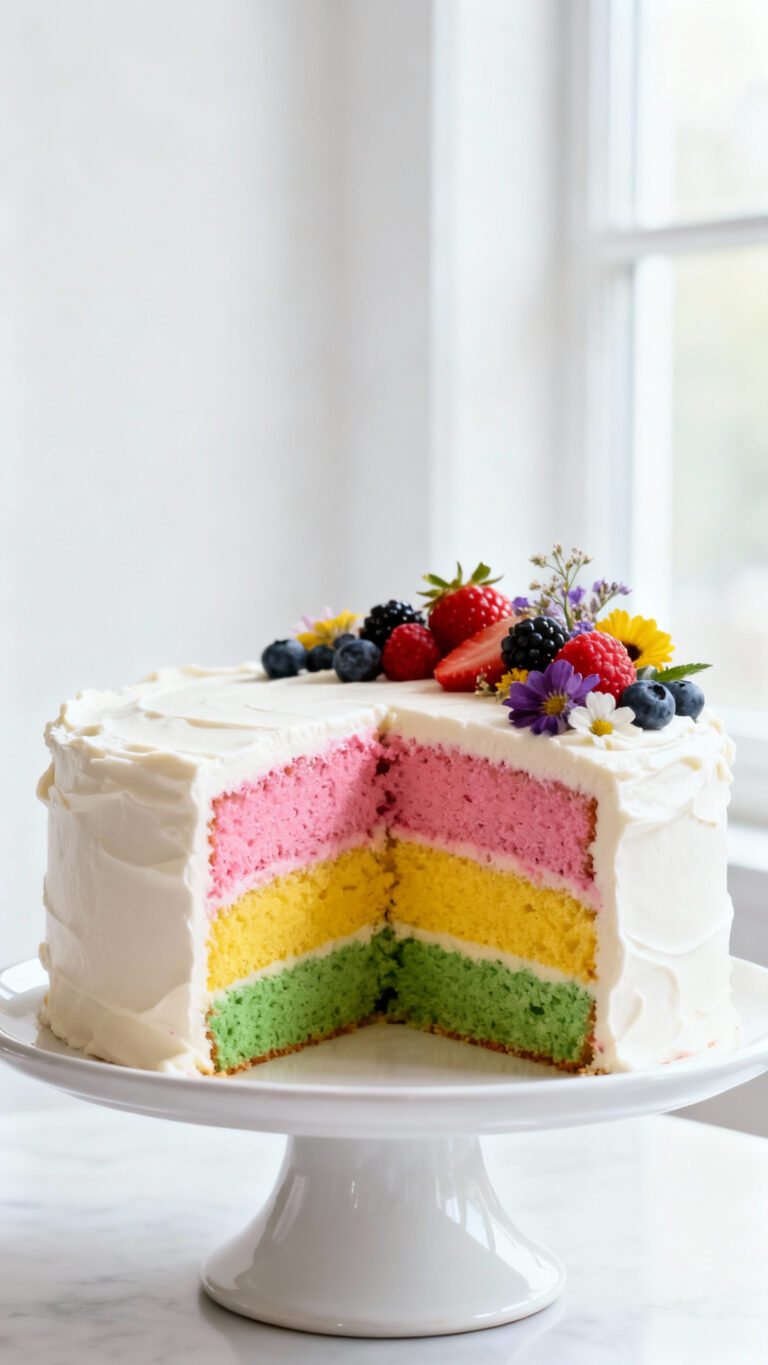
Lavender Honey Cake Using Dried Lavender from the Pantry
Lavender honey cake is a lightly floral, golden-crumbed cake that sits somewhere between a pound cake and a French gâteau. It’s the kind of bake you reach for when you want something a little more interesting than vanilla but don’t want to overthink it.
Dried lavender from the pantry works beautifully here — you don’t need fresh flowers or anything fancy. The honey does double duty, sweetening the batter and keeping the crumb moist for days.
It’s understated and fragrant without being soapy, which is the whole challenge with lavender baking.
How Much Dried Lavender Is Actually Safe to Use
Dried lavender is roughly twice as potent as fresh, so the quantity matters more than most people expect. For a standard 9-inch cake, 1½ teaspoons of dried culinary lavender is the sweet spot — enough to notice, not enough to taste like soap or potpourri.
Always use food-grade culinary lavender, not decorative or craft lavender, which may be treated with chemicals. Steep the dried buds in warm butter or milk before baking rather than adding them dry — that gentle infusion pulls out the floral oils evenly and prevents any gritty texture in the finished cake.

Our Best Picks
Choosing the Right Honey for the Batter
Not all honey behaves the same way in baking. A mild wildflower or clover honey keeps the lavender front and center, while a strong buckwheat or manuka honey can overpower it. Avoid raw honey for the batter itself — the natural enzymes in raw honey can interfere with the rise and leave the crumb slightly dense.
For the glaze, though, raw or varietal honey drizzled over the cooled cake is excellent. It stays slightly sticky and gives you a second layer of honey flavor that the baked batter can’t quite replicate on its own.
Storage and Make-Ahead Notes
- Store the cake at room temperature under a cake dome or wrapped loosely in plastic wrap for up to 3 days. The honey keeps the crumb moist longer than a standard butter cake.
- You can infuse the butter up to 2 days ahead and refrigerate it. Bring it back to room temperature before creaming.
- If the top of the cake browns too quickly before the center sets, tent loosely with foil at the 25-minute mark and continue baking.
- For a more pronounced floral note, add ½ teaspoon of lavender to the milk-sour cream mixture as well, then strain before using.
Lavender Honey Cake Using Dried Lavender from the Pantry
Lavender Infusion
Cake Batter
Honey Glaze
Garnish
- 🔪9-inch (23cm) round cake pan
- 🥣Small saucepan
- ⚡Stand mixer or hand mixer with beater attachments
- 🍳Two medium mixing bowls
- 🥄Fine mesh sieve
- 📏Rubber spatula
- 🔧Wire cooling rack
- 🍰Pastry brush
- 🫙Kitchen scale (recommended)
Infuse the Butter
Combine the 115g cubed butter and 1½ teaspoons dried lavender buds in a small saucepan over low heat. Warm gently for 5–7 minutes until the butter melts completely and begins to smell floral — don’t let it bubble or brown.
Remove from heat and let the lavender steep in the butter for 20 minutes. Strain through a fine mesh sieve into a bowl, pressing the buds lightly to extract the infused butter.
Discard the spent lavender. Let the infused butter cool to room temperature before using, about 15 minutes.
Prep the Pan
Preheat your oven to 175°C (350°F). Grease the 9-inch cake pan with a thin layer of butter or neutral oil, then line the bottom with a round of parchment paper.
Lightly flour the sides of the pan, tapping out any excess. Set aside.
Mix Dry Ingredients
In a medium bowl, whisk together the 240g flour, 2 teaspoons baking powder, and ½ teaspoon sea salt. Set aside.
In a small bowl or jug, stir together the 120ml whole milk and 2 tablespoons sour cream until smooth. Set aside.
Cream Butter and Sugar
Pour the cooled lavender-infused butter into the bowl of a stand mixer fitted with the paddle attachment, or use a large bowl with a hand mixer. Add the 200g granulated sugar and beat on medium-high speed for 3–4 minutes until the mixture is pale and slightly fluffy.
Scrape down the sides of the bowl with a rubber spatula.
Add Eggs and Honey
Add the 80g honey and beat on medium speed for 1 minute until incorporated. Add the 3 eggs one at a time, beating for 30 seconds after each addition.
Scrape down the bowl between each egg. Add the 1 teaspoon vanilla extract and mix briefly to combine.
The mixture may look slightly curdled at this stage — that’s normal and will come together once the flour is added.
Fold in Flour
With the mixer on low speed, add the flour mixture in three additions, alternating with the milk-sour cream mixture in two additions (flour, milk, flour, milk, flour). Begin and end with the flour.
Mix only until each addition just disappears — overmixing at this stage will tighten the gluten and make the crumb tough. Stop the mixer as soon as the last streak of flour is gone, then give the batter two or three folds by hand with a rubber spatula to catch anything at the bottom.
Bake the Cake
Scrape the batter into the prepared cake pan and smooth the top with a spatula. Tap the pan gently on the counter two or three times to release any large air pockets.
Bake on the center rack at 175°C (350°F) for 35–40 minutes. The cake is done when the top is deep golden and springs back when lightly pressed in the center, a skewer inserted into the middle comes out with just a few moist crumbs (not wet batter), and the edges have begun to pull away slightly from the sides of the pan.
Cool in Pan
Let the cake cool in the pan on a wire rack for 15 minutes. Run a thin knife around the edge, then invert onto the rack and peel off the parchment.
Turn right-side up and let it cool completely, at least 45 minutes to 1 hour, before glazing. Rushing this step will cause the glaze to run straight off and pool on the rack.
Glaze and Finish
Stir together the 3 tablespoons honey, 1 tablespoon warm water, and pinch of sea salt in a small bowl until the honey loosens and becomes pourable. Using a pastry brush, coat the top and sides of the fully cooled cake with the glaze in two thin layers, letting the first layer absorb for 2–3 minutes before applying the second.
Scatter a few dried lavender buds or edible flowers over the top if using. Let the glaze set for 10–15 minutes before slicing.
Per serving (1 slice (1/10 of cake)) — values are estimates
Our Best Picks