Gluten-Free Mini Pavlovas with Berries Everyone Will Love
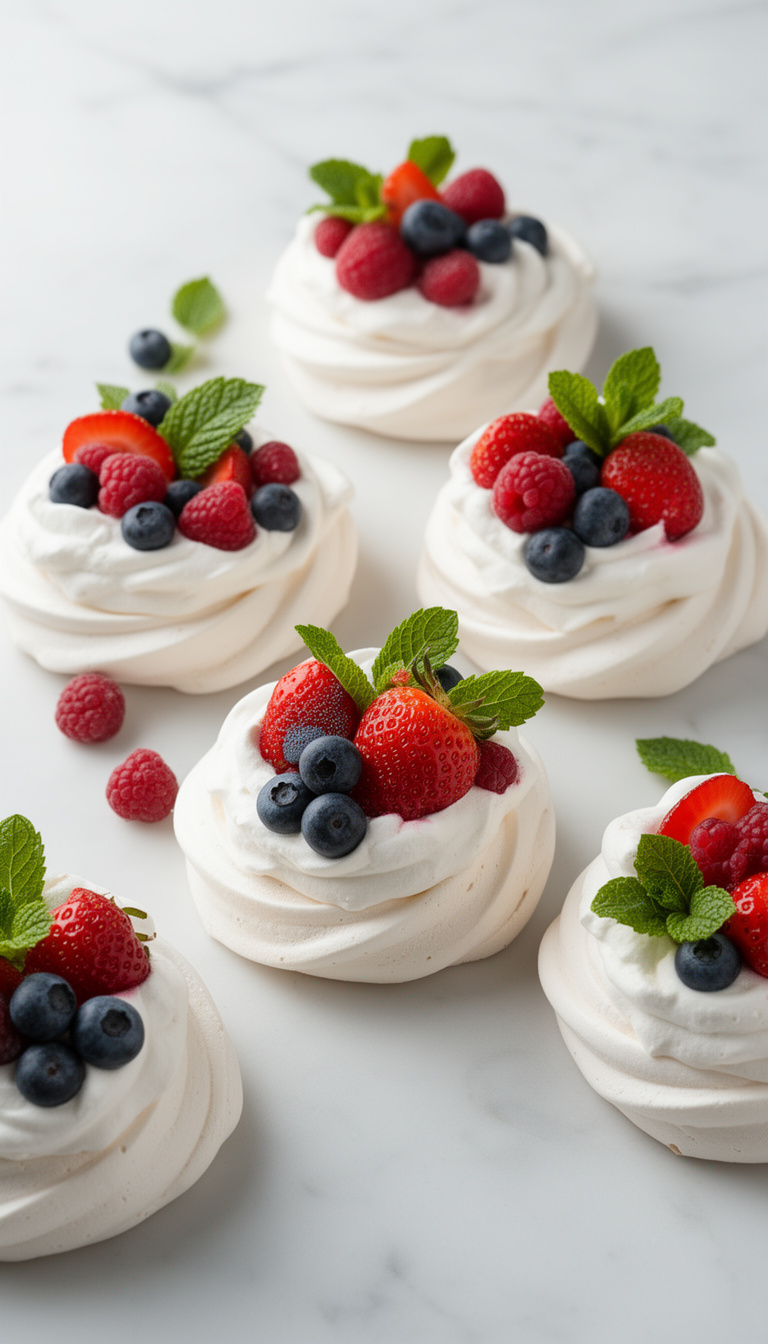
Mini pavlovas are individual meringue shells — crisp on the outside, marshmallow-soft inside — topped with whipped cream and fresh berries. They’re naturally gluten-free, which makes them one of the rare desserts that genuinely works for a crowd with mixed dietary needs.
Each guest gets their own, which solves the messy slicing problem of a full pavlova. You can also prep the meringues a day ahead, so there’s very little to do before serving.
Why Egg Whites Behave the Way They Do
Meringue is sensitive to fat, and even a trace of egg yolk or grease on your bowl will prevent the whites from whipping to stiff peaks. Wipe your bowl and whisk with a little white vinegar on a paper towel before you start — it cuts through any residual oil.
Room temperature egg whites whip faster and to greater volume than cold ones. Separate your eggs straight from the fridge, then let the whites sit out for 20–30 minutes. The cream of tartar stabilizes the foam and helps the meringue hold its structure through baking.
Editor’s Choice
Getting the Oven Drying Right
Pavlovas don’t really bake — they dry out slowly at low heat. If your oven runs hot, the meringues will crack badly and the outside will brown before the inside sets. An oven thermometer is worth using here, because most home ovens are off by 10–25°F.
Once the baking time is done, turn the oven off and leave the meringues inside with the door closed for at least one hour — longer is fine. Don’t rush this step. The slow cool-down prevents the shells from collapsing or cracking from a sudden temperature change.
Make-Ahead and Storage
- Bake the meringue shells up to 2 days ahead and store in an airtight container at room temperature. Don’t refrigerate them — humidity will make them sticky and soft.
- Avoid making meringue on a rainy or very humid day. Moisture in the air is absorbed by the sugar and will make the shells weep or stay tacky instead of drying out properly.
- Superfine (caster) sugar dissolves faster than regular granulated sugar, which reduces the risk of a grainy meringue. If you can’t find it, pulse regular sugar in a food processor for 30 seconds.
- If your meringues crack on top, don’t worry — it’s normal and the whipped cream covers everything. Major cracking usually means the oven was too hot or the shells cooled too quickly.
Gluten-Free Mini Pavlovas with Berries Everyone Will Love
Meringue
Topping
Berries
- 🔪Stand mixer or hand mixer with whisk attachment
- 🥣Large stainless steel or glass mixing bowl
- ⚡Baking sheet (half-sheet, 18×13 inches)
- 🍳Parchment paper
- 🥄Rubber spatula
- 📏Piping bag with large round or star tip (or a large spoon)
- 🔧Oven thermometer
- 🍰Small sieve for dusting powdered sugar
Prep the Pan
Position a rack in the center of your oven and preheat to 225°F (110°C). Line a large baking sheet with parchment paper.
Use a 3-inch round cookie cutter or a glass to trace 8 circles on the parchment, spacing them at least 1 inch apart. Flip the parchment over so the pencil marks face down — you’ll still see them through the paper.
Start the Whites
Wipe your mixing bowl and whisk attachment with a paper towel dampened with white vinegar. Add the 4 room-temperature egg whites and ½ teaspoon cream of tartar to the bowl.
Beat on medium speed (speed 4 on a stand mixer) until the whites are foamy and opaque, about 2 minutes.
Add Sugar Slowly
Increase speed to medium-high (speed 6). With the mixer running, add the 1 cup superfine sugar one tablespoon at a time, waiting about 10 seconds between each addition.
This should take 4–5 minutes total. Don’t rush the sugar addition — adding it too fast can deflate the foam or make the meringue weep during baking.
Beat to Stiff Peaks
Once all the sugar is in, increase to high speed and beat for another 3–4 minutes until the meringue is very thick, glossy, and bright white. Rub a small amount between your fingers — it should feel completely smooth with no sugar grains.
If it still feels gritty, beat for 1–2 more minutes and test again.
Fold in Stabilizers
Reduce mixer speed to low. Add 1 teaspoon vanilla extract, 1 teaspoon vinegar, and 1 teaspoon cornstarch.
Beat for 30 seconds just until combined. The meringue should hold stiff, glossy peaks that don’t droop when you lift the whisk.
Shape the Nests
Spoon or pipe the meringue onto the traced circles, building up the edges slightly higher than the center to create a shallow well — this is where the cream and berries will sit. Each mound should be about 2½ inches tall at the edges.
Use the back of a spoon to swirl the sides for a decorative look if you like.
Bake and Rest
Slide the baking sheet into the preheated 225°F oven. Bake for 1 hour and 15 minutes.
Don’t open the oven door during baking. When time is up, turn the oven off completely and leave the meringues inside with the door shut for at least 1 hour, or up to overnight.
The shells are ready when they lift cleanly off the parchment, feel completely dry and hollow when tapped on the bottom, and are a very pale ivory — not white, not brown.
Macerate the Berries
While the meringues rest, combine the sliced strawberries, blueberries, and raspberries in a bowl. If you’d like the berries a bit juicier, drizzle with 1 tablespoon honey or maple syrup, stir gently, and let sit at room temperature for 20–30 minutes.
The berries will release a little juice that soaks beautifully into the cream.
Whip the Cream
Pour the cold heavy cream into a chilled bowl. Beat on medium-high speed until it starts to thicken, then add 2 tablespoons powdered sugar and 1 teaspoon vanilla.
Continue beating until the cream holds soft, billowy peaks — it should mound on a spoon without being stiff or grainy. Stop before it looks like butter.
Assemble and Serve
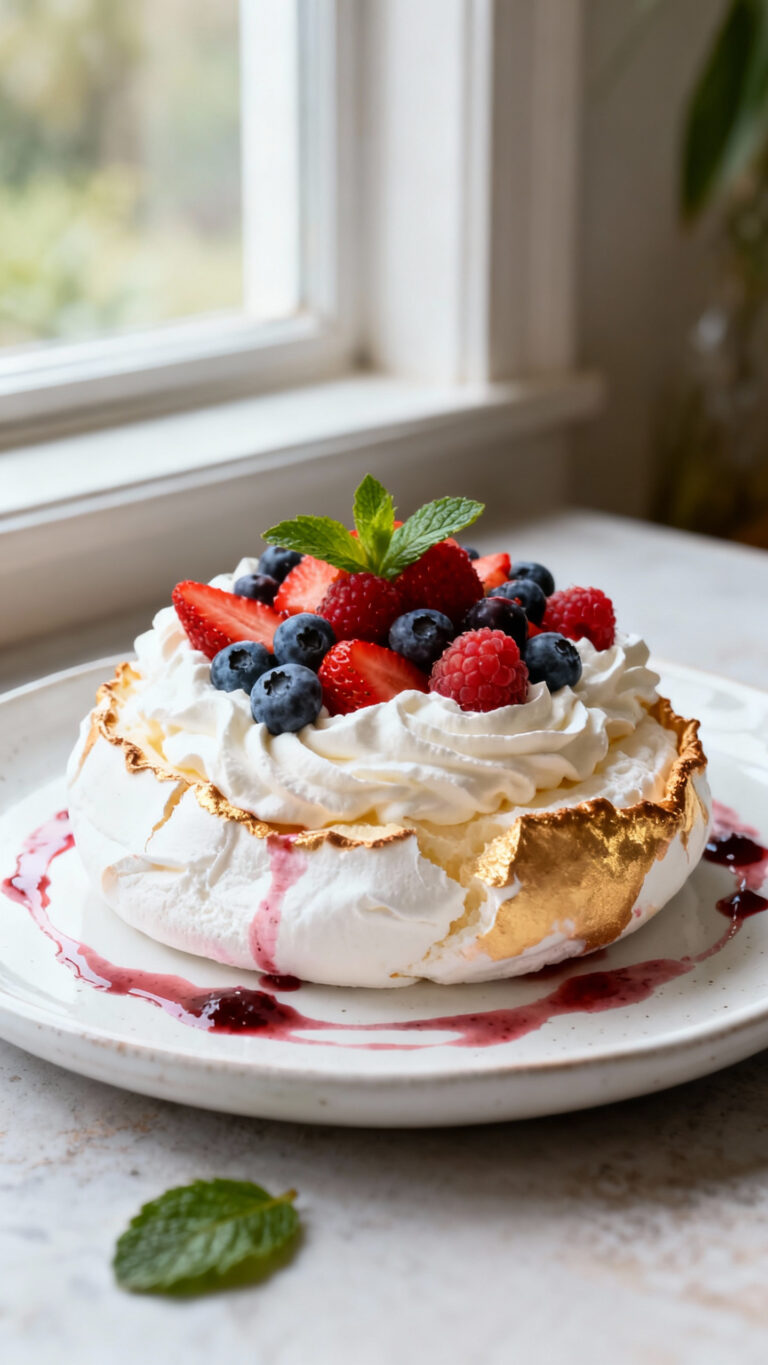
Assemble the pavlovas just before serving. Spoon a generous dollop of whipped cream into the well of each meringue shell, then pile the berries on top, letting a little of the juice drip down the sides.
Serve immediately — once assembled, the shells will start to soften within 30–45 minutes. The meringue shells can be stored unassembled in an airtight container at room temperature for up to 2 days.
Per serving (1 mini pavlova) — values are estimates
Trending Now